First Seen
2023-11-08T07:38:47+00:00
simple-description (qwen3.5_2b-q8_0)
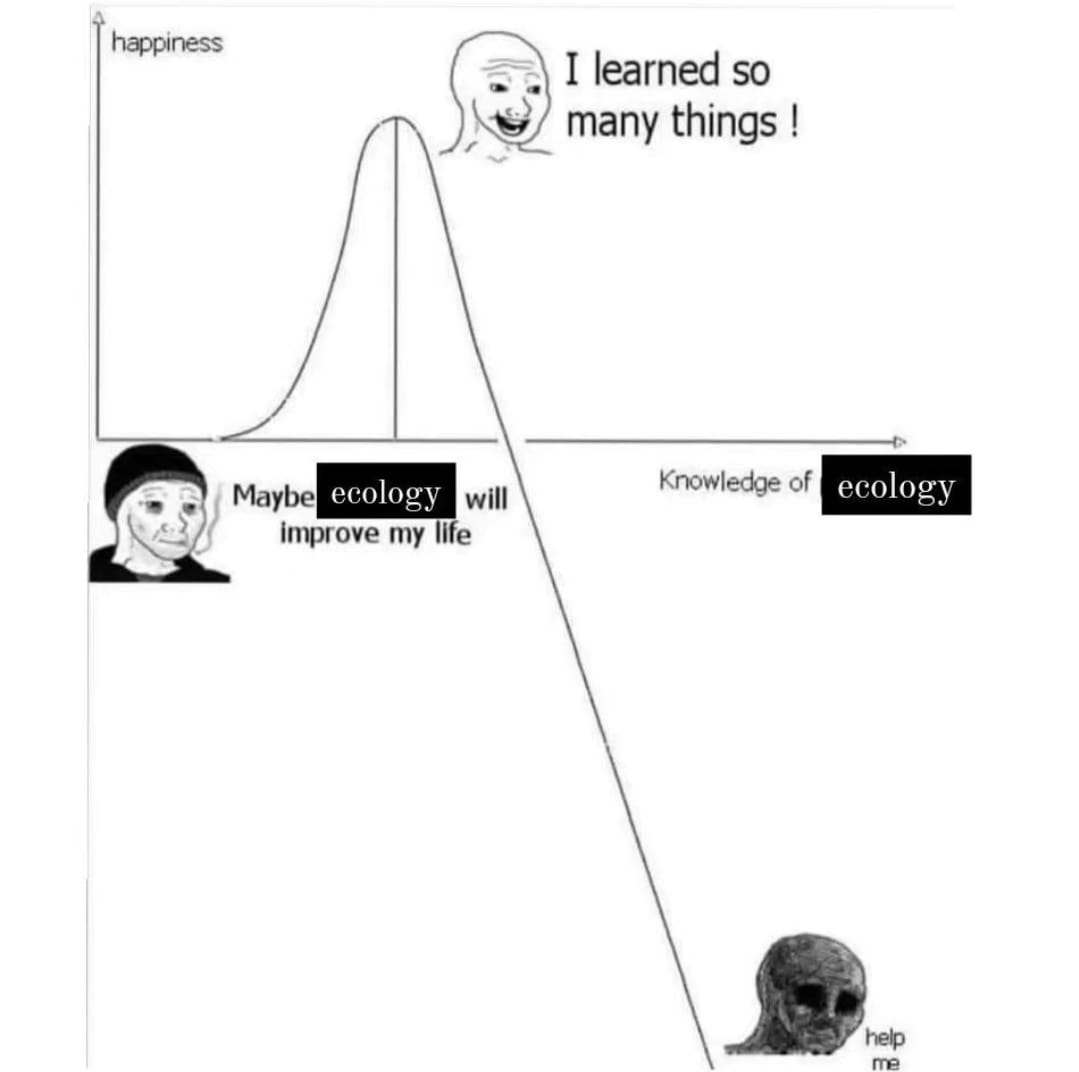
As an academic, this meme satirizes the concept of diminishing returns in higher education. The researcher learns so much knowledge that their happiness curve peaks, but then drops into a bottomless abyss of isolation and despair. This visual humorously depicts the reality that increasing the subject of 'ecology' can lead to a student feeling completely helpless, as shown by the desperate figure at the bottom who requests help, while others claim to have learned 'I learned so many things!'
simple-description (llama3.2-vision_11b)
The meme is a humorous illustration of the concept that one can't learn everything, even with a vast amount of knowledge in a specific field. The image shows a person with a "I can read and learn anything" sign, but it's actually a "I can read and learn anything except [insert topic here]" sign. The text "I can read and learn anything" is crossed out and replaced with "I can read and learn anything except [insert topic here]".
detailed-analysis (gemma3-27b-vision)
Okay, let's break down this image meme through various theoretical lenses. It's a deceptively simple image that opens up surprisingly complex readings.
Visual Description
The image is a minimalist, black and white line drawing depicting a curve resembling a bell curve. The y-axis is labeled “happiness.” Along this curve are three progressively despondent cartoon faces.
- Initial Phase (Ascent): A cartoon face with a seemingly naive expression is positioned on the ascending slope of the curve, accompanied by the text “Maybe ecology will improve my life.” The face shows enthusiasm.
- Peak (Temporary High): At the peak of the curve, another face is depicted, appearing joyful with a wide smile and text “I learned so many things!”
- Rapid Descent & Despair: A third cartoon face, this one resembling a sea turtle (often used as a symbol of slowness, enduring struggle, and environmental concern) is positioned at the bottom of a very steep descending line, looking distraught. The text reads “help me”. This turtle is drawn in a much more somber and detailed style than the other faces, creating a visual contrast.
The meme format relies on the expectation of a predictable outcome that is subverted. The rapid descent from optimism to despair is exaggerated. The image’s aesthetic is intentionally crude and minimalist, leaning into the “rage comic” style often associated with internet culture.
Foucauldian Genealogical Discourse Analysis
This meme is ripe for Foucauldian analysis. The image visualizes the discourse around ecology and its purported ability to bring about happiness/improvement. The initial face represents the individual accepting the dominant discourse - that learning about ecology will be beneficial.
However, the descent into despair suggests the power/knowledge relationship at play. The initial hope is ultimately eroded by a confronting reality, perhaps the overwhelming scale of ecological crises, the perceived futility of individual action, or the political inertia surrounding environmental issues. The turtle, an animal deeply connected to the threatened marine environment, becomes a symbolic representation of the subject of this discourse – burdened by the weight of ecological knowledge and the realization of its powerlessness.
The genealogy would trace how the discourse around ecology has shifted – from promises of individual wellbeing to a sense of existential dread. It exposes the ways knowledge about ecology produces a certain kind of subject – one grappling with anxiety and disillusionment. The meme highlights the failure of the discourse to deliver on its initial promise.
Critical Theory
From a critical theory perspective, this meme can be seen as a commentary on the false consciousness fostered by a capitalist system. The initial optimism (“ecology will improve my life”) implies a belief that individual action or knowledge can solve systemic problems. However, the despairing turtle represents the realization that environmental issues are deeply rooted in capitalist modes of production and consumption.
The meme subtly critiques the tendency to individualize responsibility for ecological crises. We are encouraged to recycle, reduce consumption, and make “sustainable” choices, but these actions are often framed as individual burdens rather than collective demands for systemic change. The turtle's helplessness symbolizes the frustration of confronting issues that are far beyond individual control. The “improvement” promised is ultimately a form of pacification, a way to manage anxieties without challenging the underlying power structures.
Postmodernism
The meme embodies some key tenets of postmodern thought. The rapid shift from optimism to despair reflects the postmodern skepticism towards grand narratives or universal truths. The idea that “ecology will improve my life” represents a belief in a coherent, meaningful project. The meme dismantles this narrative, exposing its inherent fragility and ultimately revealing the subjective experience of disillusionment.
The image also plays with irony and parody. It mocks the idealized vision of environmentalism, presenting a starkly different reality. The crudeness of the drawing style and the minimalist aesthetic challenge conventional notions of artistic expression and invite a self-aware, critical engagement with the subject matter. The meme embraces fragmentation and ambiguity, rejecting any easy answers or simple solutions.
Queer Feminist Intersectional Analysis (Less directly applicable, but present)
While not the primary focus, a queer-feminist lens can offer a nuanced reading. Environmental crises disproportionately impact marginalized communities, particularly women and LGBTQ+ individuals. The turtle, as a vulnerable creature, can be seen as representing these communities. Their despair embodies the compounding effects of ecological destruction and systemic oppression.
The meme could also be interpreted as a commentary on the ways in which dominant environmental discourses often exclude or marginalize the voices of these communities. The promise of “improvement” may not apply equally to everyone, and the burden of ecological responsibility may fall disproportionately on those who are already marginalized. The meme implicitly challenges the idea of a universal “ecological subject,” highlighting the importance of intersectional analysis in understanding environmental justice issues.
Let me know if you'd like me to elaborate on any of these interpretations or explore other theoretical frameworks!
simple-description (llama3.2-vision)
The meme is a chart that shows a person's happiness level changing as they gain more knowledge of ecology. The chart starts with a person who is happy and has no knowledge of ecology, but as they learn more, their happiness increases. However, as they become an expert in the field, their happiness suddenly drops to a low point, and they become "help me" (a meme that is often used to express frustration or desperation). The text on the chart says "I learned so many things!" and "Maybe ecology will improve my life." The chart is meant to be humorous and satirical, poking fun at the idea that learning more about a subject can actually make you less happy.
tesseract-ocr
| happiness =.) I learned so / Neg/ many things |! JK Se ccolocy Knowledoe of FON £3 improve my life \ & help re