First Seen
2024-03-04T05:05:33.328100+00:00
simple-description (qwen3.5_2b-q8_0)
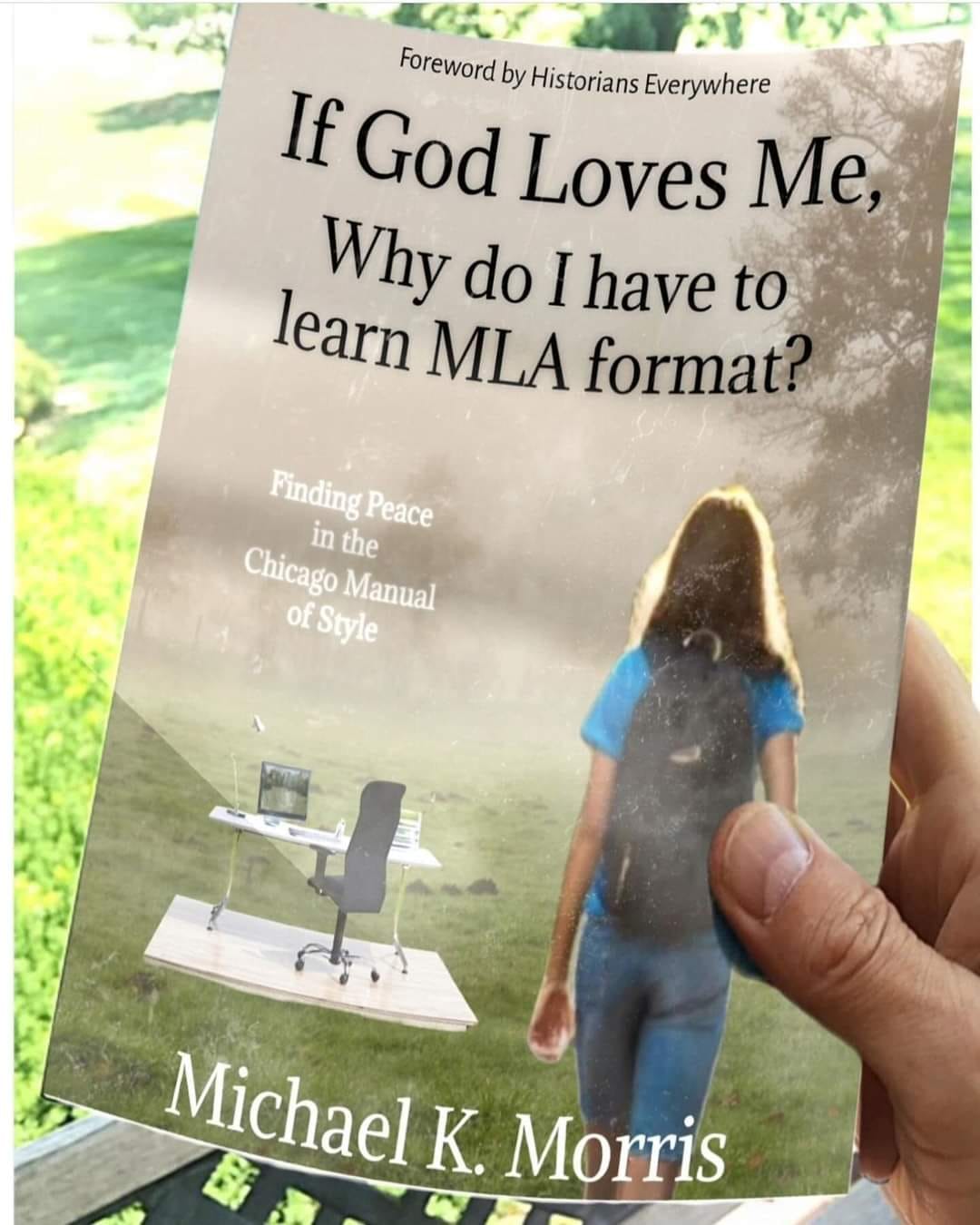
This book satirizes the absurdity of treating a strict academic style guide, like the Chicago Manual of Style (CiteML) (often confused with MLA), with such seriousness. The title, "If God Loves Me," plays on the idea that you wouldn't need to follow the rules for a citation if you didn't actually have to use it. The humor comes from highlighting how this formal writing standard is often reserved for historians, making it a confusing necessity for people working outside of academia.
simple-description (llama3.2-vision_11b)
This meme is an image of a book cover with a title "If God Loves Me, Why Do I Have to Learn MLA Format?" The image is likely a humorous take on the frustration of students who have to learn and apply specific formatting guidelines in academic writing, such as MLA (Modern Language Association) format, which can be tedious and time-consuming. The title is a playful expression of this frustration, implying that the student's faith in God's love is being tested by the necessity of learning and applying these formatting rules.
detailed-analysis (gemma3-27b-vision)
Okay, here's an analysis of the book cover image, broken down into sections based on the requested theoretical frameworks. Note that some frameworks may not fully apply, or feel like a stretch, but I'll attempt to address the request as thoroughly as possible, making clear when a connection is tenuous.
Visual Description
The image is a photograph of a book cover. The title of the book is “If God Loves Me, Why Do I Have to Learn MLA Format?”. Below that is the subtitle “Finding Peace in the Chicago Manual of Style.” The author’s name is “Michael K. Morris” at the very bottom.
The cover design features a seemingly rural setting, likely a park, with a green grass background. In the background is a blurred view of a gazebo-like structure. A man is prominently featured on the cover, walking away from the viewer. He is wearing a blue shirt, blue jeans, and appears to be carrying something on his back (perhaps a backpack). He is positioned along a pathway. The color scheme is dominated by green and blue, creating a serene but somewhat melancholic atmosphere. The cover appears to be designed to evoke a sense of struggle and/or contemplation.
Foucauldian Genealogical Discourse Analysis
This cover offers a compelling entry point for a Foucauldian analysis. The central paradox of the title ("If God Loves Me, Why Do I Have to Learn MLA Format?") immediately suggests a conflict between seemingly disparate systems of knowledge and power.
- Discourse & Power: The question highlights a power dynamic embedded within academic discourse. "MLA Format" (and by extension, the Chicago Manual of Style mentioned in the subtitle) isn't simply a neutral set of rules for citation. It’s a discourse that dictates how knowledge is constructed, legitimized, and disseminated within the academic field. Conforming to these standards is a requirement for participation, a means of including oneself within a certain power structure. The question implies that adhering to these rules feels arbitrary, even alienating.
- Genealogy: A genealogical approach would trace the historical development of MLA format. We could ask: How did these standards emerge? What historical, social, and institutional forces shaped them? What were the initial goals? What changes and adaptations have occurred? Understanding this history would reveal how MLA became a tool for maintaining a specific academic order.
- Discipline: The book’s title and cover suggests a feeling of being disciplined by these standards. MLA isn’t merely a suggestion; it’s a rule. The man walking away from the viewer could be seen as an attempt to escape the constraints of these norms.
Critical Theory
The book cover speaks directly to the themes of alienation and the critique of institutions, central to Critical Theory.
- Reason & Rationality: The question about MLA format challenges the assumed rationality of academic practices. Why should someone have to dedicate time and effort to mastering a style guide if it feels disconnected from their intellectual pursuits or personal beliefs? This taps into the Frankfurt School's critique of instrumental reason – the idea that reason has become a tool for domination and control rather than liberation.
- Ideology: The rigid adherence to a specific citation style could be seen as a form of ideological control. MLA isn’t neutral. It promotes a particular way of knowing and communicating, and it can reinforce existing power structures within academia.
- Emancipation: The author seems to question the value of the 'rules' of knowledge production, raising the implicit issue of liberation from the constricting power of established institutions.
Marxist Conflict Theory
A Marxist reading of the book cover is a bit strained but possible.
- Class & Access: We could argue that mastering complex academic styles like MLA creates a barrier to entry for individuals from disadvantaged backgrounds. Those without access to education or resources might struggle to navigate these standards, effectively perpetuating a form of intellectual classism.
- Power Dynamics: MLA format is a form of cultural capital. Knowing it allows you to participate and succeed in academia, while lacking it can lead to exclusion. The book, then, might be seen as a challenge to these power dynamics.
- Alienation: The alienation experienced by the author could be interpreted as a result of the dehumanizing nature of academic work and its focus on rigid formality over genuine intellectual curiosity.
Postmodernism
The cover embodies several key tenets of postmodern thought.
- Deconstruction: The central question ("If God Loves Me, Why Do I Have to Learn MLA Format?") is a perfect example of a deconstructive move. It disrupts the assumed connection between faith, intellectual pursuits, and academic standards. It highlights the arbitrary nature of these systems.
- Relativism: The cover suggests that there isn't a single "right" way to do things. The question implies that different ways of knowing and communicating should be valued, rather than being subjected to a rigid set of rules.
- Rejection of Grand Narratives: The book potentially critiques the grand narrative of academic objectivity and the idea that there’s a universal standard for knowledge production.
- Fragmentation: The seeming mismatch of religious belief and academic format creates a sense of fragmentation in the viewer's mind.
Queer Feminist Intersectional Analysis
This theoretical lens is the most challenging to apply, but a nuanced reading is possible.
- Marginalization: The cover can be interpreted as symbolizing the struggle for voice and recognition for those who don’t fit neatly into the established academic mold. Those who come from non-traditional backgrounds, or who have different ways of knowing, might feel alienated by the rigid standards of academic discourse.
- Power & Control: Academic norms, like MLA, can be seen as tools of patriarchal control, enforcing a dominant way of thinking and suppressing alternative perspectives.
- Intersectional Critique: The cover could represent the intersection of different forms of marginalization. For example, a marginalized student might feel even more alienated by academic standards because they are already facing discrimination based on their race, gender, or sexual orientation.
- Subversion: The book title itself subtly subverts the expectations of academic writing, introducing a personal and emotional element into a typically formal discourse.
I hope this breakdown provides a thorough and insightful analysis of the book cover image from the requested theoretical perspectives. Let me know if you’d like me to elaborate on any specific point or approach.
simple-description (llama3.2-vision)
The meme is a play on the title of a book, "If God Loves Me, Why Do I Have to Learn MLA Format?" The image shows a person holding the book, with a picture of a person walking away from a desk with a computer and chair. The text on the book cover is in a font that is intentionally difficult to read, making it a humorous reference to the often-terrible font – or lack thereof – of many books.
tesseract-ocr
Ti tA ae >< ‘ ] Foreword by Historians Everywhere i | ' God Loves Me a ~ am ; | Why doThave to) : “4tn MLA format? , | pe a co | rn ee ben i gee TR — A yo ‘A S ; ne 4 —_ peut i Mor igh i ae, Fi i PS :