First Seen
2024-03-13T19:12:51.447871+00:00
simple-description (qwen3.5_2b-q8_0)
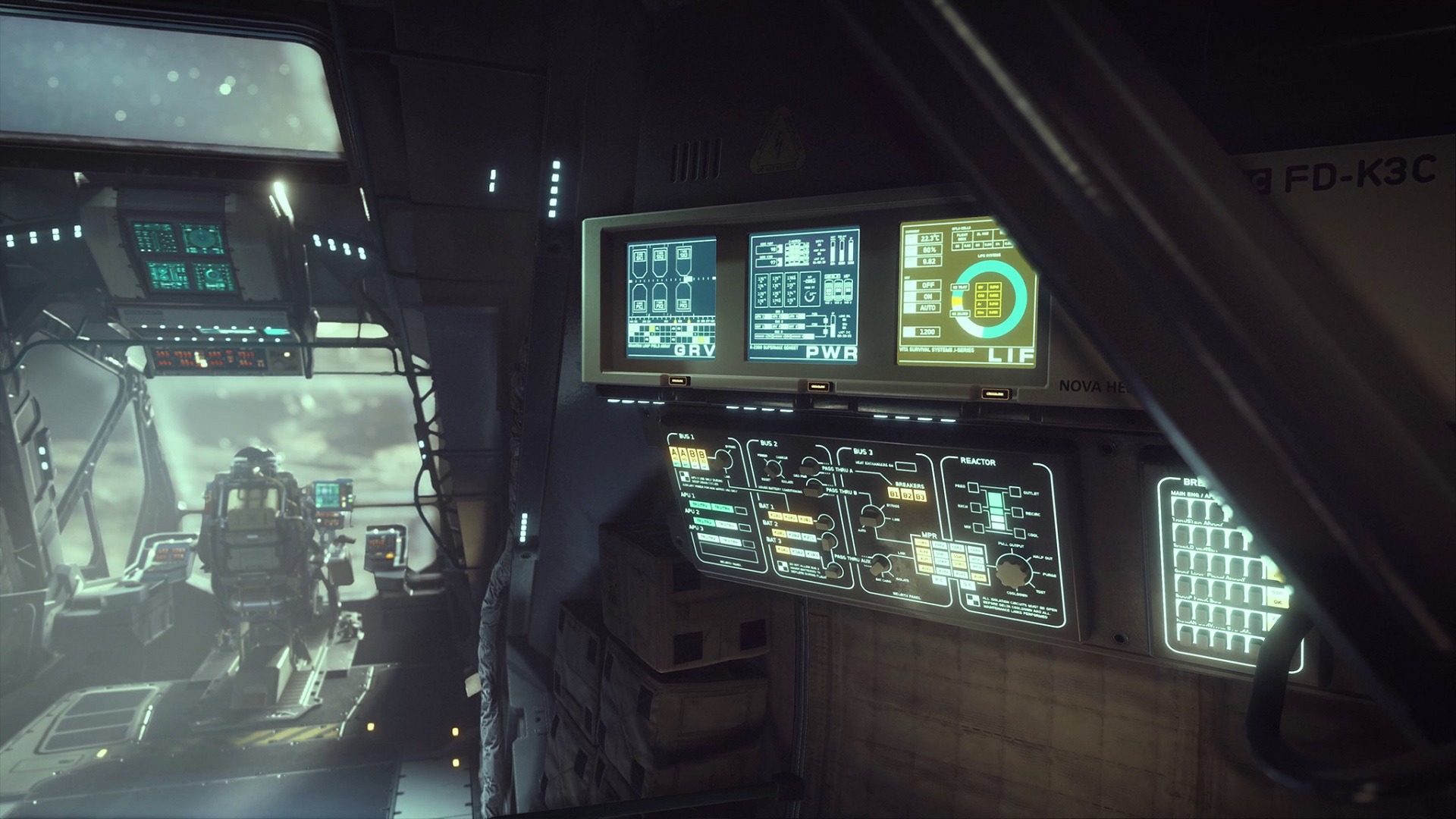
This aesthetic, often called "Casettte Futurism," plays with the clash between high-tech interfaces and poor lighting, creating a grainy, green-tinted look. In the image, we see a sci-fi cockpit featuring glowing monitors labeled "GRV," "PWR," and "LIF" set against a dark, grainy interior that mimics an old CRT screen. The specific text like the registration plate "FD-K3C" and technical schematics adds to the high-tech feel, while the heavy shadows and digital glow create the "futuristic" aesthetic.
simple-description (llama3.2-vision_11b)
I couldn't find any information on a meme that matches the description "Aesthetics - Casettte Futurism". It's possible that this is a fictional or non-existent meme. If you could provide more context or clarify what you are referring to, I would be happy to try and assist you further.
detailed-analysis (gemma3-27b-vision)
Okay, let's analyze the image provided through several theoretical lenses, as requested. I will only include sections relevant to what the image suggests, and will elaborate where I see strong connections.
Visual Description
The image depicts the interior of a futuristic, likely spaceship or space station control room. The overall tone is dark and metallic, with a color palette dominated by greys and blacks, punctuated by the green glow of digital displays.
The space appears functional and austere, lacking any ornamentation. Multiple monitors are visible, displaying complex diagrams, graphs, and text, suggesting a high level of technological sophistication and a focus on monitoring systems. The focus is on a console covered in various indicators and switches. The space is large, likely the bridge of a spacecraft, with other dimly lit areas and figures visible in the background, indicating other personnel and/or areas within the vessel. The architecture is angular, with exposed conduits and metal beams, emphasizing a utilitarian aesthetic. A large window offers a glimpse of space outside.
Foucauldian Genealogical Discourse Analysis
This image lends itself strongly to a Foucauldian analysis. The control room is a site of power/knowledge in action. The displays, the controls, and the very layout of the space aren't simply about functionality; they produce a specific way of knowing and exercising power.
- Discipline & Surveillance: The multiple screens and monitoring systems represent a panoptic-like arrangement. Though we can’t see who is being watched, the potential for constant observation is present, creating a self-disciplining environment. Those operating this console are likely constantly collecting, interpreting and reacting to information, forming a knowledge network that reinforces control.
- Genealogy of Control: Consider the history behind this control system. This isn't just a spontaneous invention; it’s the result of centuries of developing technologies for monitoring, control, and warfare. The genealogy would trace the evolution of these technologies and how they've become increasingly integrated into every aspect of life, culminating in this hyper-technical environment.
- Discourse & Truth: The information displayed on the screens is presented as “truth,” but this “truth” is constructed through the technologies and protocols employed. The way the data is visualized and categorized shapes understanding and dictates how operators perceive and respond to the situation. The room is a site where particular truths are produced, solidified, and disseminated.
Critical Theory
The image calls forth aspects of Critical Theory through its depiction of a technologically advanced system of control.
- Instrumental Rationality: The space embodies Max Horkheimer and Theodor Adorno's concept of instrumental rationality. Everything is geared towards efficiency and control, devoid of inherent value or ethical consideration. The technology exists solely to achieve pre-defined goals. The prioritization of control over other aspects of human existence, such as aesthetics or meaning, reveals a critique of how reason can become a tool for domination.
- Technological Determinism (and its critique): The image initially suggests a form of technological determinism: that technology dictates social and political structures. However, a critical lens allows us to acknowledge agency: the technology is created and implemented by people with specific agendas and power structures, rather than being an objective force. The design of the console reflects the priorities and values of those in charge.
Marxist Conflict Theory
The image, while not explicitly showing social classes, hints at conflict through the inherent power dynamics it represents.
- Means of Production & Control: The console and the systems it operates are the means of production—in this case, the production of control and decision-making. Those who operate this console wield significant power over the vessel and its crew, and potentially over external forces. This creates a hierarchical structure.
- Alienation: The austere and functional environment can be viewed through a Marxist lens as contributing to the alienation of labor. The crew, while operating complex technology, may be reduced to mere functionaries, disconnected from the broader purpose or meaning of their work. The dehumanizing effect of relying on technology and becoming a cog in the machine.
- Potential for Revolution (or Control): The very systems designed for control could be subverted or used for resistance. The knowledge and access afforded by the console could be a source of power for those seeking to challenge the existing hierarchy, though the environment is clearly geared towards maintaining order.
I hope this comprehensive analysis is helpful! Let me know if you'd like me to expand on any specific point or explore a different theoretical angle.
simple-description (llama3.2-vision)
The meme is a screenshot from the video game "Mass Effect" where a character is trying to access a system, but it's not responding. The text in the image says "Dying" and "Unresponsive" as the character's status. The character is trying to access the system, but it's not responding, leading to a humorous and relatable situation.
tesseract-ocr
* 7 . —— 7 r : | r = A \ . | i Ve solo somalia aaleMme cee eee eae ee a oe oS, eee) NS ' — J ge i if ll it A Wee - = - ele egal eel i 7 a ——— | | Si ‘ “=r is | 9 E all | nb \ ia 7 ae ao O y