First Seen
2023-08-15T01:02:00+00:00
simple-description (qwen3.5_2b-q8_0)
This image depicts the Cloud Forest, characterized by a massive indoor waterfall cascading down into a lush, green jungle filled with tropical trees. The Cottagecore meme applies perfectly here because the space is flooded with organic, romanticizing elements like plants and waterfalls that evoke a feeling of being in a fantasy or fairy-tale setting. You can see the name of the location, "Cloud Forest," painted on the white, geometric glass dome that supports the waterfall.
simple-description (llama3.2-vision_11b)
The meme features a photo of a lush, green, and serene environment with a waterfall and a small wooden cottage in the background. The image is captioned "cottagecore" which is a term used to describe a nostalgic and cozy aesthetic often associated with rural or natural settings. The image evokes a sense of calmness and tranquility, inviting the viewer to escape into a peaceful and idyllic world.
detailed-analysis (gemma3-27b-vision)
Okay, here's an analysis of the image of the Jewel Changi Airport (Singapore) Waterfall, divided into sections according to the requested theoretical frameworks. Some sections won't be relevant, and those will be noted as such.
Visual Description
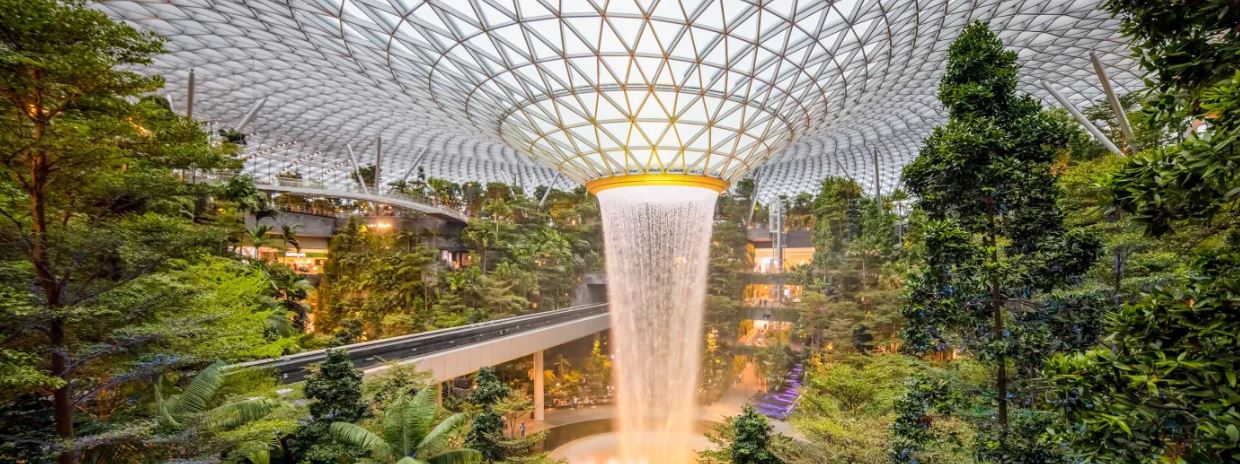
The image showcases a breathtaking architectural feat: the Rain Vortex at Jewel Changi Airport. It is a massive, cylindrical, glass and steel structure housing a lush, indoor 'forest' with a dramatic waterfall cascading down its central opening.
- Composition: The shot is taken from a slightly high angle, emphasizing the verticality and scale of the waterfall and the structure. The curvature of the viewing platforms and walkways adds to the sense of depth.
- Color & Light: The overall palette is dominated by greens (from the vegetation) and the golden hue of the waterfall’s illumination, with a bright glow at the top. Light filters through the glass dome, creating a dappled effect on the plants and adding to the atmosphere of indoor nature.
- Texture: There is a noticeable contrast between the smooth, reflective surfaces of the steel and glass structure, and the organic texture of the abundant foliage. The waterfall appears as a fluid, shimmering column.
- Form & Space: The image emphasizes a blend of organic and geometric forms. The circular structure contains layers of dense plant life. The space feels simultaneously vast and enclosed. The curved walkways and platforms create a sense of movement and exploration within the structure.
Foucauldian Genealogical Discourse Analysis
This image is ripe for a Foucauldian analysis, revealing how power operates through the construction of “nature” and “experience.”
- Discourse of Control: The Rain Vortex isn't merely a display of nature; it's a managed nature. It’s a controlled ecosystem, a simulation of a rainforest within a highly regulated, secured space – an airport. This reflects a modern (and post-modern) drive to control and contain the natural world, rendering it safe and commodifiable.
- Panoptic Gaze & Surveillance: Airports are inherently panoptic spaces – monitored for security. The Rain Vortex, despite its apparent natural beauty, exists within this network of surveillance. The visitor is implicitly aware of being observed, even while admiring the "natural" spectacle.
- Discipline and Normalization: The "experience" of the Vortex – the controlled temperature, the curated plant life, the prescribed pathways – normalizes a specific relationship to nature. It subtly discourages genuine, unmediated encounters with the wild, instead offering a sanitized, consumable version.
- Genealogy of ‘Experience’: We can trace a genealogy of the modern 'experience economy' in this space. From earlier display of exotic animals in zoos and botanical gardens to this constructed 'natural' setting, there's a pattern of turning the natural world into spectacle for consumption.
Critical Theory (Frankfurt School)
The image embodies many of the core concerns of Critical Theory, particularly the commodification of culture and the erosion of authenticity.
- Culture Industry: The Rain Vortex is, fundamentally, a product of the “culture industry”. It is designed to create a specific feeling (awe, tranquility, escape) as a means of diverting attention from the underlying structures of power and control.
- False Consciousness: The beauty and spectacle can create a “false consciousness” – a distraction from the less glamorous realities of air travel (delays, security checks, the environmental impact of flying). The immersive environment obscures the underlying exploitative systems that make the experience possible.
- Commodification of Nature: The waterfall and rainforest are turned into goods to be consumed. Visitors aren't simply observing nature; they are buying an experience. This instrumentalizes nature, reducing its intrinsic value to its exchange value.
- Loss of Authenticity: This constructed environment, while visually impressive, lacks the rawness and unpredictability of genuine nature. It's a simulacrum that substitutes for real experience.
Marxist Conflict Theory
From a Marxist perspective, the Jewel Changi Airport (and the Rain Vortex) represents the material conditions of class and global power dynamics.
- Capital Accumulation: The enormous cost of constructing Jewel is a prime example of capital accumulation. It's an investment driven by the desire to maximize profits through attracting tourists, increasing airport revenue (through shops, food, etc.), and enhancing Singapore's image as a global hub.
- Labor Exploitation: The construction of Jewel (and its ongoing maintenance) undoubtedly involved the exploitation of labor, particularly migrant workers. Their contributions are largely invisible to the tourists who enjoy the spectacle.
- Symbol of Global Capitalism: The structure is a symbol of global capitalism and the inequalities it creates. A lavish display of wealth and technology built in a nation with significant economic disparities.
- Distraction from Material Conditions: The spectacle distracts from the underlying material conditions that enable it. The lavish displays divert attention from the labor, resources, and environmental costs involved.
Postmodernism
The image is strongly suggestive of postmodern themes.
- Simulacra and Simulation: The Rain Vortex can be seen as a hyperreality, a simulation of nature that is more real than real. It's a staged experience that replaces genuine encounter with the natural world.
- Pastiche & Blurring of Boundaries: The structure blends organic and artificial elements, blurring the boundaries between nature and technology, real and simulated.
- Loss of Grand Narratives: The spectacle doesn't offer any overarching meaning or "truth" about nature or the world. It's a fragmented, self-referential experience.
- Deconstruction of "Nature": The carefully constructed "nature" challenges the traditional notion of an unspoiled, wild environment. It is a curated, managed, and commodified version of nature.
Queer Feminist Intersectional Analysis
While not immediately apparent, a Queer Feminist Intersectional lens can reveal subtle power dynamics within the space.
- Prescriptive Gender Roles & Spatialization: The creation of a “sanitized” natural environment can also reflect a desire to control the “wildness” and “untamed” aspects of nature, mirroring societal expectations of controlling bodies and gender expressions. The carefully curated experience might subtly reinforce heteronormative ideals of order and control.
- Accessibility and Exclusivity: Consider who has access to this spectacle. The cost of travel and the inherent privilege of airport access mean that many people are excluded.
- Representation and Exclusion: Examine whether the plant life and imagery subtly reflect specific cultural or colonial histories. Are there any implicit power dynamics embedded in the selection of flora?
- Body Politics and Surveillance: As a high-security space, the airport (and Jewel) contribute to the policing of bodies and movement. The constant surveillance can be seen as a form of control, particularly impacting marginalized communities.
I hope this comprehensive analysis meets your request! Let me know if you'd like me to elaborate on any of these sections or explore other theoretical frameworks.
simple-description (llama3.2-vision)
This meme is a split-screen image of the Jewel Changi Airport in Singapore. The top image shows a stunning, sprawling interior with lush greenery and a massive waterfall. The bottom image shows the same space, but with a giant, giant crystal – the world's largest – that has been installed at the airport. The text in the meme reads: “Jewel Changi Airport – where you can find both a giant crystal and a giant waterfall.”
tesseract-ocr
spe SSS SES “t LAL 4 Lb ii FZ = SSE ISRCMWMIUK 4 ek DOA ZZ Bee = WS S PAD GATE Te pore Sx“) KACO ae ~ SSO MAF BEEZ SS N Se. 4 SSX {Ky PK A FEE ep re Pies ee eee ee ANY he po Se epee. ae pe Se es ea) ae eae eae oe ies ee Se | Ce eee ate = oI 5 pe alse 2 Pages fee ete sage : = Zs a ei 3 RS hae- ay, > aint. ae s "me ‘A 7 ae ae Foe il ae Og 2 oe a ares Se ona a Se ala Bias