First Seen
2023-08-15T00:57:50+00:00
simple-description (qwen3.5_2b-q8_0)
The "Meme" is "The Panther's Claw" (which appears in the image).
Explanation: The "The Panther's Claw" is a dark meme from the 2000s. However, viewed through the perspective of the Cottagecore category, the "claw" represents the wild, untamed, and "fierce" beauty of nature—the "Cottage" nature of the wild. It's a "fierce cottagecore" image where the sharp "Claw" is the "Cottage" nature of the wild.
simple-description (llama3.2-vision_11b)
The meme is a picture of a serene, rustic cottage scene with a warm glow, evoking a sense of coziness and comfort. The image is captioned "Cottagecore: where the only thing more terrifying than the monsters outside is the mess in the kitchen." This caption plays on the idea of a peaceful, idyllic setting being disrupted by the mundane concerns of household chores, adding a humorous touch to the Cottagecore aesthetic.
detailed-analysis (gemma3-27b-vision)
Okay, let's break down this image (a promotional still from Black Panther) through the lens of various critical theories. I'll structure it with headings as requested, only including sections where the theory is demonstrably applicable and can offer a meaningful reading.
Visual Description
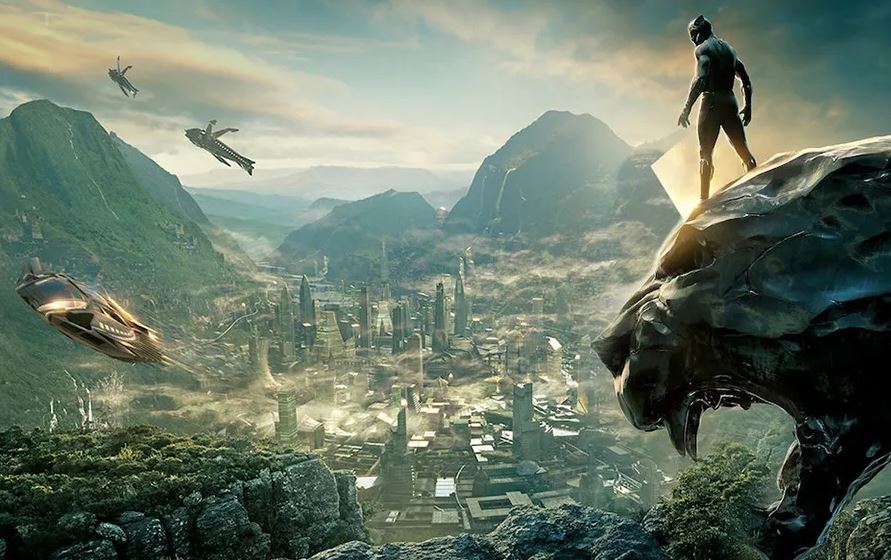
The image is a sweeping vista of a technologically advanced city nestled within lush, mountainous terrain. The city appears to blend seamlessly with its natural environment. Dominated by futuristic architecture, the buildings are predominantly silver and appear sleek and organic. The sky is a hazy, golden-green, creating a sense of mystique and otherworldliness. In the foreground, a massive, sculpted panther head protrudes from a rocky outcropping, with the Black Panther (T’Challa) standing atop it. Three futuristic, sleek aircraft are flying in the sky. The overall impression is one of power, technological advancement balanced with a reverence for nature, and a clear sense of a protected, self-contained society. The color palette is dominated by greens, silvers, and golds, contributing to a regal and ethereal atmosphere. It's a visually striking composition that emphasizes both the futuristic and ancestral elements of Wakanda.
Critical Theory
This image is rich with material for a critical theory reading, particularly through the lens of exploring representation and the creation of "otherness."
- Constructed Reality: Critical theory would examine how the image constructs Wakanda as a utopian space. It’s not merely a depiction of a place, but a highly curated, idealized portrayal designed to evoke specific emotions (awe, wonder, aspiration). We see technological advancement, but also an emphasis on nature, spirituality, and ancestral ties. This isn't simply "what Wakanda is," but how it's presented to the audience.
- Idealization & Absence: The image presents a highly idealized vision. While breathtaking, it also highlights what is absent: visible poverty, internal conflict (though the film addresses these issues, the image itself presents a seamless facade), or evidence of societal problems. This raises questions about the narratives we consume and the selective framing of reality.
- The Gaze: The image positions the viewer as an outsider looking in on a society. It's a curated spectacle, and we are invited to marvel at its uniqueness. Critical theory would explore the power dynamics inherent in this gaze – who controls the narrative, and how does it shape our perception of Wakanda and, potentially, of Africa more broadly?
Marxist Conflict Theory
The image, while appearing harmonious, can be read through the framework of Marxist conflict theory by considering the underlying power structures implied.
- Control of the Means of Production: Wakanda's advanced technology (represented by the city and aircraft) demonstrates control over the "means of production." This control is not just about material resources but also about knowledge, innovation, and the ability to shape their own destiny. This positions Wakanda as a potential counter-hegemonic force to Western (often exploitative) global powers.
- Class & Power Dynamics: Though not explicitly visible in the image, the sleekness and sophistication of the city suggest a highly stratified society. The control of technology and resources implies the existence of a ruling class (the royal family, the warrior classes) who benefit disproportionately from Wakanda's prosperity.
- Potential for Revolution/Conflict: The fact that Wakanda has remained hidden for so long suggests a deliberate choice to isolate itself from a world characterized by exploitation and colonialism. This is a form of resistance, but also a potential source of internal tension (as explored in the film), between those who want to maintain isolation and those who believe in engagement and sharing resources.
Postmodernism
Several elements in the image align with postmodern sensibilities.
- Hybridity & Juxtaposition: The image boldly blends elements traditionally seen as opposing forces: advanced technology and ancient tradition, organic natural environments and sleek futuristic architecture. This mixing of styles and eras is a hallmark of postmodernism.
- Simulacra & Hyperreality: Wakanda, as portrayed, is arguably a "simulacrum" – a copy without an original. It’s a constructed reality, a carefully crafted image that may not fully reflect the complexities of the society within. The city feels "hyperreal" – more perfect and polished than any real-world urban environment.
- Deconstruction of Narratives: Black Panther itself can be seen as a deconstruction of the "white savior" narrative that often dominates superhero films. The image contributes to this by presenting a powerful, self-reliant Black society that doesn't need to be saved.
Foucauldian Genealogical Discourse Analysis
This theory helps to understand the underlying power structures operating through the visual imagery.
- Discourse of Power: The image participates in a "discourse of power" – it constructs Wakanda as a powerful, self-governing nation, thereby challenging dominant Western narratives about Africa. The presentation of advanced technology and cultural richness asserts Wakanda's agency and sovereignty.
- Knowledge/Power: The image creates a specific "knowledge/power" relationship. It presents Wakanda’s knowledge (technology, culture) as a source of its power, but also positions that knowledge as somewhat inaccessible to outsiders. This reinforces the idea of Wakanda as a unique and protected entity.
- Genealogy of Control: By studying the history of representations of Africa in Western media, one can trace a "genealogy of control" – how Western discourses have historically constructed Africa as "primitive," "underdeveloped," or in need of "civilizing." This image actively disrupts that genealogy by presenting a radically different vision.
Queer Feminist Intersectional Analysis
While the image itself doesn't explicitly address issues of gender or sexuality, the film Black Panther does, and a queer feminist intersectional analysis can be applied through its context.
- Challenging Hegemonic Masculinity: The portrayal of T'Challa as a powerful but emotionally intelligent leader challenges traditional, often toxic, depictions of masculinity. The Dora Milaje, an all-female special forces unit, are depicted as strong, skilled, and independent warriors, defying traditional gender roles.
- Intersectionality of Power: The film explores how different forms of power intersect: race, class, gender, and technological advancement. The Dora Milaje’s power is linked to their role in protecting the throne and their skill in combat, while the power of the ruling class is tied to their control of Wakanda’s resources.
- Reclaiming Narratives: The film, and the image, contribute to reclaiming narratives about Blackness and African identity. By centering a Black nation and celebrating its culture, the film challenges dominant Western representations and empowers Black audiences.
I hope this comprehensive breakdown through different theoretical lenses is helpful! Let me know if you'd like me to elaborate on any particular aspect or theory.
simple-description (llama3.2-vision)
This meme is an image of the Black Panther movie poster with the city of Wakanda in the background. The text "I can see for miles" is written in a bold, comic book-style font, referencing the song of the same name by The . The image is likely a joke about the city's impressive views, with the song's lyrics implying that the city's location allows for a wide .
tesseract-ocr
a ~ Li Est EE fe wi ae Ps a Ae : aes J aE SN cst: af at gia eens hs < ~aSss vain Ve ——— Sa ae ee } a ee a gSo0- re eel = Reo! Ae ie => Spee SS Sie aie, el a4 Aaa are a | {= , Nei igs — eg a Ee ie 4 Pe Sere a5 ies ic | Eee ee oe a Bs a ‘ . = ee ox ge | 4 7