First Seen
2023-11-17T05:30:48+00:00
simple-description (qwen3.5_2b-q8_0)
The "Cottagecore" meme celebrates a specific aesthetic that favors idyllic, nature-filled imagery over technology and industrialization. In the image, this is perfectly represented by the fantasy city where buildings are heavily overgrown with vines and moss, creating a rustic, romanticized blend of old-world gears and wild greenery. While the scene feels almost like nature itself reclaimed the city, there is a small number visible on the side of the large orange dome structure that reads "153".
simple-description (llama3.2-vision_11b)
The meme features a whimsical illustration of a fantastical cottage, complete with a wonky roof, a crooked chimney, and a garden overflowing with vibrant flowers. The image is captioned "when you're trying to adult but your cottagecore aesthetic is still a 10-year-old's fantasy novel". The meme pokes fun at the romanticization of a simple, rustic lifestyle, implying that even the most idyllic of cottages can't escape the imperfections of adulthood.
detailed-analysis (gemma3-27b-vision)
Okay, let's break down this image with the requested critical lenses. It's a fascinating scene, and several of these approaches are quite fitting.
Visual Description
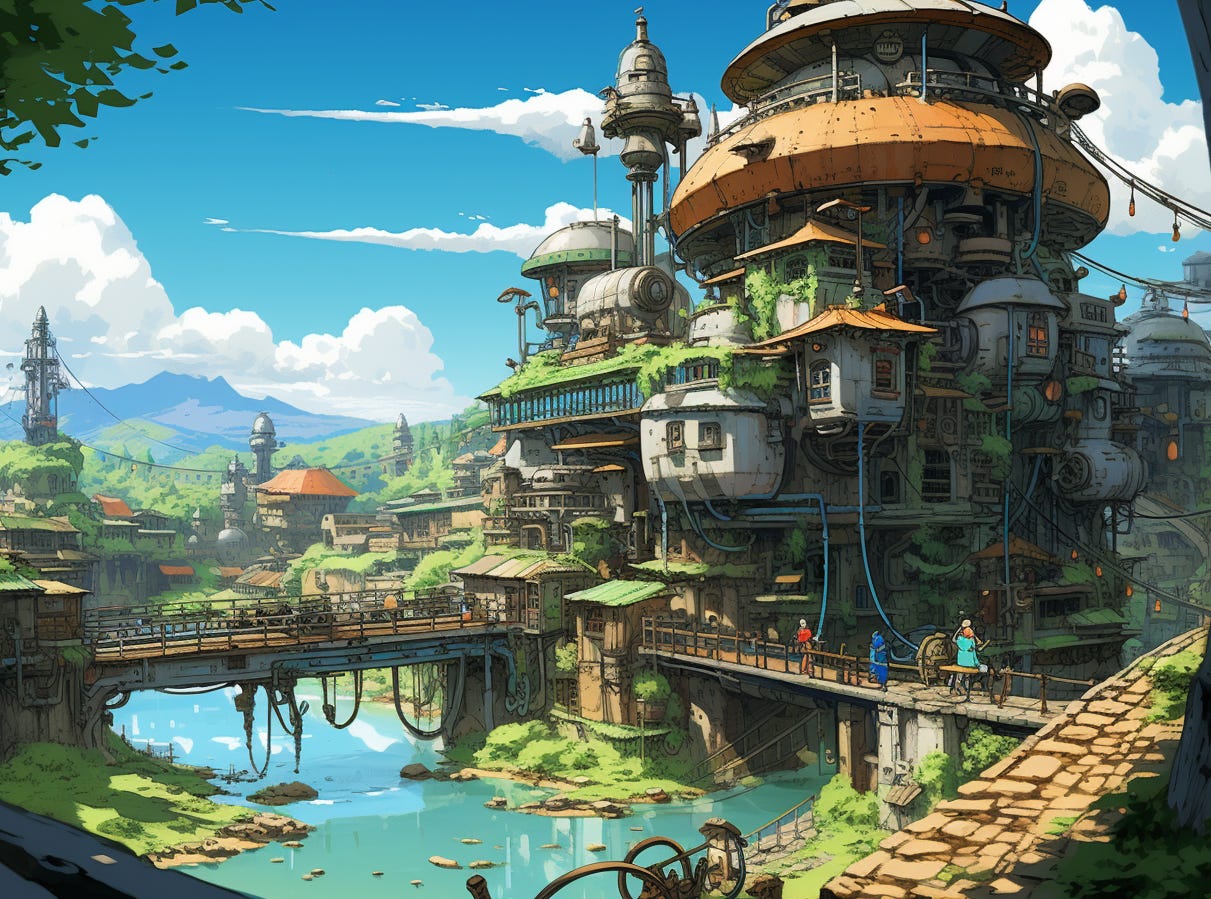
The image depicts a fantastical, sprawling city built alongside and partially over a bright turquoise river. The architecture is a unique blend of organic and industrial elements. Dominating the scene is a large, rusty, cylindrical structure covered in pipes, gears, and windows. This main structure appears to be a central hub, with smaller buildings and platforms branching out from it, connected by bridges and walkways. The structures are haphazardly layered, appearing built up over time, in a kind of chaotic but visually compelling way. Vegetation—vines, moss, and trees—is integrated into the architecture, softening the hard edges of the machinery. The color palette is a mix of warm, rusty tones (iron, copper), cool blues and greens (river, foliage) and the bright blue sky. There are visible human figures on some platforms, giving a sense of scale and suggesting the city is inhabited. The overall aesthetic evokes a steampunk/dieselpunk style with hints of ecological integration. The image has a painterly quality, suggesting it might be digital art emulating traditional media.
Foucauldian Genealogical Discourse Analysis
This city presents a rich site for a Foucauldian genealogical examination. The layering and patchwork nature of the construction suggest a history of practices and discourses forming the built environment.
- Power/Knowledge: The architecture itself embodies power/knowledge relations. The central cylindrical structure could be interpreted as a panoptic device, controlling visibility and enforcing norms. The labyrinthine arrangement of platforms and walkways suggests systems of surveillance and control, even if unintentional.
- Archaeology of Knowledge: Tracing the evolution of the city would reveal shifting discourses about technology, nature, and urban planning. The fusion of organic and mechanical elements implies a re-negotiation of the traditional separation between the "natural" and the "artificial."
- Disciplinary Power: The arrangement of the city seems to facilitate, but not necessarily enforce, certain behaviours. The network of bridges and walkways creates a complex circulation system, suggesting a subtle but pervasive form of discipline. The limited presence of open space and the density of the structures might suggest social control.
- Genealogy: A genealogical exploration would investigate the historical forces that led to this unique urban form. What particular technologies, philosophical ideas, and social anxieties shaped this city? How does this built environment reflect the changing power relations of its inhabitants?
Critical Theory (Frankfurt School - Adorno/Horkheimer)
From a critical theory perspective, this city can be seen as an example of the dialectic of enlightenment. While representing technological progress and ingenuity, the city also carries the marks of instrumental reason and domination of nature.
- Commodification: The integration of nature (vegetation) into the mechanical structures could be seen as a form of commodification, where even the natural world is reduced to a resource for human exploitation.
- Loss of Aura: The chaotic, haphazard arrangement of the city may reflect a loss of tradition and aesthetic value. The constant striving for technological innovation has led to a fragmented and unstable environment.
- Instrumental Reason: The city prioritizes function over form, suggesting a dominance of instrumental reason. The emphasis on technological efficiency has overshadowed any consideration of beauty, spirituality, or human well-being.
- Culture Industry: The image can be read as a spectacle, a product of the “culture industry” that offers a simulated experience of authenticity and community.
Marxist Conflict Theory
Viewing the city through a Marxist lens reveals potential class conflict and exploitation.
- Means of Production: The intricate machinery and infrastructure represent the "means of production" in this society. Control over these resources likely rests with a ruling class, who benefit from the labor of the inhabitants.
- Class Stratification: The arrangement of the city suggests a hierarchy of social classes. Those who live higher up in the structures likely have more access to resources and power, while those who live closer to the river may be subjected to harsher conditions.
- Alienation: The repetitive, monotonous nature of the machinery may lead to alienation among the workers. The lack of connection to nature and the emphasis on industrial production can further exacerbate this sense of estrangement.
- Ideology: The city itself may serve as an ideological apparatus, reinforcing the power relations of the ruling class. The emphasis on technological progress and efficiency can legitimize the existing social order.
Postmodernism
The city is highly suggestive of postmodern aesthetics.
- Pastiche & Hyperreality: The blend of architectural styles (organic, industrial, steampunk) creates a sense of pastiche, mixing and matching elements from different historical periods. The simulated nature of the environment (it's a fantastical city) can be seen as a form of hyperreality.
- Fragmentation & Deconstruction: The chaotic arrangement of the city suggests a rejection of grand narratives and totalizing systems. The deconstruction of traditional architectural forms reflects a postmodern emphasis on ambiguity and instability.
- Loss of Authenticity: The simulated nature of the city raises questions about authenticity and originality. The blurring of boundaries between nature and technology challenges traditional notions of the “real.”
- Irony and Playfulness: The whimsical, fantastical nature of the city suggests a sense of irony and playfulness. It rejects the seriousness and monumentality of modernist architecture.
I've tried to provide a thorough analysis within the scope of the requested critical lenses. It's worth remembering that these lenses aren't mutually exclusive, and often overlap and complement each other. Let me know if you'd like me to elaborate on any specific point.
simple-description (llama3.2-vision)
The meme is a picture of a futuristic, high-tech cityscape with towering buildings and advanced technology. The text "I can see for miles and miles and miles" is written in a playful, childlike font at the top of the image, referencing the classic song "I Can See for Miles" by The Who. The image is a humorous take on the song's lyrics, exaggerating the idea of being able to see for miles and miles and miles.
tesseract-ocr
= eat No ca : =e a 8 A. hg lM = 2 2 4 aH Qy 2 eee = t ae ae a Nay i = ’ t ‘ gaat TS the maeagt = ae fr , = ae ea Sar. aaa Ei et a ee Oo ee whee : eee pes ere R yg TJ) 7 — a (a A cy ; \y we ae ‘ea te a / — b ae rae oles a é a : a ci. ae 5 c Pe VL eae ee SE ee ae a = if : ae cr oe 4 : a“ See ae Se ~~ - -. @ ge gel ee han ia