First Seen
2024-05-20T03:04:11.281951+00:00
simple-description (qwen3.5_2b-q8_0)
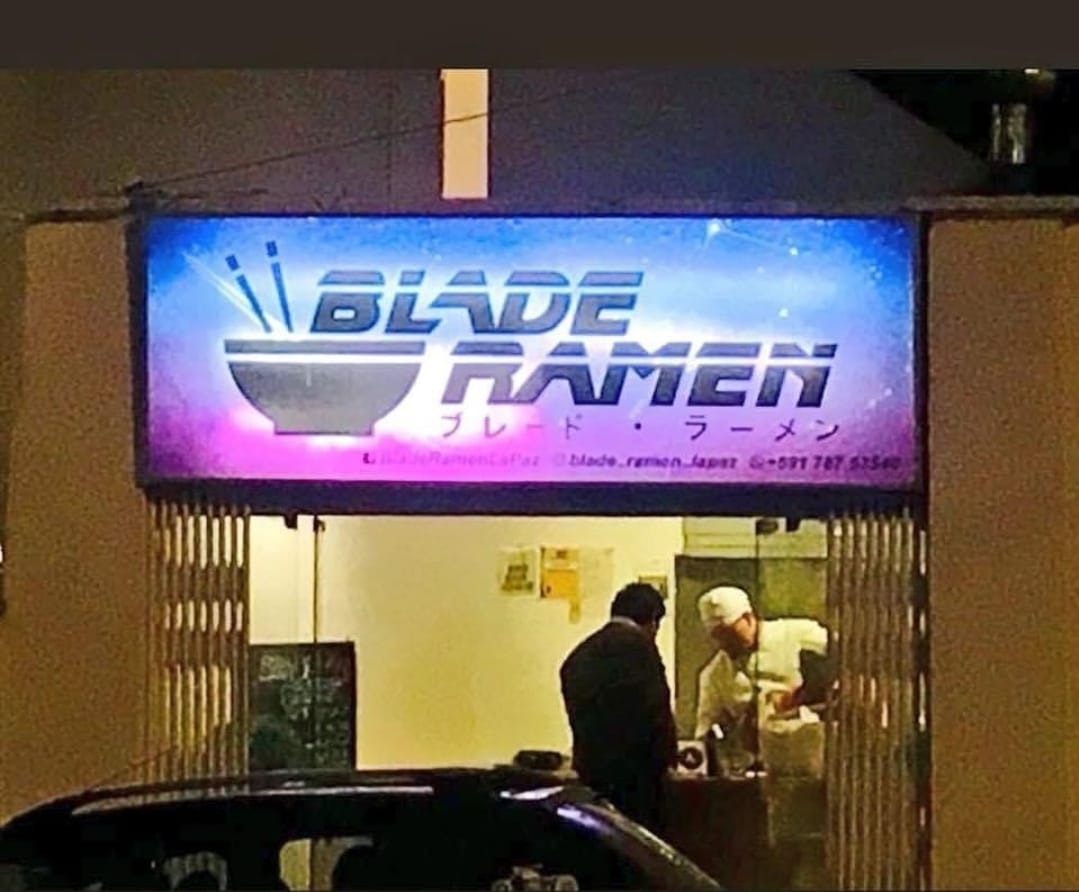
This meme applies a heavy 'cyberpunk' aesthetic to a traditional ramen shop by using metallic, blocky typography and a neon-blue glow. This transforms the humble bowl of ramen into something sharp and futuristic, turning a comfortable meal into a weapon. The text 'BLADE RAMEN' displayed above the entrance reinforces this sci-fi, weaponized theme.
simple-description (llama3.2-vision_11b)
This meme is from the category of Cyberpunk aesthetics, specifically referencing the 1982 sci-fi movie Blade Runner. The image is a photo of a restaurant called "Blade Runner: Bar" with a neon sign that reads "Blade Runner: Bar" in a futuristic, cyberpunk-inspired font. The text "I can show you the menu" is written in a similar font, implying a futuristic and high-tech atmosphere, which is a play on the classic line "I can show you the money" from the movie.
detailed-analysis (gemma3-27b-vision)
Okay, here’s a breakdown of the image through several theoretical lenses, structured as requested. I’ll only include sections relevant to the image and its apparent meaning.
Visual Description
The image depicts the storefront of a restaurant named "Blade Ramen." The sign is prominently lit and features the restaurant’s name in English and Japanese characters, styled with a futuristic, neon-lit aesthetic. The background of the sign is a purple/blue gradient that suggests space or a digital environment. Below the name are contact details. The storefront itself appears to be an older building with vertical corrugated metal shutters partially rolled down. A person, presumably a customer, stands with their back to the camera, entering or exiting the restaurant. A photograph inside the restaurant depicts two men in chef's attire. The scene is captured at night, casting a slightly grainy and dramatic light. A car’s fender is visible in the lower left corner, grounding the scene in a real-world, urban context.
Foucauldian Genealogical Discourse Analysis
The name “Blade Ramen” immediately evokes the 1982 film Blade Runner. This isn’t accidental. The restaurant constructs itself within a specific discourse, a network of power/knowledge relating to cyberpunk aesthetics, neo-noir films, and the futuristic imagining of a dystopian future.
- Discourse & Power: The restaurant isn’t just selling ramen; it’s selling an experience intertwined with this cultural discourse. The name itself functions as a signifier that carries all the baggage of the Blade Runner film – themes of artificiality, existential questioning, urban decay, and the blurring of lines between human and non-human. By associating itself with this film, the restaurant attempts to wield the power embedded in this cultural construct.
- Genealogy: Tracing the genealogy of "Blade Runner" reveals a history rooted in film noir, Japanese cinema (particularly Kurosawa), and philosophical anxieties about technology and humanity. The restaurant doesn't merely borrow the name; it participates in this historical chain, re-presenting and re-circulating these ideas in the form of a meal.
- Surveillance and Control: Blade Runner is deeply concerned with surveillance and control, specifically the identification and 'retirement' of replicants. Even subconsciously, the name suggests this dynamic, framing the act of consuming this ramen within a context of being "looked at" or assessed – a subtle echo of the film's themes.
Postmodernism
This image embodies several key tenets of postmodernism:
- Pastiche & Intertextuality: The restaurant directly references a well-known film. It's a clear act of intertextuality, relying on the pre-existing meaning of Blade Runner to create a new experience. It’s not simply inspired by the film; it actively incorporates it.
- Hyperreality & Simulation: The restaurant simulates an atmosphere, an experience that is more about the idea of a dystopian future than the reality of it. It's a constructed environment designed to evoke a feeling, not necessarily a genuine connection to the source material.
- Loss of Grand Narratives: While Blade Runner presents a grand narrative about humanity and technology, the restaurant’s appropriation of it is fragmented and localized. The experience of eating ramen doesn't require engaging with the film's philosophical complexities. It's a deconstruction of the original narrative into a consumable, individual experience.
- Blurring of Boundaries: The juxtaposition of Japanese cuisine (ramen) and a Western science fiction film blurs cultural and genre boundaries. This is characteristic of postmodernism's rejection of rigid categorization.
Critical Theory
From a critical theory perspective, the restaurant presents interesting points to consider.
- Commodification of Culture: The restaurant commodifies a cultural reference, packaging the aesthetic and thematic elements of Blade Runner for consumption. This is part of a larger trend of turning cultural products into marketable commodities, potentially diminishing their original meaning and critical power.
- Ideology & Fantasy: The restaurant offers a specific fantasy – a romanticized, aestheticized version of a dystopian future. This fantasy can function ideologically, potentially masking or obscuring the real-world issues that Blade Runner originally critiqued (e.g., corporate power, environmental degradation).
- Alienation and Spectacle: In a society characterized by alienation, the restaurant offers a temporary escape into a constructed "reality." This spectacle – the atmospheric setting, the neon lights, the evocative name – distracts from the underlying conditions of social and economic inequality.
I did not find a strong enough basis for applying Marxist Conflict Theory or Queer Feminist Intersectional Analysis given the content of the image. While those frameworks are valuable, they don't seem to be directly and significantly illuminated by the visual details presented in this photograph.
Hopefully, this breakdown, structured according to your requirements, provides a useful analysis of the image. Let me know if you’d like me to elaborate on any of these points!
simple-description (llama3.2-vision)
This meme is a screenshot of a restaurant called "Blade Ramen" with a sign that says "We don't care about your feelings." The image is likely a humorous take on the popular sci-fi movie "Blade Runner" and the phrase "blade" is a play on words with "ramen," a type of Japanese noodle soup. The sign's message is a satirical commentary on the restaurant's attitude towards its customers.
tesseract-ocr
ee 1) a) a iT HH) i: 6 ; |i] i a in =. ORE itis 7 P Pa ~ AE