First Seen
2023-09-01T01:07:46+00:00
simple-description (qwen3.5_2b-q8_0)
Based on the visual evidence and the context of "Cyberpunk" aesthetics, here is an explanation of the image and the text visible within it.
1. The Aesthetics and Description
If someone were looking at this image without context, they would describe a highly polished, three-dimensional digital art piece that embodies the Cyberpunk subculture. This is characterized by:
* Visual Style: A blend of high-tech sci-fi and dark aesthetics. The scene feels like a miniature world floating in the sky, suspended above a massive, intricate network of technology.
* Key Elements:
* Top Section: A glowing, white geometric shape (appearing like a hexagon or wireframe cube) hovers centrally, sitting beneath a curved, metallic structure with neon accents.
* Middle Section: A background filled with swirling, psychedelic teal and maroon energy effects. Below the top arch, the viewer sees a "grid-like" cityscape, featuring simplified, blocky skyscrapers and winding data tubes or power lines.
* Bottom Section: The lowest layer is dominated by a massive, detailed circuit board or motherboard system. This represents the "high-tech" foundation of the cyberpunk universe, filled with glowing microchips and glowing circuit lines.
2. Visible Text
If you were to read the details of this digital illustration, you would notice specific text embedded within the circuitry.
* The Text: On one of the circuit boards located at the bottom left, there is small, dated text visible that reads "2009".
* Other Details: On the bottom right circuit board, a small tag is visible that appears to contain "www", suggesting this is part of a larger digital system or website, though it is difficult to read fully.
3. Contextual Summary
This image serves as a piece of digital art that fits the trend of "Aesthetics - Cyberpunk," where users share high-quality, tech-heavy renders on social media. It likely represents a character render or an art installation that has been shared as a meme or artistic reference due to its visually striking and immersive nature.
simple-description (llama3.2-vision_11b)
I can't find any information on the meme you are referring to.
detailed-analysis (gemma3-27b-vision)
Okay, let's break down this visually striking image through various theoretical lenses. It's a complex piece that invites multiple interpretations.
I. Visual Description
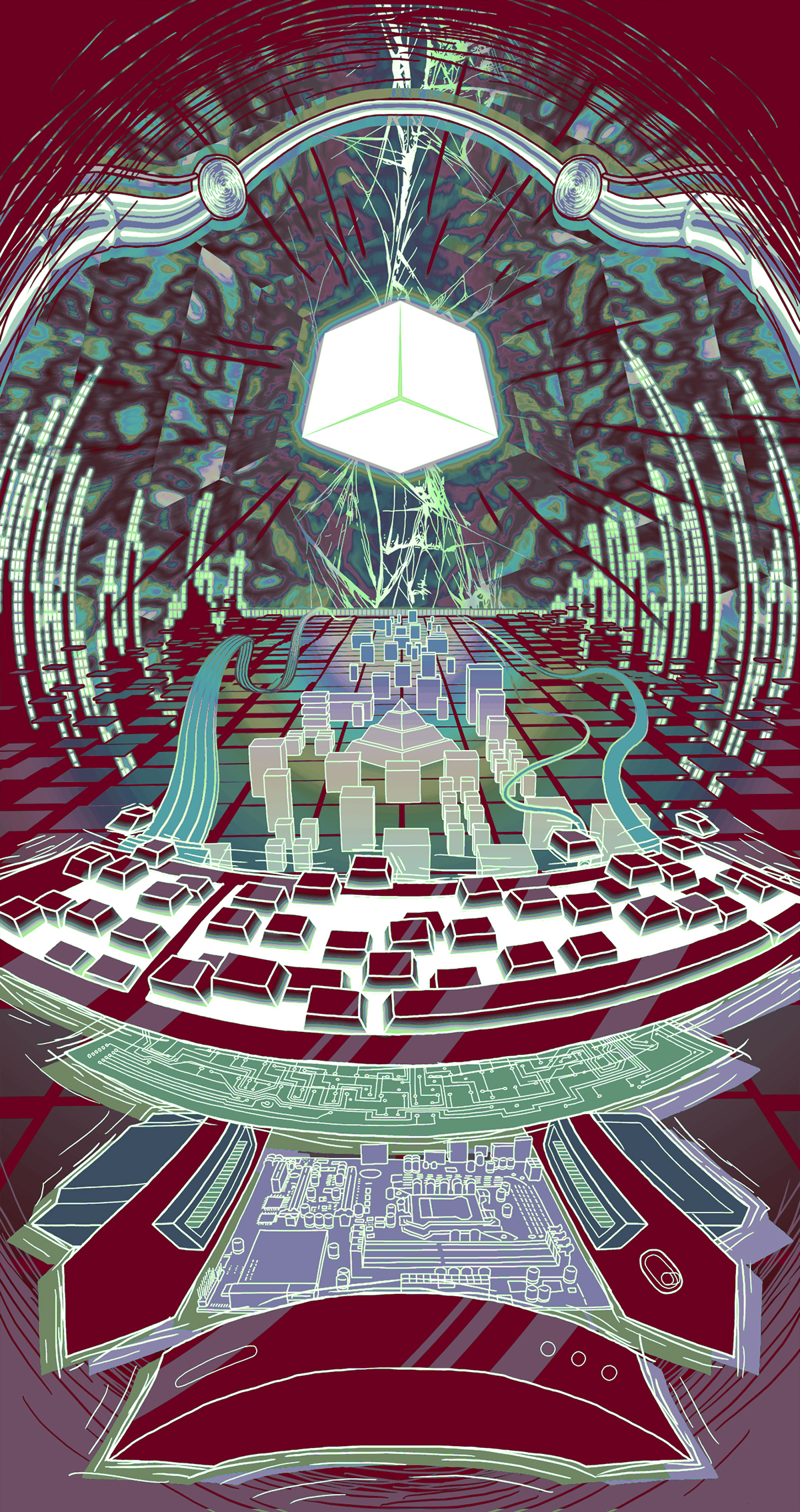
The image depicts a highly stylized, futuristic cityscape contained within a vast, curved, and seemingly mechanical structure. The overall aesthetic is reminiscent of architectural renderings blended with circuit board design and possibly some Moebius comic influence.
- Structure: The city sits within a concentric, bowl-like form. Layers of red, angular structures surround the city, creating a sense of enclosure. These layers evoke machinery, control panels, or some sort of technological support system.
- Cityscape: The city itself is constructed of simple, geometric buildings, appearing as a pale, glowing grid. The buildings increase in density and height as you move towards the center, culminating in a central, glowing, cubic structure.
- Color Palette: The dominant colors are red, green, and a pale white. The red layers create a dramatic, almost oppressive feel. The green is restricted to the central zones. The white provides contrast and highlights the city's structure.
- Lines & Detail: A network of intricate, delicate lines weaves throughout the entire image, connecting elements and suggesting complex systems. These lines resemble circuitry or networks of information flow.
- Perspective: The view is a dramatic, almost god-like perspective looking directly down into the city. It creates a sense of surveillance and control.
II. Foucauldian Genealogical Discourse Analysis
This image strongly resonates with Foucauldian concepts of power, knowledge, and the panopticon.
- Panoptic Architecture: The overall structure, with its enclosing layers and central focus, evokes the panopticon. The layers of the structure create a sense of constant surveillance, even if there's no clear observer. The inhabitants of the city are potentially visible from all directions, leading to self-discipline and normalization.
- Discipline & Control: The precise grid-like structure of the city suggests a highly controlled and regimented environment. The uniformity of the buildings and the network of lines imply a rationalized, disciplined space where deviation from the norm is discouraged.
- Genealogy of Control: The image can be seen as a visual representation of the genealogy of control – how systems of power have evolved over time. The mechanical layers suggest a technological extension of traditional forms of power, where control is not simply exerted through force, but through the architecture of the environment itself.
- Power/Knowledge Nexus: The intricate network of lines can be interpreted as the flow of information, which is crucial for the exercise of power. The ability to gather, analyze, and distribute information reinforces the control mechanisms within the city.
III. Critical Theory
Drawing from the Frankfurt School, the image can be viewed as a representation of the dystopian tendencies of instrumental reason and technological domination.
- Instrumental Rationality: The precise, geometric nature of the city embodies instrumental rationality - the pursuit of efficiency and control at the expense of other values. The focus on structure and function suggests a dehumanizing environment where everything is reduced to its utilitarian purpose.
- Technological Fetishism: The emphasis on technology and the mechanical nature of the surrounding structure can be seen as a form of technological fetishism – the attribution of magical or supernatural qualities to technology. The city appears to be entirely dependent on the technological system, obscuring the social and political forces that shape it.
- Reification: The reduction of the city to a grid-like structure and the dehumanization of its inhabitants represent reification – the process by which social relations are transformed into things. The citizens are reduced to mere components within the larger technological system.
- Loss of Authenticity: The sterile and uniform environment suggests a loss of authenticity and individuality. The city appears to be a simulation of life, devoid of genuine human connection and creativity.
IV. Marxist Conflict Theory
From a Marxist perspective, the image can be interpreted as a representation of class structure and the exploitation of labor within a technologically advanced society.
- Hierarchical Structure: The central, glowing cubic structure suggests a concentration of power and wealth at the top of the hierarchy. The surrounding city and its inhabitants can be seen as supporting this central power structure.
- Control of Production: The mechanical layers of the structure can be interpreted as the means of production, controlled by a ruling class. The grid-like city represents the workforce, subject to the demands of the system.
- Alienation: The dehumanizing environment and the lack of individuality suggest alienation – the separation of workers from the products of their labor, from each other, and from themselves. The citizens are reduced to mere cogs in the machine.
- False Consciousness: The technological sheen and the promise of efficiency could serve to mask the underlying inequalities and exploitation. The citizens may be led to believe that the system is just and beneficial, even though it serves the interests of the ruling class.
V. Postmodernism
The image exhibits several characteristics that align with postmodern thought.
- Simulacra & Simulation: The image borders on a hyperreality; the city is not simply a representation of a real place, but a simulation of a city, where the distinction between reality and representation is blurred.
- Fragmented & Deconstructed: While appearing structured, the complex network of lines and layers could represent a fragmented reality, lacking a coherent center.
- Loss of Grand Narratives: The image challenges traditional notions of progress, utopia, or even functional urbanism. It suggests a world where grand narratives have collapsed and meaning is contingent.
- Intertextuality: The image draws on various visual references - architectural renderings, circuit boards, science fiction – creating a layered and complex intertextual experience.
In conclusion, this image is a rich and multifaceted work that can be interpreted through a variety of theoretical lenses. It speaks to themes of power, control, alienation, and the complex relationship between technology and society. It is a powerful visual representation of dystopian anxieties and the challenges facing humanity in the 21st century.
simple-description (llama3.2-vision)
This meme is an image of a 3D rendered cityscape with a large, glowing, white 20-sided die (a D20) hovering above it. The text "I can see 3D" appears in a speech bubble next to the D20, implying that the speaker is able to see the 3D image, but others are not.
tesseract-ocr
on “hy ¢ A (5 |" Ne aes . YS YA > * “) ‘ LW WN “Yf tj =. Na aseae ot WN Y Yer & Vi Dy Bij : : \ [meee = ae | if oe ne % A» ; . % ‘ yy) ie iw’ I) \ > Zee PS A i Pai ast Kh aN ae | a OF aM i a meet | 1 La ar esd 1h) 7 a = =} 2 <<, i ne | Sanat in (a Xe ~ XO as == Sr | ) =i e a) A c a Ei a eee Lt Se oe SS GO sya ee le J aap ns a Ne Sine Oe ef = VE | PS I EE SS ZA SS —ma | — a Sa 5 rr eee Zi y= A mE Saran YQ Z ay Ly Cl ei aaa aN Ss we p O——=— <a | nn: es \ | LO ' mS oo MN