First Seen
2024-02-12T06:39:35.017129+00:00
simple-description (qwen3.5_2b-q8_0)
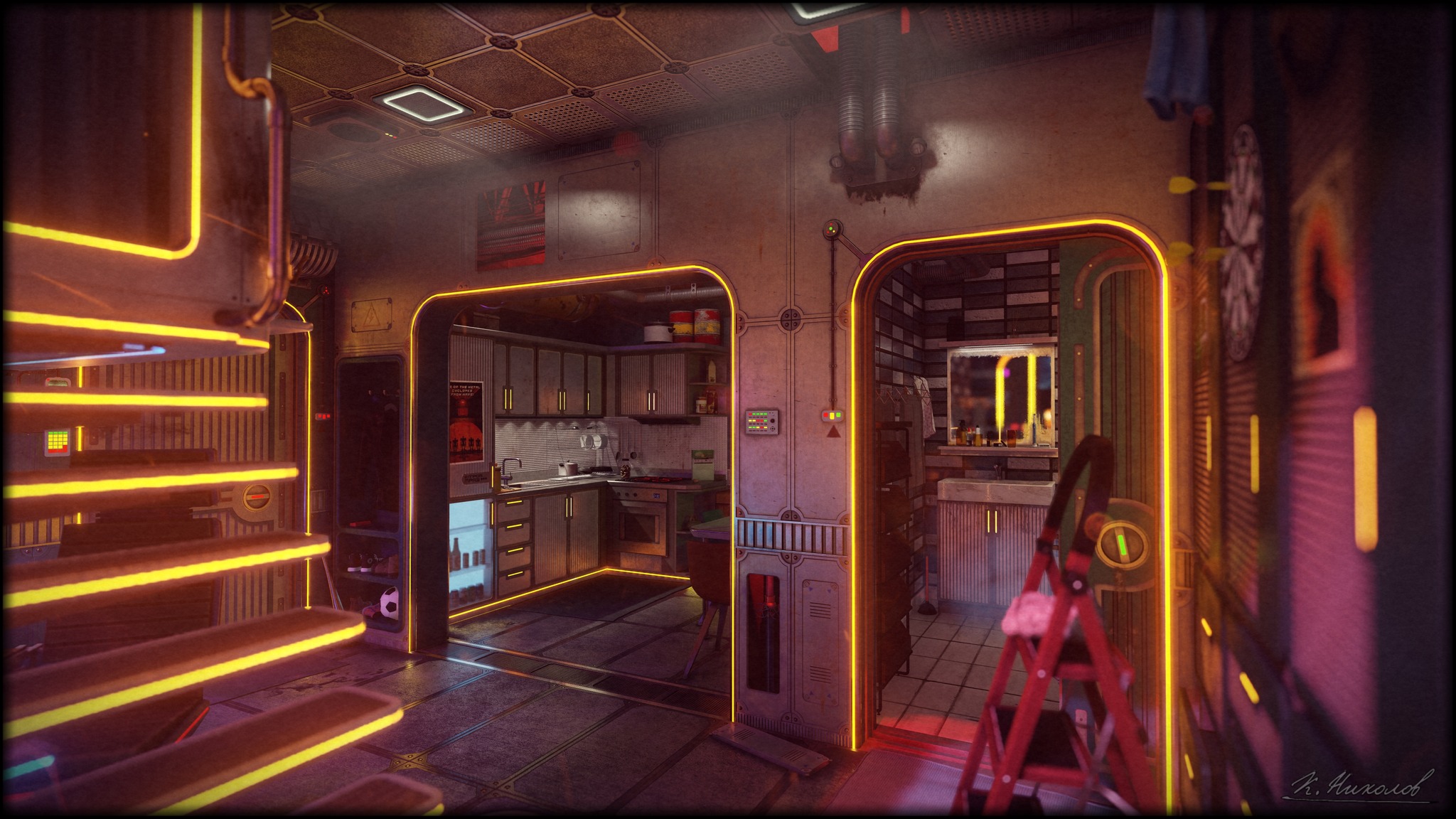
The image you provided is a piece of Cyberpunk artwork that pays homage to one of the most famous internet memes known as the "Cooling Fan".
Here is an explanation of how this fits into the Cyberpunk aesthetic, covering the specific details visible in the image:
1. The Core Meme: "Cooling Fan"
The "Cooling Fan" meme originated as a simple line on a computer fan that indicated a high-speed, overheating unit. Over time, it evolved into a popular internet joke and art style where specific lines on an image (usually in green or blue) represented the "cooling" capacity. In this Cyberpunk version, the "cooling" lines are replaced by yellow neon lights.
2. The Cyberpunk Aesthetic
In this image, the concept of "cooling" (and the meme's visual cues) is reimagined in a gritty, futuristic city:
* The "Staircase" Effect: On the left side of the image, you can see a set of stairs or ramps cut through the scene. Instead of being flat, they are defined by diagonal yellow neon lines. This mimics the "Cooling Fan" meme's angle but replaces the green fan with a cyberpunk industrial setting.
* Neon Lighting: The background and structures are bathed in orange and yellow lights. In a Cyberpunk context, this represents heat, power, and energy—exactly what a cooling fan would do, just rendered as neon lights.
* Industrial Texture: The walls and floor are made of metal, pipes, and machinery, typical of the cyberpunk city of Night City.
3. Specific Details in the Scene
* The Stepladder: In the foreground on the right, there is a red stepladder. This is a common trope in the Cyberpunk aesthetic, symbolizing the manual labor and gritty atmosphere of the world.
* The Layout: Through the door on the right, you can see a bathroom area with vanity and toiletries. Through a different door, there is a kitchen area with cabinets and shelves holding cans. This suggests a utilitarian, functional interior common in futuristic settings.
* The Signature: At the bottom right, there is the signature "K. Nikholov". He is the creator of the meme, but in this specific image, he is using his name to sign off on a Cyberpunk render.
Summary
The image is a creative re-imagining of the Cooling Fan meme. It takes the original internet joke and filters it through the Cyberpunk lens, showing the "cooling fan" lines (now neon) on a stepladder in a futuristic, neon-lit industrial setting.
simple-description (llama3.2-vision_11b)
The meme is a screenshot of a cyberpunk-themed game environment, specifically a dimly lit, neon-lit room with a futuristic aesthetic. The image is captioned "I just realized I've been playing a game that's been on my wishlist for 3 years and I still have no idea what it's about"
detailed-analysis (gemma3-27b-vision)
Okay, here's an analysis of the image, broken down into the requested sections, based on the visual elements. I'll indicate where a section doesn't heavily apply. Note that these are interpretations, and some overlap will inevitably occur.
Visual Description
The image depicts a highly stylized, futuristic, and slightly claustrophobic interior space – seemingly a galley or combined kitchen/living area of a spaceship or high-tech base. The dominant color palette is a strong orange/amber glow, with accents of deep navy/black, and some green.
- Spatial Arrangement: The space is narrow and divided into zones – a raised area with steps, a central galley area, and a further space with what appears to be equipment/storage. The strong lines and right angles emphasize a rigid, functional structure.
- Lighting: The lighting is a defining feature. It’s predominantly artificial, with neon-like orange lines outlining architectural features and illuminating the space. This creates dramatic shadows and highlights, and lends a retro-futuristic aesthetic reminiscent of cyberpunk or science fiction. There are also some small screens or light panels with various displays.
- Materials & Technology: The materials appear to be primarily metal, with a strong emphasis on hard surfaces. There are numerous panels, wires, and what appears to be technological equipment integrated into the architecture. The galley features standard appliances (sink, stove, cabinets) but they are integrated into the overall aesthetic.
- Overall Impression: The scene is clean, but not necessarily comfortable. It feels designed for function and efficiency, with a slightly sterile quality. The overall aesthetic is highly manufactured and artificial, suggesting a technologically advanced and perhaps controlled environment. There's a sense of containment and restriction, given the narrow dimensions and strong lines.
Foucauldian Genealogical Discourse Analysis
This image provides fertile ground for a Foucauldian analysis focusing on power, knowledge, and discourse.
- Panoptic Architecture: The long hallways and lines of sight suggest a structure that could facilitate surveillance. While not a literal panopticon, the visual layout implies potential for control and observation. The linear arrangement of spaces and potentially "transparent" panels encourage (or enforce) visibility.
- Discipline & Normalization: The strict geometry, repetitive patterns, and emphasis on function speak to a system of discipline. The space is designed to organize behavior and enforce norms. The kitchen-living area is clearly set up for a specific way of life.
- Knowledge/Power Nexus: The technology embedded in the space isn't just functional; it’s a manifestation of power. Those who understand and control the technology wield power over those who don't. The organization of the space itself creates knowledge by defining how the inhabitants are expected to move, work, and live.
- Genealogy of Control: Examining the evolution of this space (imagined, of course) might reveal how this specific configuration emerged from a history of increasingly sophisticated control mechanisms. The focus on automation and efficiency could be traced back to earlier attempts at managing populations and optimizing processes.
Critical Theory
Applying a broader Critical Theory lens, we can examine the image as a commentary on modernity, technology, and alienation.
- Instrumental Reason: The design of the space prioritizes function and efficiency above all else. This reflects the "instrumental reason" described by the Frankfurt School – a focus on means to an end that neglects broader human values.
- Dehumanization: The sterile, technologically saturated environment could be interpreted as contributing to a sense of alienation and dehumanization. The emphasis on control and efficiency might come at the expense of individual expression and autonomy.
- Reification: The space is an example of "reification" – the treatment of abstract concepts (like efficiency or control) as if they were concrete, tangible things. The design is not simply about providing a functional space; it embodies these abstract concepts, reinforcing their power.
- Loss of Authenticity: The highly manufactured nature of the environment suggests a loss of connection to natural or authentic experiences. The inhabitants are surrounded by artificiality, which could lead to a sense of disconnect from the real world.
Marxist Conflict Theory
While not overtly central, aspects of Marxist theory can be applied.
- Control of Means of Production: The technology integrated into the space represents the “means of production” – the tools and infrastructure used to sustain life. Who owns and controls this technology determines the power dynamics within this environment. It suggests a rigid hierarchy.
- Alienation from Labor: The highly automated environment could result in alienation from labor. If the inhabitants’ tasks are reduced to mere button-pushing or monitoring, they may feel disconnected from the fruits of their labor.
- Class Division: The level of technology implies a degree of stratification. Those who maintain and operate the machinery, and those who benefit from it likely represent different strata in the society.
Postmodernism
The image lends itself well to a postmodern interpretation.
- Simulacra and Simulation: The space feels less like a “real” living environment and more like a simulation of one. The aesthetic borrows from retro-futurism and science fiction, creating a pastiche of styles that doesn't necessarily relate to any lived reality.
- Fragmentation and Deconstruction: The linear design and compartmentalized spaces suggest a fragmentation of experience. The image deconstructs traditional notions of home and living space.
- Loss of Grand Narratives: The absence of any clear context or purpose suggests a rejection of grand narratives or overarching ideologies. The space exists as a self-contained system, without any connection to a larger historical or cultural context.
- Hyperreality: The strong artificiality of the scene creates a hyperreal environment where the distinction between reality and simulation has become blurred.
Queer Feminist Intersectional Analysis
This area is less directly applicable, but can still offer insightful readings:
- Spatial Control and Gender/Sexual Politics: The rigidity and containment of the space may speak to a control over movement and bodies. Historically, constrained spaces have been used to enforce gender roles and suppress non-normative sexual expressions. Examining how this space doesn't allow for fluidity or deviation can be informative.
- Domesticity and Labor: The galley/living area is a traditionally "domestic" space, often associated with female labor. The level of technology here might be read as an attempt to automate or devalue that labor, or perhaps to reconfigure gender roles.
- Intersectionality: The power dynamics within this space (who controls the technology, who benefits from the automation) might intersect with other forms of oppression (based on gender, sexuality, race, etc.). The image doesn’t directly depict these intersections, but it provides a framework for imagining them.
I hope this detailed analysis is helpful! Let me know if you’d like me to elaborate on any specific section or aspect of the image.
simple-description (llama3.2-vision)
The meme is an image of a futuristic, high-tech room with a large, curved screen displaying a video game-like interface. The text on the screen reads "Error 404: Not Found" in a futuristic font, implying that the user's request for a specific video game or game server has been rejected. The image is likely a humorous reference to the common "Error 404" message that appears when a user's request for a specific website or resource is not found.
tesseract-ocr
Js — at poem STETITI et | = & ’ fy | [i 3 TET QD) eink : ¢ Pd N Ss :