First Seen
2024-02-12T06:39:17.691871+00:00
simple-description (qwen3.5_2b-q8_0)
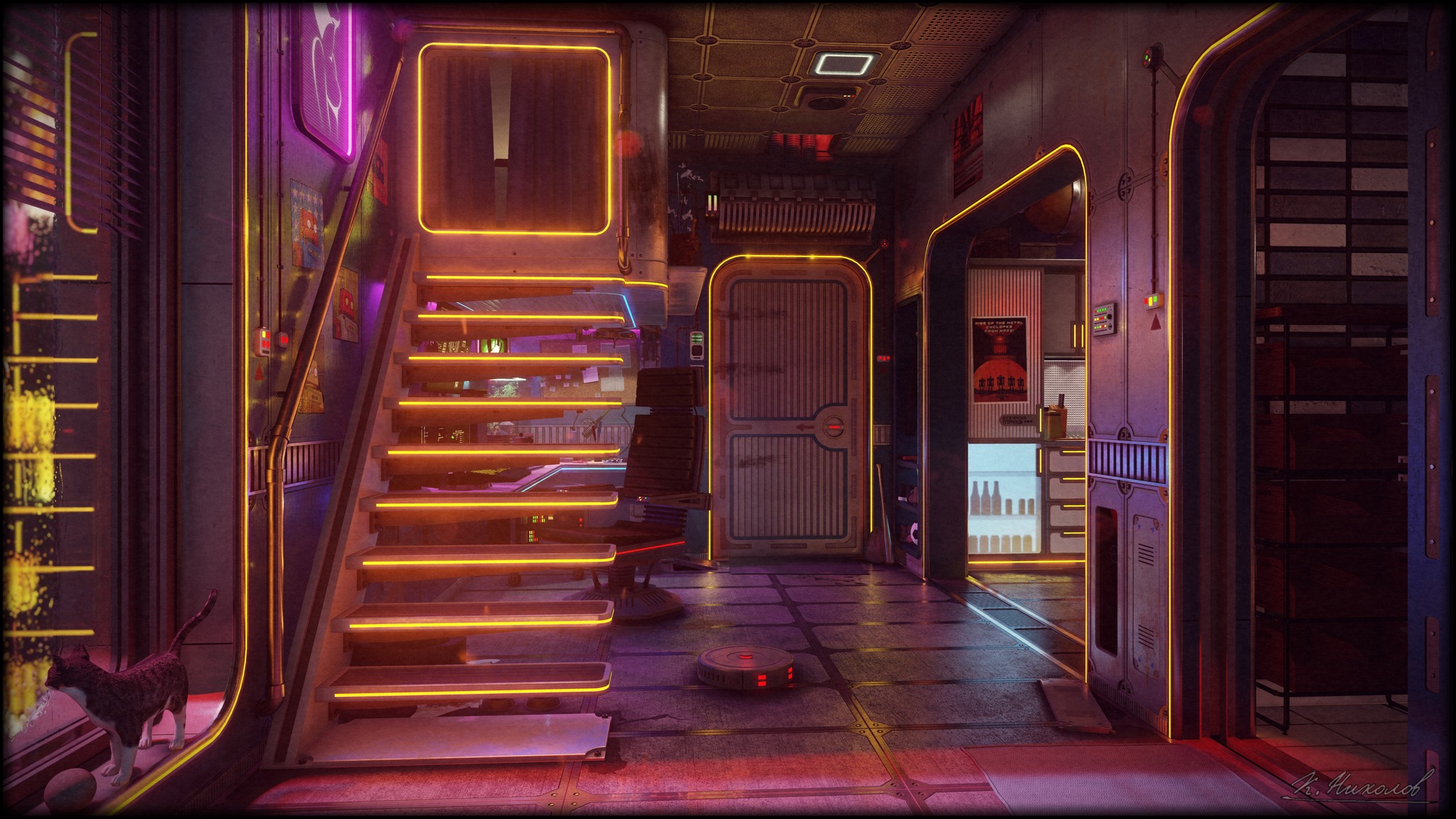
The "meme" in this context refers to the Cyberpunk aesthetic, a popular genre of digital art and video game design known for its neon-lit, futuristic, and often gritty environments. This style is used as a meme to visually communicate a sci-fi setting where high-tech machinery coexists with danger, characterized by glowing neon lines and metallic textures. It serves as a recognizable symbol in the gaming and art community for expressing a unique, retro-futuristic visual language.
simple-description (llama3.2-vision_11b)
The meme is a screenshot of a futuristic, high-tech environment with neon lights and a sleek, industrial aesthetic. The image is captioned "I can smell the desperation in the air" and features a lone figure in the foreground, surrounded by dark, ominous shadows. The text suggests a sense of foreboding and anxiety, implying that something is about to go terribly wrong.
detailed-analysis (gemma3-27b-vision)
Okay, here's an analysis of the image, broken down into the requested sections where applicable. I’ll indicate where sections don't apply, as some theoretical frameworks aren't particularly relevant to the imagery.
Visual Description
The image depicts a futuristic, dimly lit interior space—likely the interior of a space station or ship. It’s characterized by a prominent staircase with neon orange/yellow lighting illuminating the treads. The dominant aesthetic is a sort of neo-brutalism with exposed metallic structures, conduits, and cabling. The walls are a dark, muted grey, with metallic accents and rounded edges. The overall color palette is cool-toned, with the neon lighting providing stark contrast.
Key features include:
- Staircase: A central, winding staircase dominates the composition, ascending out of frame.
- Industrial/Technical: There's a clear emphasis on the technical—exposed infrastructure, recessed lighting, and metallic panels.
- Dim Lighting: The scene is cast in shadow, with the neon lights creating pools of illumination.
- Doorways/Compartments: The space is segmented by doorways and compartments, hinting at a larger, more complex structure.
- Cyberpunk/Sci-fi feel: the image possesses the stylistic elements of cyberpunk or sci-fi aesthetics.
Foucauldian Genealogical Discourse Analysis
This image lends itself well to a Foucauldian analysis, particularly focusing on power dynamics and surveillance.
- Panoptic Potential: The arrangement of the space, particularly the multiple doorways and the implied surveillance capability of the technology within, suggests a panoptic structure. While we don’t see cameras directly, the structure could facilitate constant monitoring of those navigating the staircase. It’s a space where individuals are potentially visible, and thus, subject to control.
- Discipline & Control: The functional, almost austere design reinforces the idea of a space organized for efficiency and control. The starkness of the environment minimizes distractions and enforces a sense of order.
- Genealogy of Spaces: One can imagine how this space evolved – beginning as a purely functional structure, then adapting to include surveillance and control elements as technology advanced. This space is a historical product of power relations and evolving technologies.
- Normalization: The very design of the space normalizes a particular way of moving through it. The staircase isn’t a leisurely stroll, but rather a directed path. This contributes to the disciplining of bodies.
Critical Theory
The image can be analyzed through the lens of critical theory, focusing on themes of alienation and the impact of technology on the human experience.
- Alienation: The sterile, industrial environment suggests a disconnect from the natural world and a sense of isolation. The lack of organic materials and the overwhelming presence of technology contribute to a feeling of detachment.
- Technological Determinism: The image implicitly raises questions about the role of technology in shaping human lives. The design prioritizes function over comfort, suggesting that humans are adapting to the needs of the machine rather than the other way around.
- The Spectacle: (Debord) While not a direct display, the space itself is a constructed environment designed to convey a specific message – a sense of technological advancement and order. It can be seen as a component of the broader spectacle, a manufactured reality that obscures genuine human connection.
Marxist Conflict Theory
While not overtly present, a Marxist reading can be applied, though it's somewhat indirect.
- Spatial Division of Labor: The different levels and compartments hinted at in the image suggest a hierarchical structure. This space could be part of a larger system where certain individuals have access to certain areas, while others are confined to others – reflecting class divisions.
- Means of Production: The technology visible within the space represents the “means of production.” Whoever controls this technology wields significant power over those who must navigate and utilize it.
- Alienation from Labor: The starkness of the environment suggests that work performed within it is likely dehumanizing and alienating. The space prioritizes efficiency over the well-being of those who labor within it.
Postmodernism
The image exhibits several characteristics associated with postmodernism.
- Blending of Styles: The combination of industrial, futuristic, and slightly decaying elements suggests a blurring of boundaries between different aesthetics and time periods.
- Simulacra & Simulation: The space feels constructed, almost artificial. It’s a simulation of a functional environment, potentially disconnected from any genuine purpose. It’s more about appearing advanced and technological than actually being fundamentally different.
- Deconstruction: The exposed infrastructure can be seen as a deconstruction of traditional architectural norms. It’s a deliberate rejection of polished surfaces and hidden mechanics.
- Loss of Grand Narrative: There's no clear narrative or overriding purpose implied by the space. It lacks the monumental quality of modernist architecture and instead emphasizes functionality and control.
Queer Feminist Intersectional Analysis
This is where the image is weakest, and the analysis would be stretching. However, a nuanced interpretation can be attempted.
- Spatial Control & Gender/Sexuality: Spaces like this, designed for control and surveillance, often disproportionately impact marginalized bodies. Historically, controlled spaces are often used to regulate and police gender expression and sexual identities.
- Invisibility & Marginalization: The dim lighting and confined spaces could symbolize the experiences of marginalized communities, who are often rendered invisible or confined within oppressive systems.
- Non-Normative Body & Space: The functionality and lack of comfort might implicitly critique normative architectural designs that prioritize certain body types and needs. This space isn’t designed to be welcoming to all bodies.
- Intersectionality: While the imagery isn’t direct, the idea is that the experience of navigating this space would be different for individuals based on their intersecting identities (race, gender, sexuality, class, etc.). A marginalized individual might feel more vulnerable or controlled within this environment than a privileged one.
Important Note: The Queer Feminist Intersectional analysis relies heavily on interpretation and isn’t as clearly demonstrable as the other theoretical frameworks. It requires layering meaning onto the visual elements based on broader socio-political concerns.
I hope this provides a thorough and insightful analysis of the image. Let me know if you’d like me to elaborate on any of these points.
simple-description (llama3.2-vision)
This meme is a screenshot of a video game scene, specifically a futuristic cityscape from the game "Cyberpunk 2070". The image shows a dimly lit, neon-lit street with a sign reading "Kowak" and a poster reading "Kowak: The Kowak Story". The text "Kowak" is written in a bold, neon-lit font, with a red "K" and a blue "K" in the top left and right corners, respectively.
tesseract-ocr
a ' SS E | bee Ue Vi fo : ~ a a ee td i ail ae 1 || Ps i Ee. | er aoe me a: |) ee ! = a — | 3 P ee | sy | = a = Al | : | | “ e | | « ULL | | Vig Me A 1) com eo, =e 1 LW aTTTAT ' A asc tr ee eu ‘ aa 7) ere pee : 2) 12 Pf =a j ee ae SE a _ - y ——| || | ' og if | aa — “ Z : a = _— = + | i