First Seen
2024-04-11T06:05:55.780024+00:00
simple-description (qwen3.5_2b-q8_0)
This image represents the classic "4 KILLER" meme, showing a hooded gamer sitting at a desk in a futuristic, neon-drenched setting. The rain-soaked cityscape and glitchy text on the monitors perfectly encapsulate the Cyberpunk aesthetic, creating a cool, dark atmosphere that contrasts with the frantic action of the game being played. The glowing screens display bright, colorful data, highlighting the intense, fast-paced gameplay that defined the '4 KILLER' culture within this digital world.
simple-description (llama3.2-vision_11b)
This meme is a still image from the 1995 movie "Johnny Mnemonic," depicting a hacker in a dimly lit, futuristic room surrounded by computer screens and wires. The image is captioned "I'm not a hacker, I'm a data liberation front" and is often used to humorously imply that someone is a skilled hacker or is involved in a high-stakes, underground activity. The image's aesthetic is quintessential cyberpunk, evoking a sense of gritty, high-tech futurism.
detailed-analysis (gemma3-27b-vision)
Okay, let's break down this pixel art image using the frameworks you've requested. It's a rich image that lends itself to several analyses.
1. Visual Description
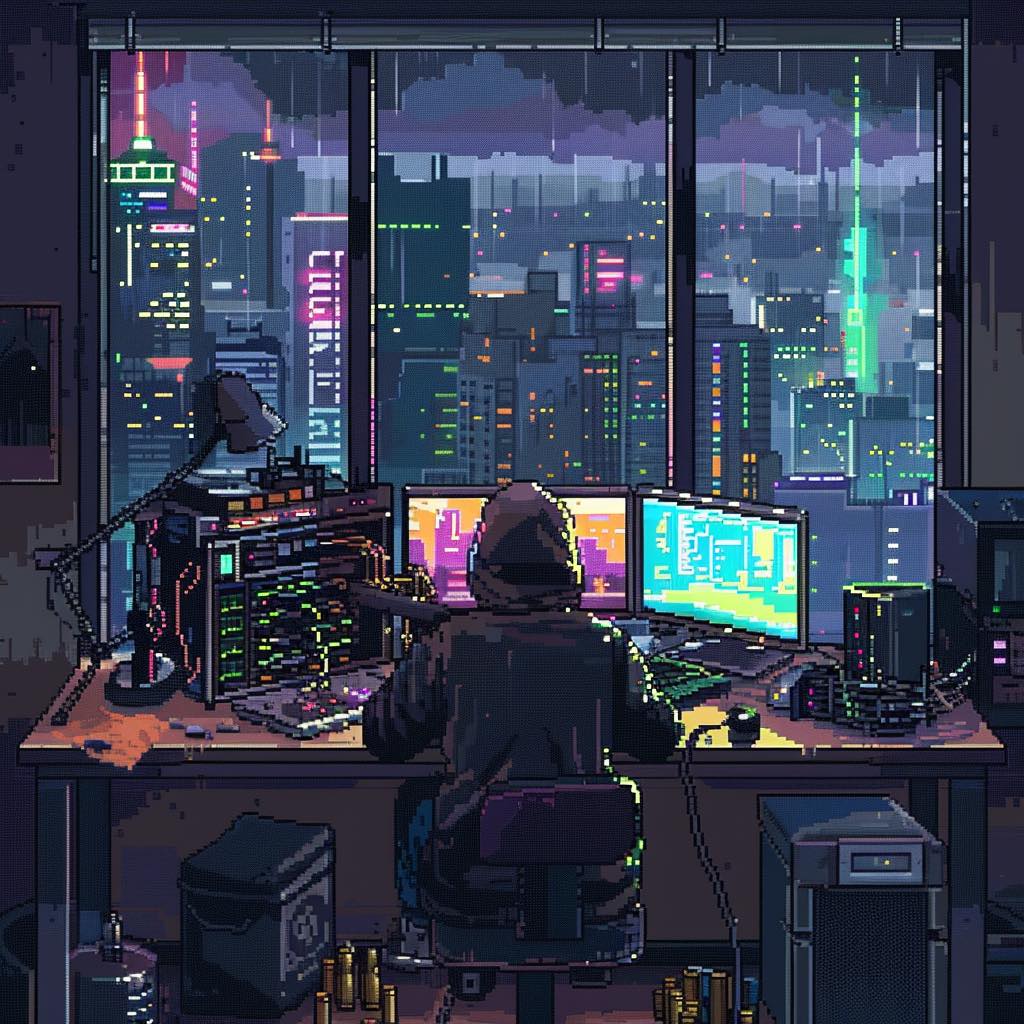
The image is a pixel art rendering depicting a person sitting at a cluttered desk facing a massive window overlooking a futuristic, neon-lit cityscape. The colour palette is dominated by deep blues, purples, and vibrant greens, creating a cyberpunk aesthetic.
- Setting: A room, likely an apartment or office, with a large window offering a panoramic view of a dense, futuristic city. The city is characterized by towering skyscrapers, illuminated with neon lights. Rain is visible on the window, suggesting a damp or gloomy atmosphere.
- Subject: A hooded figure is seated at a desk facing the window, engaged with a computer setup. The figure's face is obscured, fostering a sense of anonymity or isolation.
- Desk & Tech: The desk is extremely cluttered with computer hardware, cables, empty energy drink cans, and other objects. There are multiple monitors displaying complex interfaces, suggesting the person is engaged in coding, data analysis, or some form of digital work. A small robot-like figure is visible on the left.
- Style: The pixel art style evokes nostalgia for early video games and a retro-futuristic aesthetic. It gives the image a slightly artificial and distanced quality.
2. Foucauldian Genealogical Discourse Analysis
This image can be understood through a Foucauldian lens by examining the discourses surrounding technology, surveillance, and control.
- Panopticism & The Digital Gaze: The figure, shrouded in darkness and focused on the screens, can be seen as a modern interpretation of Foucault's panopticon. While not physically observed, the figure is immersed in a digital world where surveillance is constant and pervasive. Data is collected, algorithms track behaviour, and the lines between private and public are blurred. The city outside, illuminated and monitored, reinforces this sense of constant observation.
- Discipline & Self-Regulation: The cluttered desk, filled with tools of digital work, represents a space where self-discipline is essential. The figure is engaged in work that requires intense focus and self-regulation, driven by the demands of the digital economy.
- Power/Knowledge: The technology itself—the computers, the interfaces—embodies a particular form of power/knowledge. The figure's ability to interact with this technology grants them access to information and influence, but also subjects them to the constraints and logic of the digital systems they operate within.
- Genealogy of "Hacker/Programmer": Tracing the historical development of the figure's profession (programmer, hacker, data analyst) would reveal how their role is shaped by evolving power structures, economic interests, and changing definitions of knowledge.
3. Marxist Conflict Theory
This image immediately suggests themes of alienation and the impact of late capitalism.
- Alienation from Labour: The figure is isolated, obscured from view, and seemingly absorbed in their work. This can be interpreted as a representation of the alienation of labour under capitalism, where individuals are disconnected from the products of their work and from each other. The clutter on the desk could symbolise the material accumulation of capitalist production, contrasting with the worker's lack of ownership.
- Commodification of Time & Skill: The figure's focus on the screens represents the commodification of their time and skill. Their labour is exchanged for a wage, and their value is determined by their ability to perform digital tasks.
- Class & Control: The futuristic cityscape can be seen as a symbol of the economic and political power of a ruling class. The individual figure, working within this system, is both a participant and a subject of this power.
- Digital Divide: The advanced technology displayed could be contrasted with the lack of access to technology and digital literacy faced by marginalized communities, highlighting the widening gap between the haves and have-nots.
4. Postmodernism
This image is rife with postmodern characteristics.
- Simulacra & Simulation: The pixel art style itself is a form of simulation, recreating reality through a digital medium. The futuristic city, with its neon lights and towering structures, may be seen as a hyperreality, a simulation of urban life that is more real than reality itself.
- Fragmented Identity: The obscured face and hooded figure contribute to a sense of fragmented identity. The individual is not presented as a coherent whole, but rather as a collection of digital interfaces and technological tools.
- Loss of Grand Narratives: The image doesn't offer a clear or unified meaning. It resists easy interpretation and challenges the notion of a single, overarching truth.
- Blending of Real and Virtual: The integration of the figure's physical space with the digital world is a key characteristic of postmodern life. The boundary between the real and the virtual is blurred, creating a sense of disorientation.
5. Queer Feminist Intersectional Analysis
While less directly apparent, we can explore this image through a queer feminist intersectional lens.
- The Anonymity and Masking: The figure's obscured face and hooded figure can be read as a rejection of normative expectations around visibility and presentation. This can be linked to queer and trans experiences of navigating public space and challenging gender roles.
- Tech as a Space of Resistance/Escape: The digital space (represented by the screens) can be seen as a potential site of resistance and liberation for marginalized communities. However, it's also important to acknowledge the ways in which technology can perpetuate existing inequalities and reinforce oppressive systems.
- Capitalism and Gendered Labor: Exploring how the labor shown is gendered. Historically, technical jobs have been largely dominated by men. How does the person in this image, with the anonymity, exist within that power dynamic?
- Intersectionality of Isolation: The figure's isolation can be interpreted as a reflection of the experiences of individuals who are marginalized based on multiple intersecting identities (e.g., race, gender, class, sexuality). The digital space may offer a sense of community and connection, but it can also exacerbate feelings of loneliness and alienation.
Let me know if you'd like me to elaborate on any of these analyses or explore other frameworks!
simple-description (llama3.2-vision)
The meme is a screenshot of a popular internet meme "I Can See Your House" from the video game "Counter-Strike". The image shows a hacker (or "I Can See Your House") sitting in front of multiple computer screens, with a city skyline visible through the window behind them. The text "I can see your house" is displayed on the screen in the center, implying that the hacker has accessed the victim's computer and is now able to see their home.
tesseract-ocr
le eS See == |S Si | ae a | L 1 ij q Ae i : ’ He | H I 4 oo Ae | a saa el i Ret | Jotun nid. |iiwell a aa ‘ - in a iii a eee id 1h ae i eal ica. ot Peicimesees | ee ni | a a a ee eee 5 ye) et a. aed ee tig J tpl coe | | i | ee ec ae Pere ee oe ai | me ee ail»: il pees ny — i gf es pe age ‘ | ee : ate a. sey Sell ceca aan || Se ze Ip ly pee rh et | ‘A= = (ie oe a 4 ry a | / ah a a | at | F TIE ae a) Pes