First Seen
2024-03-01T00:47:20.660943+00:00
simple-description (qwen3.5_2b-q8_0)
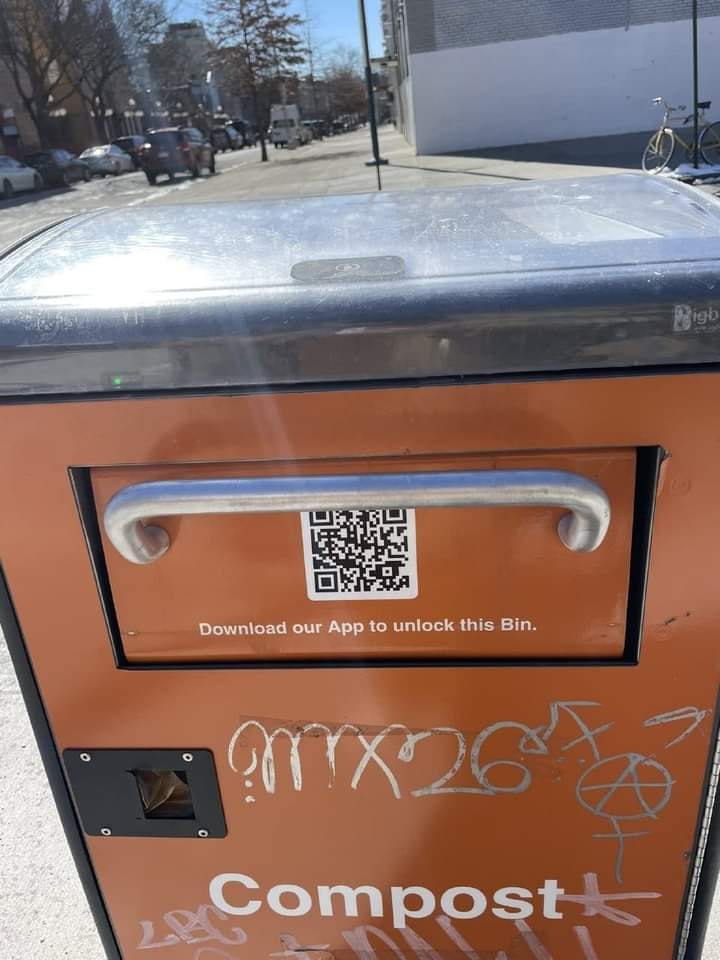
In a 'Cyberpunk' context, this image plays with the contrast between digital technology and gritty reality. The text 'Download our App to unlock this Bin' mimics a mobile interface, creating a dark humor when applied to a basic compost bin. The visual elements like the 'MX26' graffiti and the screen reflection at the top blend sleek UI design with the rough textures of urban decay.
simple-description (llama3.2-vision_11b)
The meme is a picture of a trash can with a QR code on it. The QR code has a URL that says "https://www.urbanskip.com". This is likely a reference to a website that allows users to report abandoned cars or other issues in urban areas, but the URL is a joke, implying that the trash can is so abandoned that it's been turned into a website.
detailed-analysis (gemma3-27b-vision)
Okay, here's an analysis of the image broken down into the requested theoretical sections. I will indicate when a section doesn't apply or has limited relevance.
Visual Description
The image depicts an orange compost bin situated outdoors, likely in an urban or public park setting. The bin is constructed of metal and features a horizontal opening with two handles. Prominently displayed on the bin is a QR code along with the text "Download our App to unlock this Bin." Below this, the word "Compost" is clearly printed. The surface of the bin exhibits graffiti, scrawled in what appears to be marker, consisting of illegible characters and lines. The background shows a pathway, trees, and what seem to be bicycles parked in the distance. The lighting suggests a bright, sunny day. The bin appears somewhat worn, adding to its urban aesthetic.
Foucauldian Genealogical Discourse Analysis
This image provides a fascinating case study in the application of Foucault's theories. The discourse surrounding waste management, sustainability, and civic responsibility has become deeply intertwined with technological control as exemplified by the app-locked bin.
- Power/Knowledge: The requirement of an app to access the compost bin demonstrates a shift in how civic duties (like proper waste disposal) are mediated. Knowledge (about composting, environmental responsibility) is now linked to access controlled by technology and the developers of the app. Those without smartphones, or without access to data, or the knowledge to use the app are excluded. This creates a power dynamic.
- Genealogy: The historical trajectory of waste management has shifted from purely infrastructural (bins, trucks, landfills) to increasingly algorithmic control. Tracing the history of waste regulation, we can see a move from physical barriers to access (locked bins requiring keys, for example) to digital barriers (app access). This reflects a broader shift in control mechanisms in modern society.
- Discipline & Normalization: The app-locked bin disciplines behavior through its conditional access. Composting is normalized as a ‘good’ practice, but participation is now contingent on using the designated technology and engaging with the specific system. This creates a subtle form of surveillance and data collection.
Critical Theory
From a Critical Theory perspective, this image represents a key example of the commodification of sustainability and the colonization of public space by technology.
- Rationalization & Instrumental Reason: The app-locked bin embodies a rationalized approach to waste management, prioritizing efficiency and control. However, this can lead to instrumental reason, where the means (the app, the technology) become more important than the end (environmental sustainability).
- Commodification of Sustainability: Sustainability, once a grassroots movement, is increasingly being integrated into market-based solutions. The app creates a potential for data collection and monetization, raising questions about whose interests are truly being served.
- Alienation: The act of composting, a potentially communal and direct connection to the land, is mediated by a technological interface. This can lead to alienation – a feeling of separation from the natural world and from the community.
Marxist Conflict Theory
Applying a Marxist lens, the image highlights issues of class and access to resources.
- Means of Production: The app and the technology behind it represent the means of production – controlled by private companies or municipalities. Access to composting is now mediated by this control.
- Class Struggle: Those who lack smartphones or data access are excluded from participating in this “sustainable” system, creating a form of digital divide and exacerbating existing inequalities. This can be seen as a subtle form of class struggle.
- Commodity Fetishism: The focus on the technology (the app) obscures the underlying material conditions of waste disposal (trucks, landfills, labor). It fosters a fetishization of the app itself, diverting attention from the larger systemic issues.
Postmodernism
From a Postmodern perspective, this image represents the breakdown of grand narratives and the increasing fragmentation of experience.
- Simulacra & Simulation: The app-locked bin is a simulacrum - a copy without an original. It simulates a commitment to sustainability without necessarily addressing the underlying structural issues.
- Hyperreality: The focus on the app and the technological interface creates a hyperreality where the image of sustainability becomes more important than the actual practice.
- Deconstruction of Meaning: The graffiti on the bin can be interpreted as a deconstruction of the bin’s intended meaning. It disrupts the smooth, rational narrative of sustainability and introduces ambiguity.
Queer Feminist Intersectional Analysis
This image has limited direct relevance to a queer feminist intersectional analysis, however, we can speculate on potential connections.
- Access & Exclusion: The app-locked bin disproportionately impacts marginalized communities who may have limited access to technology or digital literacy. This aligns with feminist concerns about equitable access to resources and the digital divide.
- Gendered Labor: The systems of waste management, even with technological mediation, often rely on the invisible labor of women and other marginalized groups. The introduction of technology doesn't necessarily address these underlying power dynamics.
- Disruption & Resistance: The graffiti on the bin can be interpreted as an act of resistance against the normalizing forces of technology and the dominant discourses of sustainability. It disrupts the smooth, rational narrative and introduces ambiguity.
I hope this comprehensive analysis is helpful. Let me know if you would like me to elaborate on any particular point or theoretical framework.
simple-description (llama3.2-vision)
This meme is a photo of a public trash can with a sign that says "Download the app to unlock this bin." The image is likely meant to be humorous because it's absurd that a trash can would require a download to be used. The phrase "Download our App to unlock this bin" is likely a joke, implying that someone would need to download an app to use a simple trash can.
tesseract-ocr
\ oe ' < Diner Rta RCM aia —_ | | | / iit ; Compost |