First Seen
2024-04-30T05:06:35.564152+00:00
simple-description (qwen3.5_2b-q8_0)
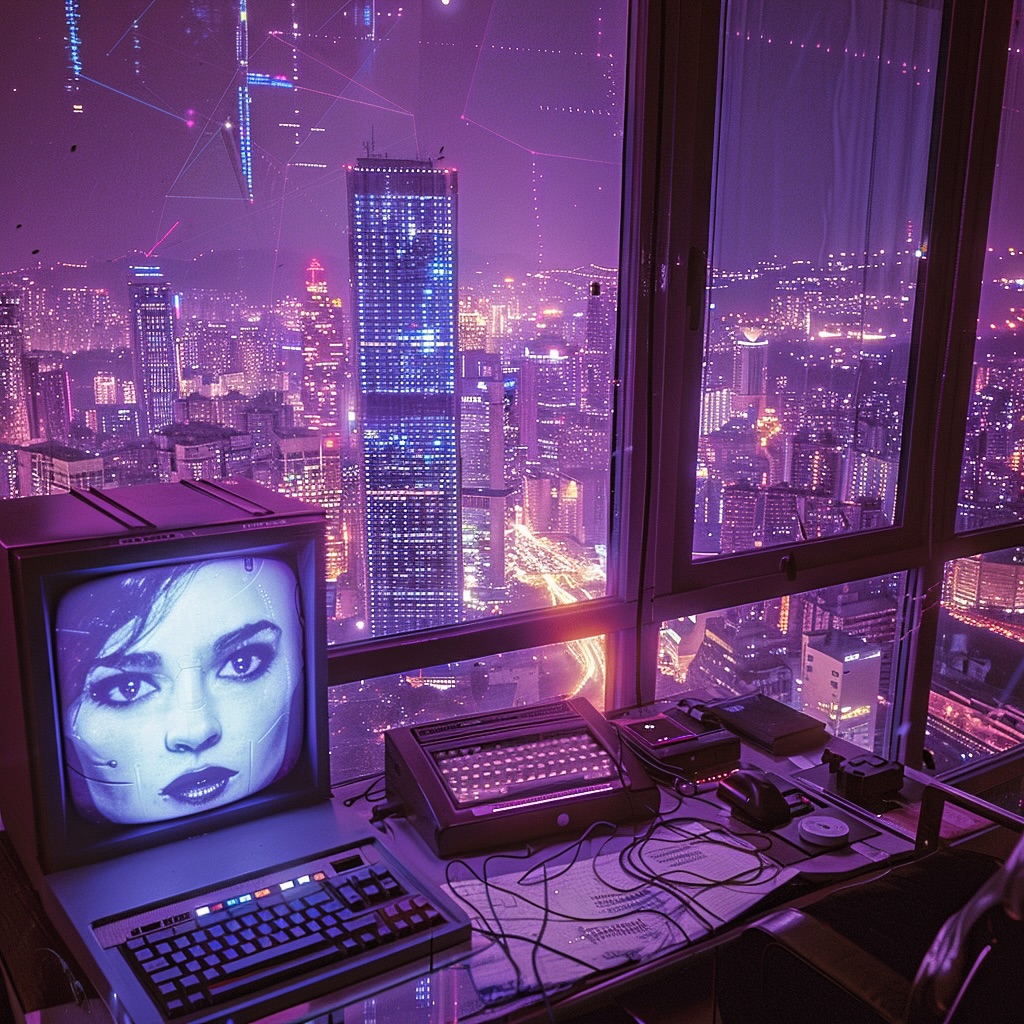
This image serves as a quintessential entry into cyberpunk aesthetics by depicting a futuristic command center overlooking a neon-drenched, sprawling cityscape at night. The centerpiece is a retro CRT monitor displaying a close-up of a woman's face with visible glowing circuit lines, creating a cybernetic digital look. An old-fashioned typewriter sits idle on the desk, reinforcing the retro-futuristic atmosphere, while the text HUAWEI on the monitor bezel grounds the sci-fi imagery in a specific, recognizable technological setting.
simple-description (llama3.2-vision_11b)
The meme is a screenshot of a 1980s computer desktop with a Windows 3.1 desktop background, featuring a pixelated image of a woman with a futuristic cyberpunk aesthetic. The image is captioned "When you're trying to get work done but the cat is always watching". The meme is a humorous take on the common experience of being distracted by a pet, but in a futuristic and high-tech setting.
detailed-analysis (gemma3-27b-vision)
Okay, here's an analysis of the image, broken down into sections as you requested. I'll indicate when a section doesn't strongly apply, and will prioritize depth where the image invites those analyses.
Visual Description
The image presents a highly stylized, digital artwork depicting a futuristic cityscape viewed from a high-rise office or apartment. The color palette is dominated by deep purples, blues, and magenta, creating a neo-noir, cyberpunk aesthetic. The city itself is densely packed with illuminated skyscrapers, suggesting a massive, complex urban environment.
In the foreground, a cluttered desk is visible, equipped with outdated computer hardware – a large CRT monitor displaying a close-up of a woman’s face, a keyboard, a series of complex electronic devices (likely related to data processing or signal interception), and floppy disks. The lighting casts strong shadows, emphasizing the technological elements and the person's face on the screen.
The overall mood is one of isolation, technology, and perhaps surveillance. The contrast between the vast, brightly-lit city and the dark, confined desk space is striking. There's a sense of being both connected to and detached from the urban landscape. The image is highly rendered, with a strong emphasis on digital effects and a clear aesthetic leaning towards retro-futurism.
Postmodernism
This image is steeped in postmodern visual language. Several key features contribute to this:
- Pastiche & Hyperreality: The combination of retro technology (CRT monitor, floppy disks) with a futuristic city suggests a blending of eras. It’s not a realistic future, but rather a curated aesthetic drawing from multiple sources, creating a ‘hyperreality’ – a simulation of a reality that may or may not exist.
- Loss of Grand Narratives: The image doesn’t offer a clear story or purpose. There’s no evident message about progress, hope, or a unified vision of the future. Instead, it presents a fragmented scene, suggesting the breakdown of overarching narratives.
- Simulation & Simulacra: The woman on the screen is a representation, a simulacrum, rather than a direct connection to a person. The city, too, feels like a constructed environment, a simulation of urban life. This speaks to the postmodern concern with the blurring of boundaries between reality and representation.
- Emphasis on Style: The artwork prioritizes aesthetic effect over realistic depiction. The vibrant colors, digital rendering, and stylized composition are central to its meaning, reinforcing the postmodern focus on surface and signifier.
Foucauldian Genealogical Discourse Analysis
A Foucauldian analysis would focus on the power dynamics embedded within the technological apparatus depicted.
- Surveillance & Power/Knowledge: The desk setup—with its monitor displaying a woman’s face and the array of electronic equipment—strongly suggests surveillance. Foucault’s concepts of panopticism come into play, even if the image doesn’t show a traditional panoptic structure. The implication is that someone is being observed, analyzed, and controlled through this technology. This creates a relationship between power and knowledge—the ability to gather information grants control.
- Discipline & Normalization: The act of surveillance itself is a disciplinary practice. By monitoring and analyzing, the subject is forced to conform to certain norms. The image does not show the observed subject, but it implies their existence and their susceptibility to power structures.
- The Genealogy of Control: A genealogical approach would trace the historical development of these technologies and the changing forms of control they enable. How did monitoring techniques evolve? What discourses legitimize surveillance? The retro technology alongside the futuristic cityscape suggests a history of control extending into the present and future.
- Discourses of Technology and Control: The image reflects the discourse that technology equals progress, yet also implies its potential for domination. By showing the dark side of technological advancement, the image challenges simplistic narratives about progress.
Marxist Conflict Theory
The image, while not explicitly about class struggle, can be interpreted through a Marxist lens.
- Alienation: The figure at the desk is isolated, seemingly disconnected from the city below. This suggests alienation from the fruits of labor—the technological advancements and urban environment are built by others, yet they create a sense of separation.
- Control of Means of Production & Information: The desk represents a point of control—over technology, over information, and potentially over the individuals being monitored. This control is concentrated in the hands of those who own and operate the technology, reinforcing class divisions.
- The City as a Site of Exploitation: The dense cityscape, while visually striking, can be seen as a product of capitalist exploitation—a concentration of wealth and power built on the labor of countless individuals.
- The Surveillance State & Control of Labor: The surveillance implied in the image can be seen as a form of control over the working class—monitoring their movements, their communications, and their behavior.
Critical Theory
Critical Theory, drawing on various schools of thought, allows for a broader analysis of the image’s underlying power dynamics and social critique.
- Commodification of the Gaze: The woman's face on the monitor is clearly objectified, reduced to an image for consumption. This ties into the critique of the commodification of the body and the gaze in consumer culture.
- Technology & Social Control: The image underscores how technology, rather than being neutral, is often used as a tool for social control and the perpetuation of power imbalances.
- The Spectacle & Simulated Reality: Building on Debord’s concept of the spectacle, the image depicts a world where representation has replaced reality. The city and the woman’s face are both mediated through technology, creating a sense of detachment from authentic experience.
Queer Feminist Intersectional Analysis
This section is the least directly applicable, but potential interpretations exist.
- Objectification of the Female Body: The woman's face displayed on the screen is undeniably objectified, reinforcing patriarchal power dynamics. The image offers no agency or inner life to the subject, reducing her to a visual spectacle.
- Surveillance & Gendered Control: Surveillance often disproportionately impacts marginalized groups, including women. The image can be seen as a metaphor for the ways in which women are constantly monitored and controlled in patriarchal societies.
- The Intersection of Technology and Power: Technology is not neutral; it is shaped by the biases and power structures of those who create it. The surveillance apparatus in the image may reflect and reinforce existing inequalities.
- Critique of the Male Gaze: The focus on a woman's face on a monitor could be interpreted as a reflection of the male gaze—the tendency to view women as objects of sexual desire or visual consumption.
I've tried to provide a nuanced analysis based on the imagery. It’s important to note that interpretations can vary, and the image's meaning is ultimately open to individual interpretation. Let me know if you'd like me to elaborate on any specific aspect.
simple-description (llama3.2-vision)
This meme is a humorous image of a 1980s-style computer setup with a monitor displaying a woman's face with a futuristic interface. The text "I can see your face" is written on the screen, likely referencing the 1983 film "Warrior" and its infamous "I can see your face" line. The image is a playful nod to the film's quote and the era's computer aesthetic.
tesseract-ocr
pe i 7 : a z | easceene c ! ie 1 ag ee te | eacggllee VP ie, es eats ae 3 ee = Nae Aire er Eee = ay ce Cs Ba (Ses OS ee . | 2S eS <j eee | I Be a ae a / i ee See ee 5 —_ ae a: a co ~ as | oe re / of E es a = Me SS