First Seen
2023-07-14T23:14:45+00:00
simple-description (qwen3.5_2b-q8_0)
The image features an assortment of cacti in terracotta pots. There are several small white plastic tags attached to the plants. The "Desertcore" aesthetic suggests a connection to desert environments and the organic nature of the plants. The tags provide a specific visual element, though their text is small or illegible in this image.
Final Answer:
The image shows a collection of cacti in terracotta pots. There are small white plastic tags attached to the cacti. The "Desertcore" aesthetic is represented by the plants and the tags. The tags are a key visual element.
simple-description (llama3.2-vision_11b)
The meme is a picture of a cactus in a desert landscape, surrounded by sand and rocks. The image is captioned "I can feel the dryness of my soul". The meme is a humorous take on the aesthetic of Desertcore, a music genre characterized by its use of desert-inspired sounds and visuals. The image is a play on the idea that the dryness of the desert can be felt in one's soul, much like the dryness of the desert landscape can be felt in the music of Desertcore.
detailed-analysis (gemma3-27b-vision)
Okay, here's an analysis of the image, broken down into the requested sections. I'll indicate when a section doesn't apply. I'll aim for analysis that’s relatively concise and reflective of the image’s visual cues, keeping in mind the complexities of each theoretical approach.
Visual Description
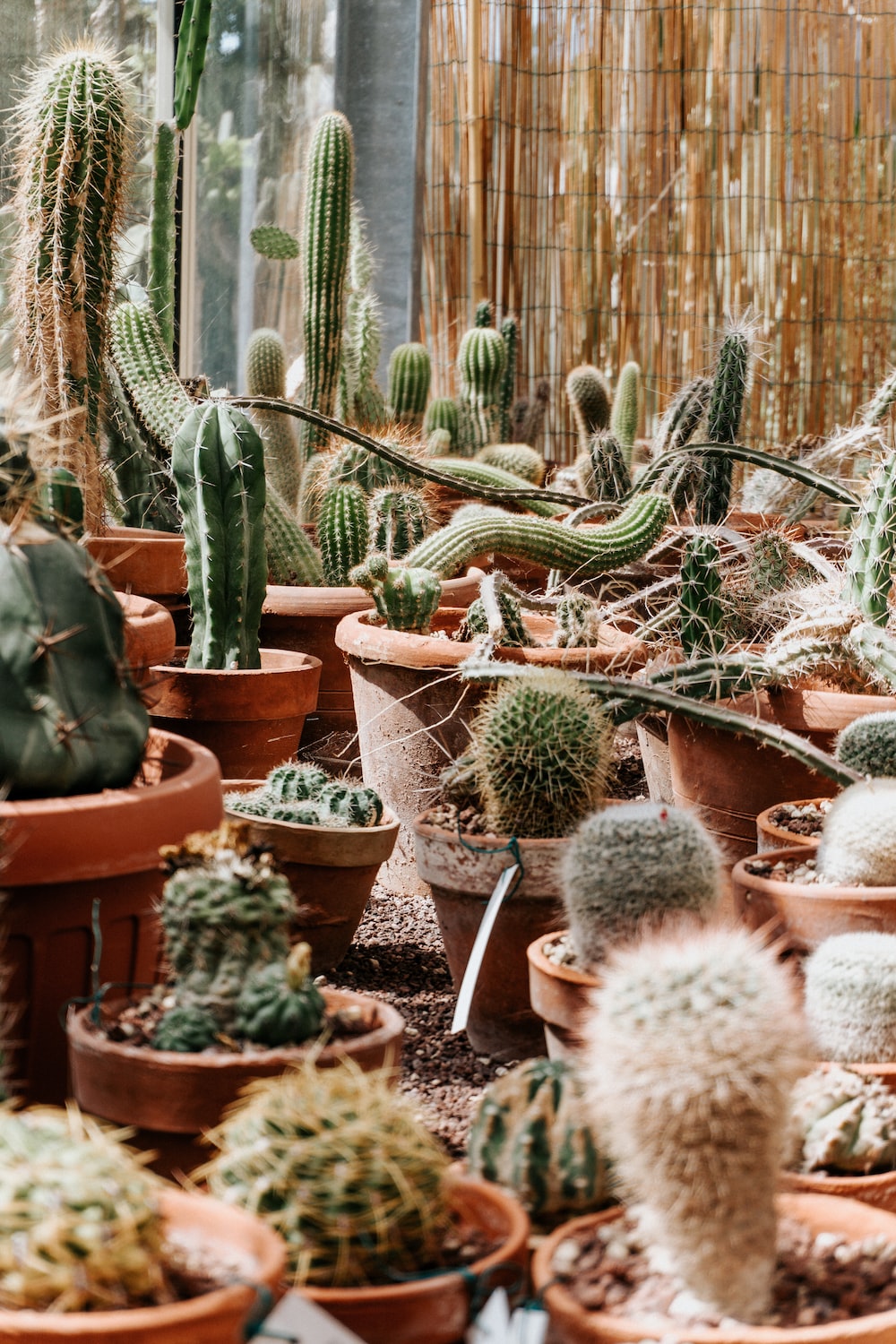
The photograph depicts a dense collection of cacti and succulents in terracotta pots. The setting appears to be a greenhouse or botanical garden, indicated by the woven bamboo screen in the background. The cacti vary in size, shape, and texture, from tall, columnar forms to small, globular varieties with complex ribbing and spines. The color palette is dominated by earthen tones – the rust of the terracotta, the greens of the plants (ranging from deep forest to pale jade), and the golden browns of the bamboo. The photograph’s depth of field is relatively shallow, resulting in a slightly blurred background and bringing attention to the foreground plants. There's a noticeable texture created by the spines and surface of the cacti, and the ground is covered with a coarse, dark substrate, likely gravel or small stones. The image conveys a sense of contained wildness, of nature organized and curated within a built environment.
Foucauldian Genealogical Discourse Analysis
This image can be seen through a Foucauldian lens as a manifestation of the discourse surrounding “nature,” “cultivation,” and “control.” The act of collecting and potting these desert plants (originally adapted to a harsh, unregulated environment) demonstrates a power dynamic – the human attempt to discipline nature, to impose order on something inherently chaotic. The greenhouse itself represents a heterotopia – a space that is simultaneously real and unreal, mirroring and inverting the natural world.
A genealogical analysis would trace the historical development of botanical gardens and collections. From early royal collections designed to display wealth and power, to modern scientific collections used for research and conservation, the practice of gathering and classifying plants has been central to western modes of knowing and exercising control over the natural world. The pots themselves are not neutral vessels, but represent a deliberate act of containing and categorizing, reinforcing a specific way of understanding and relating to plant life. It’s a discourse on what constitutes “valuable” or “worthy” plant life – and therefore, what is deemed worthy of preservation within this controlled setting.
Critical Theory
Applying Critical Theory (inspired by the Frankfurt School), the image can be seen as reflecting a broader trend of instrumental rationality. The cacti aren't valued for their inherent beauty or ecological function, but for their potential use—as decorative objects, specimens for study, or markers of status. The carefully arranged collection speaks to the drive to categorize, control, and commodification of the natural world.
The act of removing these plants from their native habitat and placing them in a greenhouse can be seen as a manifestation of a power relationship between humans and nature. The “natural” is no longer experienced directly but mediated through a constructed environment – a kind of simulacra that obscures the realities of ecological degradation. This curated collection is a representation of nature, rather than a genuine encounter with nature, reinforcing a sense of alienation and detachment.
Marxist Conflict Theory
While subtle, a Marxist reading might focus on the implied labor involved in obtaining and maintaining this collection. The plants likely originated in geographically distant and often economically marginalized regions. Their acquisition (legally or illegally) and transportation represents an extraction of resources from those areas. The greenhouse itself is a product of capitalist enterprise—built and maintained by a labor force.
The very act of displaying these plants in a controlled environment speaks to a dynamic of ownership and control. The plants are capital—a source of aesthetic or scientific value that is possessed by the owner of the greenhouse. The curated collection further reinforces class differences, as access to botanical gardens and curated collections is often limited to those with economic privilege.
Postmodernism
From a postmodern perspective, the image deconstructs the notion of “naturalness.” The plants, removed from their native environments and displayed in terracotta pots, are no longer “authentic” specimens. They are signs representing a concept of “desert life,” a simulation of a natural environment.
The image also challenges the idea of a single, overarching narrative about nature. The diverse collection of cacti and succulents demonstrates the multiplicity of forms and adaptations that exist within the natural world. There is no single “correct” way to represent or understand nature; instead, there are multiple perspectives and interpretations. The curated arrangement itself can be seen as a playful act of appropriation and re-contextualization.
Queer Feminist Intersectional Analysis
This is the most challenging section to apply directly to the image, but possible readings can be made. Historically, botanical study and plant collecting have been overwhelmingly dominated by white, male scientists. A Queer Feminist Intersectional analysis would question whose knowledge and perspectives have been privileged in the construction of botanical discourse.
The very act of cultivation can be seen as a metaphor for the imposition of order and control, reflecting patriarchal norms. The carefully arranged collection might be interpreted as a visual representation of a desire for control and domination. However, it's also possible to see a sense of care and nurturing in the cultivation of these plants, aligning with feminist notions of embodied knowledge and connection to the natural world. There is also a subversive potential in disrupting the traditional narratives of botanical science and reclaiming knowledge from marginalized voices.
Let me know if you’d like me to elaborate on any particular aspect of these analyses.
simple-description (llama3.2-vision)
The meme features a picture of a crowded and disorganized cactus garden, with many cacti of varying sizes and shapes. The image is captioned "when you finally get to the last page of the book and realize you're still 3 chapters behind".
tesseract-ocr
ee ay. io “ial | at et Hi) + ti 5. Piles Sa | Te a aS JN a eae 2 aia iF i ef F / j) | ' ft «| RW a PUN Wa ae > ar eS i |! es | y ni Ss WW Wear | h, ier ae BY Hi obit * 4 i) Nn h se ny Pe aes rl He> yi) VN cli ok Bee soa a] s mie i'4 it ih 4 Saas We.” ik eS 3 RP LRN Aas PEE SY ~— ms Me. Wes <3 Lip? a ies iy i cee BR eee | - ale Sus at pe ZS aa Loe Ee : a ; ag r& ea pe Sie a . al m 3 Pye oat Zz a ef age“ ka pal a : = ade : 4 — IES Bi oe. Ky aoe SS ee ee ; rT 4 e . * Re he a e wee ~ Sa | a . row need ‘~~ - 4 : - Btaes mie ? “y ' oa >” < Fs fe 7 ‘ J « fi ee +” ™) el « | - j * i aoe (y i> -< ; WK per o> / - Ft