First Seen
2024-06-25T18:00:30.998914+00:00
simple-description (qwen3.5_2b-q8_0)
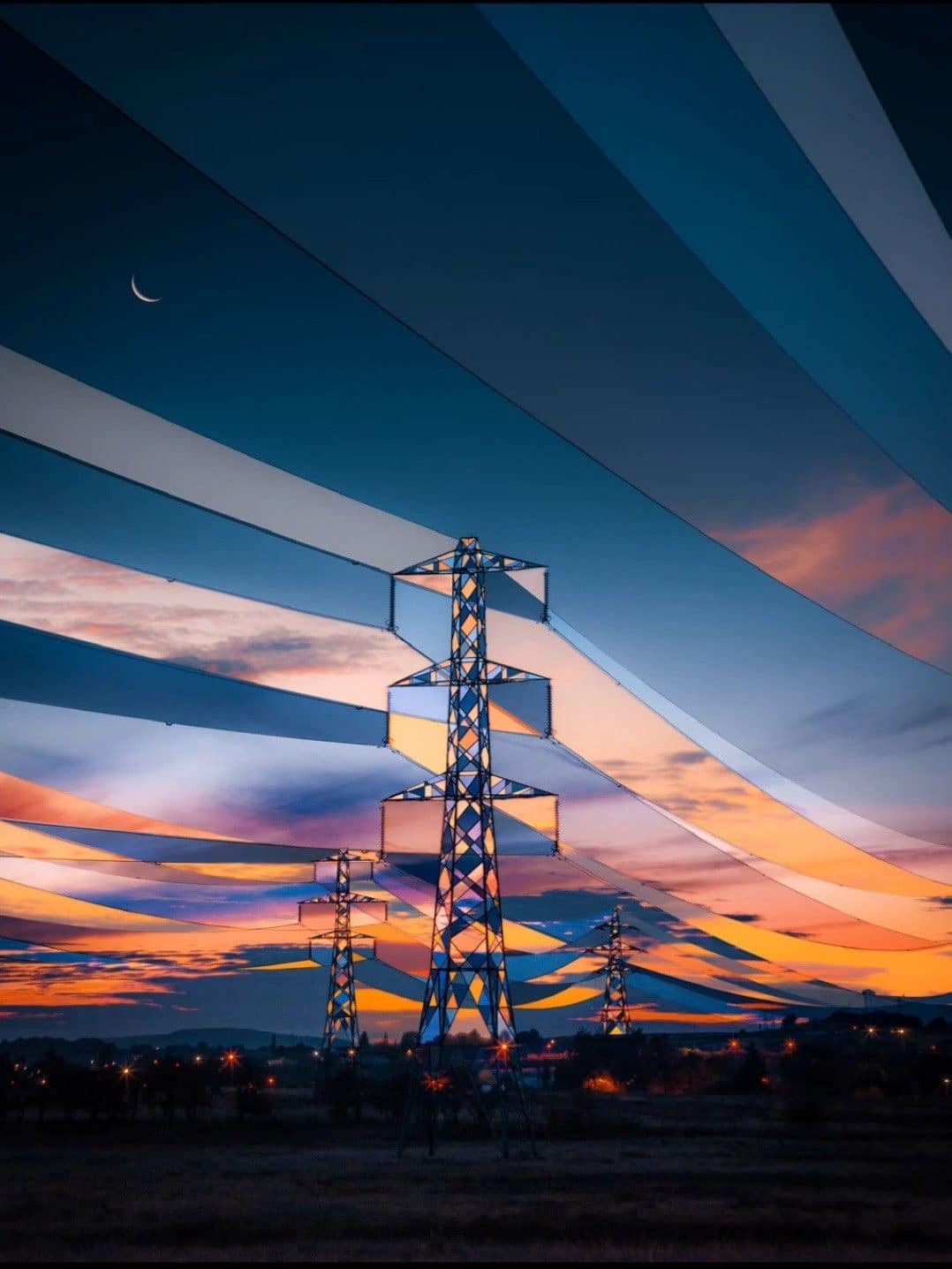
This image captures the essence of Liminality—the eerie, transitional feeling of being in a space that acts like a limbo between distinct times or places. From a visual perspective, it simulates this state through a geometric overlay of power lines cutting across a sunset, creating a disjointed "grid" that mimics the tunnel-like sensation of a journey or a threshold. The composition, which blends raw, imperfect natural light with structured digital geometry, evokes the peaceful yet unsettling transition that often characterizes moments of liminality in urban design.
simple-description (llama3.2-vision_11b)
The meme features an image of a cityscape at sunset, with a lone skyscraper standing out amidst a sea of smaller buildings. The image is transformed into a kaleidoscope of colors, with the skyscraper's silhouette morphing into a swirling vortex of hues. The text "Liminality" appears in the image, referencing the concept of liminal spaces, where one's sense of identity or reality is disrupted.
detailed-analysis (gemma3-27b-vision)
Okay, let's break down this image through a series of analytical lenses as requested.
Visual Description
The photograph depicts a dramatic skyscape at twilight. The sky is a brilliant gradient of oranges, pinks, and blues, suggesting either a sunrise or sunset. The dominant element is a series of tall, industrial electricity pylons silhouetted against this colorful backdrop. The pylons are stark and geometric, creating a strong contrast with the organic, flowing shapes of the clouds. Bright white streaks cut across the sky, either light refraction/reflection, or perhaps a photographic effect. Below the pylons, a dark silhouette of land and distant city lights is visible. The overall mood is one of slightly unsettling beauty; there’s a tension between the natural splendor of the sky and the cold, artificial nature of the industrial infrastructure. The composition is centered on the central pylon, drawing the eye upwards.
Foucauldian Genealogical Discourse Analysis
This image offers a fertile ground for Foucauldian analysis. The electricity pylons are not merely functional structures; they represent a network of power – literal power delivery, but also the broader, disciplinary power described by Foucault. A genealogical approach would trace the historical development of this technology and the discourses that surround it.
- Discipline and Surveillance: Pylons are integral to a system of energy distribution which enables modern life, but also a system of control. Energy infrastructure allows for monitoring and management of resources, contributing to a disciplined societal structure.
- Power/Knowledge: The technology itself is both a product and a producer of knowledge. The understanding of electricity and its harnessing has led to a whole field of scientific and engineering knowledge. Simultaneously, the infrastructure enables certain ways of life and excludes others (those without access to electricity).
- The Rise of the Modern State: The widespread distribution of electricity is intrinsically linked to the development of the modern nation-state, providing a means of exercising control and ensuring economic growth. The pylons represent a visible manifestation of this modern power structure.
- The "Normalization" of Infrastructure: We rarely see these pylons. They’ve become part of the background, normalized as part of the landscape. Foucault would argue this normalization is a key mechanism of power, making control feel natural and inevitable.
Critical Theory
From a Critical Theory perspective (drawing on the Frankfurt School), the image embodies the contradictions of modernity.
- Instrumental Rationality: The pylons symbolize the dominance of instrumental rationality – the pursuit of efficiency and control over nature for the sake of progress. This emphasis on reason, while enabling technological advancement, is seen as alienating and dehumanizing.
- The Culture Industry: The image itself, as a photograph, can be seen as part of the "culture industry." The aestheticization of the pylons (the beautiful sky as a backdrop) obscures the underlying power dynamics and environmental consequences of our energy systems. It’s a commodification of an industrial element.
- Alienation: The pylons stand as cold, imposing structures, disconnected from the natural world. They contribute to a sense of alienation, separating humans from the environment and each other.
- Reification: The pylons, as material objects, become reified – treated as things in themselves, divorced from the social relations that created them. This obscures the fact that they are the products of human labor and social organization.
Marxist Conflict Theory
A Marxist analysis of this image focuses on the power relations inherent in the means of production and the potential for class conflict.
- Means of Production: The pylons are integral to the means of production – the infrastructure necessary for generating and distributing energy. This infrastructure is owned and controlled by a relatively small number of corporations and/or the state, giving them significant economic and political power.
- Class Struggle: The energy produced and distributed through these pylons ultimately serves the interests of the dominant class, enabling them to accumulate wealth and maintain their position of power. The working class, meanwhile, may bear the brunt of the environmental and social costs associated with energy production.
- Exploitation of Labor: The construction and maintenance of these pylons involve the exploitation of labor. Workers are subjected to often dangerous conditions and receive relatively low wages.
- Environmental Inequality: The placement of energy infrastructure, and the resulting pollution and environmental degradation, often disproportionately affects marginalized communities.
Postmodernism
A Postmodern lens highlights the image’s blurring of boundaries and challenges to grand narratives.
- Fragmentation and Discontinuity: The visual elements of the image—the natural sky and the industrial pylons—are juxtaposed, creating a sense of fragmentation and discontinuity. This reflects the postmodern condition of a world characterized by multiple, often conflicting perspectives.
- Simulacra and Simulation: The image itself can be seen as a simulacrum – a copy of a copy – that has become detached from reality. The aestheticization of the pylons further obscures their underlying function and the social relations that produce them.
- Deconstruction of Oppositions: The image challenges traditional oppositions, such as nature/culture, natural/artificial, and beauty/ugliness. The pylons, while artificial, are presented as a visually striking element of the landscape.
- Loss of Grand Narratives: The image suggests a loss of faith in grand narratives, such as the idea of progress through technological advancement. The pylons, while representing technological progress, also symbolize the environmental and social costs associated with it.
Queer Feminist Intersectional Analysis
This requires some more nuance, but it can be applied.
- Spatial Politics: Power lines and infrastructure like this often impact communities unequally. Historically and currently, marginalized communities (particularly women of color) have been placed in close proximity to polluting infrastructure, impacting their health and wellbeing. This speaks to spatial politics and how power is enacted through geographic placement.
- Gendered Labor: The energy sector, from construction and maintenance to management, has historically been dominated by men. A feminist analysis would explore the gendered division of labor within this industry and the barriers faced by women seeking to enter and advance.
- Intersectional Vulnerability: The impacts of energy production and distribution (e.g., pollution, climate change) are not felt equally. Intersectionality highlights how individuals who occupy multiple marginalized identities (e.g., women of color, LGBTQ+ individuals) are disproportionately vulnerable to these impacts.
- Challenging “Progress” Narratives: A queer feminist perspective would challenge the idea that technological progress is inherently good or neutral. It would question who benefits from this progress and who bears the costs. The pylons, while symbolizing progress, can also be seen as a symbol of exploitation and environmental damage.
Let me know if you'd like me to elaborate on any of these analyses or explore other theoretical frameworks.
simple-description (llama3.2-vision)
The meme is a humorous image of a power grid with multiple high-voltage power lines and towers. The text "I can see 3" appears on the image, but it's actually referring to the number of power lines, not the number of people who can see the image. The meme is poking fun at the idea that someone can see multiple things at once, but in this case, it's actually a clever play on words referencing the power lines.