First Seen
2023-05-10T21:03:24+00:00
simple-description (llama3.2-vision_11b)
This meme features a picture of Elon Musk, a billionaire entrepreneur, with a red nose and painted-on smile, but with a twist: his smile is more like a snarl, and his eyes are narrowed in a menacing way. The image is captioned "When you're a billionaire but you still have to pay your taxes". The meme is poking fun at the idea that even the wealthiest people can't escape the financial burdens of being a billionaire, and that even they have to deal with the same financial struggles that everyone else does.
detailed-analysis (gemma3-27b-vision)
Okay, here's an analysis of the image, broken down into sections as you requested. I'll indicate if a specific section doesn't really apply to the image based on its content.
Image Description
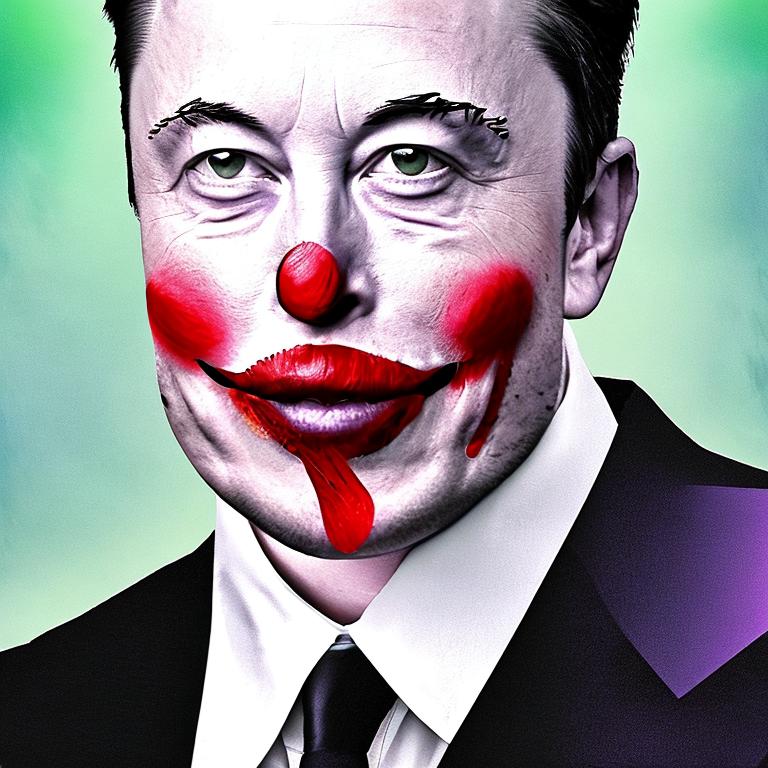
The image is a digitally altered portrait of Elon Musk, the entrepreneur and CEO of Tesla and SpaceX. He is depicted in a formal, business-like setting – wearing a dark suit, white shirt, and black tie. However, his face is heavily modified to resemble a clown. He has a bright red nose, red blush applied to his cheeks, and exaggerated red lips, with streaks of red running from the corners of his mouth. The backdrop is a gradient of green and purple. The overall effect is jarring and unsettling, juxtaposing the power and perceived seriousness of a businessman with the traditionally comedic and often chaotic imagery of a clown.
Foucauldian Genealogical Discourse Analysis
This image lends itself well to a Foucauldian analysis. Foucault's work examines how power operates not as a top-down, repressive force, but through discourse – the systems of knowledge and language that shape our understanding of the world. This image can be seen as a disruption of the discourse surrounding Elon Musk.
- Discursive Formation: The conventional discourse around Musk frames him as a visionary innovator, a tech genius, and a powerful capitalist. This image challenges that formation by associating him with the figure of the clown, a traditionally marginalized and often ridiculed figure.
- Genealogy of "The Clown": Tracing the history of the clown reveals a shifting role. Originally, clowns often held positions of authority or were seen as tricksters with societal critique. They've evolved into figures of entertainment, often associated with foolishness and frivolity. The image reclaims some of that earlier subversiveness by applying it to a figure of immense power.
- Power/Knowledge: The image suggests that the "genius" image of Musk is a construction – a carefully curated persona produced through media, marketing, and public relations. By revealing a "clown" beneath the surface, it implies that his power might be based on a performance, on the manipulation of appearances, rather than genuine substance.
- Disruption: The image disrupts the normalized discourse, forcing a re-evaluation of Musk's public persona. It asks us to consider what lies beneath the carefully crafted image and challenges the authority attributed to him.
Critical Theory
This image aligns with core concepts of Critical Theory, particularly those concerning the Frankfurt School.
- Culture Industry & Commodity Fetishism: Musk himself is, in many ways, a product of the “culture industry”. He is a brand, and the image highlights the performative nature of that brand. The "clown" makeup can be interpreted as a peeling back of the artifice.
- De-naturalization of Power: Critical Theory seeks to expose the ways power is presented as "natural" or inevitable. The juxtaposition of the powerful businessman with the clown is a deliberate attempt to de-naturalize Musk’s authority and reveal the constructed nature of his image.
- Critique of Enlightenment Rationality: The image can be seen as a critique of the uncritical faith in technological progress often associated with figures like Musk. The clown is a figure of irrationality and chaos, suggesting that even the most advanced technologies are not immune to human folly.
Marxist Conflict Theory
The image can be interpreted through a Marxist lens as highlighting class contradictions and the performance of power within capitalism.
- Class Performance: Musk embodies the capitalist class – the owner of the means of production. The image suggests that this class often performs a role – a facade of competence and authority – to maintain its dominance. The clown makeup reveals the performative aspect, hinting at a lack of genuine substance beneath the surface.
- Alienation: The stark contrast between the formal attire and the clown makeup can be seen as a representation of alienation. Musk, as a representative of capital, is alienated from genuine human connection and authenticity.
- Critique of Capitalist Spectacle: The image could be considered a commentary on the spectacle of wealth and power within capitalism. Musk’s public persona is carefully constructed and marketed, creating a spectacle that obscures the exploitative realities of the capitalist system.
Postmodernism
The image is undeniably postmodern in its aesthetic and message.
- Pastiche and Irony: The image blends disparate elements (businessman and clown) in a way that is both playful and unsettling. This combination exemplifies pastiche – a postmodern technique of borrowing and combining styles. The overall effect is imbued with irony, challenging the viewer's expectations and conventional understandings of power and identity.
- Deconstruction of Grand Narratives: Postmodernism questions grand narratives (like the idea of inevitable technological progress). The image can be seen as a dismantling of the "genius innovator" narrative surrounding Musk, revealing it as a constructed myth.
- Simulacra and Simulation: The image suggests that Musk's public persona may be a simulacrum – a copy without an original. His image is constantly mediated and reproduced, becoming a hyperreality that obscures the "real" person behind it.
Queer Feminist Intersectional Analysis
While not the most obvious lens, a Queer Feminist Intersectional analysis could be applied, though it requires more interpretation.
- Subversion of Masculinity: The image subverts traditional notions of masculinity. The clown makeup disrupts the expectation of seriousness and power typically associated with men in positions of authority. It "feminizes" Musk’s image, challenging rigid gender norms.
- The Grotesque and the Marginalized: The clown is historically associated with the grotesque and the marginalized. Applying this imagery to a powerful figure like Musk can be seen as a reclaiming of those marginalized aesthetics and a critique of the structures that maintain power imbalances.
- Intersectional Critique of Power: The image can be seen as part of a broader critique of power structures that privilege certain groups (in this case, white, wealthy, cisgender men) while marginalizing others. The disruption of Musk's carefully constructed image forces a recognition of the performative and contingent nature of all power.
I hope this detailed breakdown is helpful! It's important to remember that art is open to interpretation, and these are just some possible readings of the image. Let me know if you'd like me to explore any of these points further.
simple-description (llama3.2-vision)
The meme features a photo of actor Heath Ledger, who played the role of the Joker in the 2008 film "The Dark Knight." The image has been edited to make his face appear as if he is smiling maniacally, with red paint on his face and a clown-like appearance. The text in the image reads, "Why so serious?" which is a famous line from the film.