First Seen
2023-12-02T05:30:32+00:00
simple-description (qwen3.5_2b-q8_0)
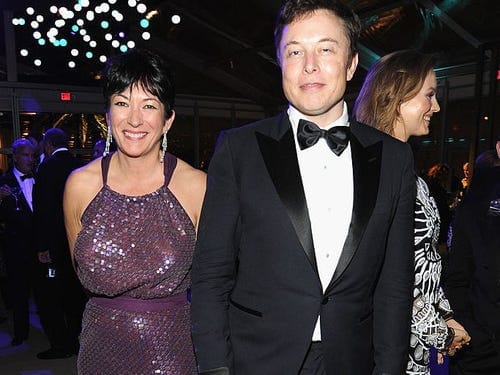
The "Anti-Billionaire" meme typically features a person saying "No Rich Man" or similar slogans to mock wealthy individuals. In the provided photo, Elon Musk is shown at a formal gala, yet he is used as a reference for this specific viral trend. This image illustrates how even the wealthiest figures (like Musk) are often mocked by the "Anti-Billionaire" meme community.
simple-description (llama3.2-vision_11b)
The meme is an image of Elon Musk and Grimes (his ex-partner) with the caption "Anti-Billionaire" written in a childlike font. The image is likely a screenshot of a news article or a social media post that mocks Elon Musk's wealth and influence. The caption is a humorous way of saying that Elon Musk is not a good role model for the environment or society, despite his wealth and influence.
detailed-analysis (gemma3-27b-vision)
Okay, here's an analysis of the image, broken down into the sections you requested. I'll prioritize relevance – not every theoretical framework will necessarily apply strongly.
Please note: This is an interpretation based on the visual information and application of theoretical frameworks. It’s inherently subjective, and other interpretations are possible.
1. Visual Description
The image shows two women and a man in formal attire walking through what appears to be a social event or gala. The man, presumably Elon Musk, is wearing a traditional tuxedo with a bow tie, giving a classic, powerful impression. One woman to his left is wearing a sequined, purple evening gown. She is smiling, offering a warm presence. A second woman is to the right of Musk, wearing a patterned, detailed evening gown, and appears to be in conversation.
The background is filled with blurred figures in similar formal wear, along with lights and architectural elements that suggest a large, upscale venue. The lighting is warm, and the overall impression is one of wealth, status, and a privileged social setting. The composition of the image places Musk as central, with the women flanking him.
2. Foucauldian Genealogical Discourse Analysis
A Foucauldian analysis focuses on how power operates through discourse—language, norms, and practices. In this image, we can see a performance of power. Musk's attire immediately speaks to established modes of authority and wealth. The tuxedo has a long history linked to elite social gatherings and societal hierarchy.
His central position, coupled with the way the women flank him, can be seen as a visual manifestation of a power dynamic. It’s not simply about dominance but about how these roles are constructed through the conventions of these events. The very act of attending such a gala, and being photographed within it, reaffirms the systems that allow this type of wealth accumulation and social stratification to exist. The smiles of the women do not necessarily indicate consent; they can be understood as a performance enacted within a system of power that normalizes certain behaviors.
The genealogy would trace the history of these norms – how the tuxedo came to signify authority, the evolution of these events, and the construction of “high society” and its attendant privileges. It would also focus on how these norms are maintained through ritual and repetition.
3. Critical Theory
From a Critical Theory perspective (drawing from the Frankfurt School), the image functions as part of the "culture industry," perpetuating an ideology that reinforces existing power structures. The glamorous depiction of wealth and status normalizes inequality. The image doesn't present a critical reflection on the conditions that allow for such extravagance; instead, it celebrates it.
This celebration contributes to a state of “false consciousness,” where viewers may unconsciously accept the existing social order as natural or inevitable. The image distracts from systemic issues like income inequality, and potentially environmental impacts that may be related to the lives and businesses of the people pictured. The focus is on the superficial—glamour, success, beauty—rather than any substantive critique.
4. Marxist Conflict Theory
From a Marxist perspective, this image is a clear visual manifestation of class conflict. The setting and attire signal extreme wealth, generated through a capitalist system that inherently relies on the exploitation of labor. The people pictured are not shown engaging in the labor that likely generated this wealth. Instead, they’re enjoying the fruits of it, reinforcing the imbalance of power.
The image showcases the “bourgeoisie” enjoying the privileges of their class, while the “proletariat” (the working class) remain largely invisible. This invisibility is not accidental; it serves to maintain the status quo. The very act of capturing and disseminating this image is a way to legitimize and perpetuate the capitalist system.
5. Queer Feminist Intersectional Analysis
An intersectional analysis focuses on the interplay of various social categorizations such as gender, race, class, and sexuality, creating overlapping systems of discrimination or disadvantage. Here, a queer feminist lens can examine the representation of women in relation to male power.
The women in the image are positioned around Musk, suggesting a lack of agency. Their smiles are subject to interpretation; are they genuinely enjoying themselves, or performing a role expected of them within a patriarchal structure? Their attire is geared towards being visually pleasing, and may speak to traditional gendered expectations.
An intersectional approach would also call attention to any lack of diversity in the image. Are there people of color represented? Are there individuals with different gender expressions? The homogeneity reinforces the idea that wealth and power are concentrated within a narrow segment of the population. It highlights how systems of power intersect to create inequalities.
Disclaimer: These are interpretations based on the image and theoretical frameworks. They are not definitive truths, but rather avenues for critical thinking and analysis.
simple-description (llama3.2-vision)
The meme is a photo of a woman in a sparkly purple dress and a man in a tuxedo. The woman is smiling and looking at the camera, while the man is looking away and appears to be awkwardly standing next to her. The text "I love you" is written in a child's handwriting on a sign in the background, implying that the couple is at a wedding or a formal event.
tesseract-ocr
Pare Ot at le "te A : ae % eas. ~ 3 i eae : ‘, : les pe fo | j es i) a | ’