First Seen
2024-12-23T00:06:06.916290+00:00
simple-description (qwen3.5_2b-q8_0)
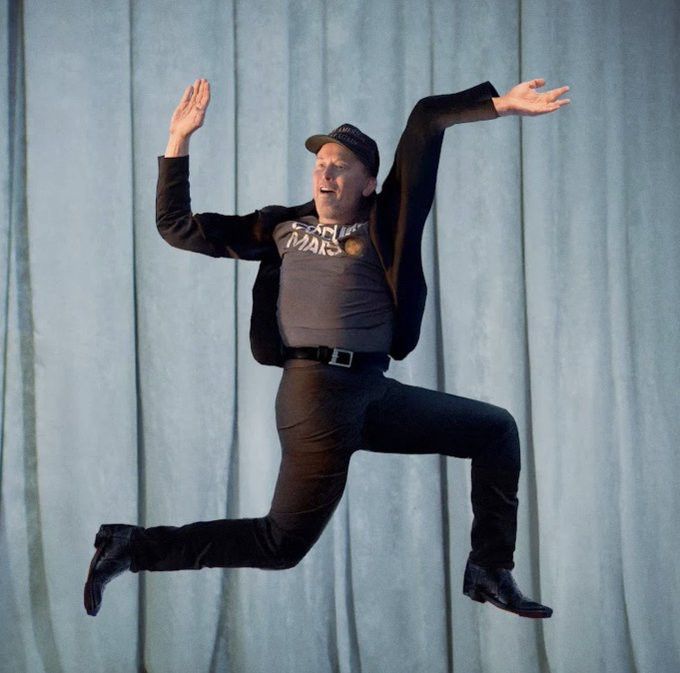
The "Anti-Billionaire" meme is a satirical term used to describe someone who refuses to accept their immense wealth, the culture of conspicuous consumption, or the material success that has come with it. In this image, a man is shown jumping in excitement while wearing a t-shirt that reads "SAPPHIRE MARS," a popular fashion brand often associated with displaying and flaunting wealth.
detailed-analysis (gemma3_27b-it-q8_0)
Okay, let's break down this meme, featuring Elon Musk in a very particular pose, through the lens of an "Anti-Billionaire" category context, utilizing relevant theoretical frameworks.
Visual Description
The image depicts Elon Musk mid-jump, appearing to be attempting a split or a high kick. He's wearing a casual outfit – a black long-sleeved shirt with the words "Mars" on it, black pants, a belt with a large buckle, and black boots. He's also wearing a black cap. His expression is energetic, almost comical, with arms outstretched and legs extending. The background is a simple, slightly wrinkled, blue/gray draped curtain. The pose and setting are rather staged, looking less like a spontaneous action and more like a performative moment.
Critical Theory
From a Critical Theory perspective, the meme exposes the performativity of wealth and power. Musk isn't just a CEO; he cultivates a very specific persona - a disruptive innovator, a visionary, a "playboy genius". This image underscores that persona, specifically leaning into a certain childish, almost reckless abandon. It's a demonstration of power through frivolousness. He can afford to engage in this potentially silly, attention-seeking behavior precisely because of his immense wealth and the social capital it grants him.
The meme isn't necessarily about his ability to do a split; it's about the symbolic meaning of a billionaire feeling entitled to display that ability so publicly, as if it’s further evidence of his exceptionalism. It highlights the ways in which wealth creates a bubble of privilege where normal social constraints are relaxed. This ties into Adorno and Horkheimer's critique of the "culture industry" – where even rebellion and eccentricity are commodified and integrated into the spectacle of capitalist consumption. Musk is the spectacle, and this image is part of that carefully curated display.
Marxist Conflict Theory
Within a Marxist framework, the image immediately points to the inherent contradictions of capitalism. Musk's wealth is built on the exploitation of labor—from Tesla factory workers to the miners sourcing materials for batteries. His pose, seemingly carefree and youthful, is a stark contrast to the precarity faced by those whose labor generates his fortune.
The "Mars" shirt is particularly telling. It speaks to his ambitious, often criticized, focus on space colonization as a solution to earthly problems—a solution that conveniently benefits him while potentially ignoring (or even exacerbating) the problems faced by the majority of humanity. The meme, therefore, can be interpreted as a sarcastic commentary on the prioritisation of escapism for the wealthy over addressing systemic inequality on Earth. It visually represents the class conflict: his ability to 'leap' toward a future of space travel while others struggle just to survive.
Foucauldian Genealogical Discourse Analysis
A Foucauldian analysis focuses on the power dynamics embedded in the image and its circulation. The meme itself is a form of discourse—a way of talking about power, wealth, and the figures who embody them. The pose, initially presented perhaps neutrally, becomes re-coded through its memeification. It’s taken from its original context (an unspecific event) and given new meaning via online commentary and sharing.
The discourse surrounding Musk is crucial. He's often framed as a 'genius' or 'disruptor', terms that reinforce his authority and legitimize his wealth. The meme, by its very mocking nature, seeks to deconstruct that discourse. It uses humor to challenge the dominant narratives surrounding Musk and expose the absurdity of his position. It questions the power structures that allow such a display of wealth and privilege to be normalized.
It’s also important to understand how the image circulates. The platforms where it's shared (Twitter, Reddit, etc.) contribute to the formation of this counter-discourse, creating a space for critique and resistance against dominant ideologies.
Postmodernism
The meme thrives on postmodern ideas of pastiche and simulation. The pose itself is an appropriation – a reference to a physical feat that feels both deliberate and somewhat clumsy. It's not a genuine expression of athletic prowess but rather a self-aware performance of it. This aligns with Baudrillard's concept of "simulacra and simulation," where signs become detached from reality and operate as self-referential copies.
Musk's entire brand, the image argues, is a simulation – a curated persona designed to project an image of innovation and superiority. The meme recognizes this and turns it back on him, highlighting the artificiality of his image. The irony and sarcasm inherent in the meme’s reception also point to a postmodern sensibility—a skepticism towards grand narratives and a willingness to embrace ambiguity.
In conclusion, this meme, within the context of an “Anti-Billionaire” framework, functions as a potent symbol of wealth disparity, performative power, and the absurdity of capitalist excess. It's not just about Elon Musk doing a silly pose; it's a critique of the systems that enable and celebrate such displays of privilege.
simple-description (llama3.2-vision_11b)
I couldn't find any information on the meme "Anti-Billionaire" or a meme featuring Nicolas Cage in a specific context.
detailed-analysis (gemma3-27b-vision)
Okay, here's an analysis of the image, broken down into sections as requested, prioritizing only those sections where the image offers substantial material for analysis.
Visual Description
The photograph depicts a man mid-jump, appearing almost as if suspended in air. He is dressed in dark clothing: a black long-sleeved shirt bearing the words "Patti Smith," a black blazer, and black pants. He has a black cap on his head. His body is dynamically posed with one leg extended forward and the other bent, and both arms are raised and slightly outstretched. The background is a solid, textured light blue/green curtain, creating a stark contrast with his dark outfit and isolating him as the primary subject. The lighting is dramatic, with clear highlights and shadows emphasizing the movement and energy of the pose. The man is an older gentleman, possibly late 50s or early 60s, appearing energetic. The overall impression is one of exuberant, perhaps theatrical, performance or liberation.
Foucauldian Genealogical Discourse Analysis
This image can be read through a Foucauldian lens as an enactment against the disciplinary structures of age and expectation. Michel Foucault's genealogical approach examines how power operates through discourse—the rules and systems of thought that shape our understanding of the world. Typically, societal expectations around men of this age (older, potentially stooped posture, perhaps slower movement) are deployed through discourse.
The man’s defiant leap breaks these expectations. His “jump” is a temporary disruption of the accepted "norm" of aging; a performative rejection of the limiting discourses surrounding the body and age. It reveals these norms as constructed rather than natural. The image does not present a “natural” aging body, but a body actively performing against expectation. Foucault would be interested in how the discourse around ‘aging’ is used to control and normalize bodies; this image serves as a counter-discourse, challenging that normalization. The theatrical backdrop and energetic pose suggest this disruption is intentional and conscious, a deliberate performance.
Postmodernism
The image resonates strongly with postmodern themes. The blatant disregard for conventional presentation of aging and the rejection of fixed identity categories are central to postmodern thought. The performance of jumping, captured in a static photograph, is a deconstruction of expectations.
Postmodernism celebrates playfulness and self-referentiality. The man isn’t simply jumping; he is performing a jump, seemingly aware of the absurdity and theatricality of the gesture. The simple background further emphasizes the artificiality of the scene. The image avoids grand narratives or claims to "truth," instead focusing on the subjective experience and the rejection of fixed meanings.
Critical Theory
A Critical Theory reading can explore how this image challenges established power dynamics related to age and the body. The man's energetic jump subverts the conventional association of age with decline and limitation. This challenges the dominant ideology that dictates how we perceive and treat older individuals.
The image potentially hints at a critique of a society that often marginalizes or overlooks the vitality and agency of older people. The fact that this is captured in a photograph suggests a moment of resistance, a deliberate act of reclaiming agency and challenging societal norms. The theatrical backdrop could suggest a performative resistance to these norms.
Explanation of Excluded Sections
- Marxist Conflict Theory: While the image depicts an individual breaking from norms, it doesn't inherently point to class struggle or material conditions. It's more focused on cultural and performative subversion.
- Queer Feminist Intersectional Analysis: The image doesn’t contain overtly gendered or queer elements that would lend themselves to an intersectional analysis. While all bodies are subject to societal norms, this image specifically focuses on challenging norms related to age and embodiment.
I hope this detailed analysis is helpful! Let me know if you would like me to elaborate on any of these sections.
simple-description (llama3.2-vision)
The meme is an image of Nicolas Cage in a dramatic pose, with his arms and legs outstretched and his face contorted in a mixture of anger and frustration. The text "I'M THE ABBY FABRICKS OF THE FUTURE!" appears on the image. The overall tone of the meme is one of over-the-top, absurd drama, as if Nicolas Cage is trying to convey a sense of importance and grandeur.