First Seen
2023-05-10T21:03:33+00:00
simple-description (llama3.2-vision_11b)
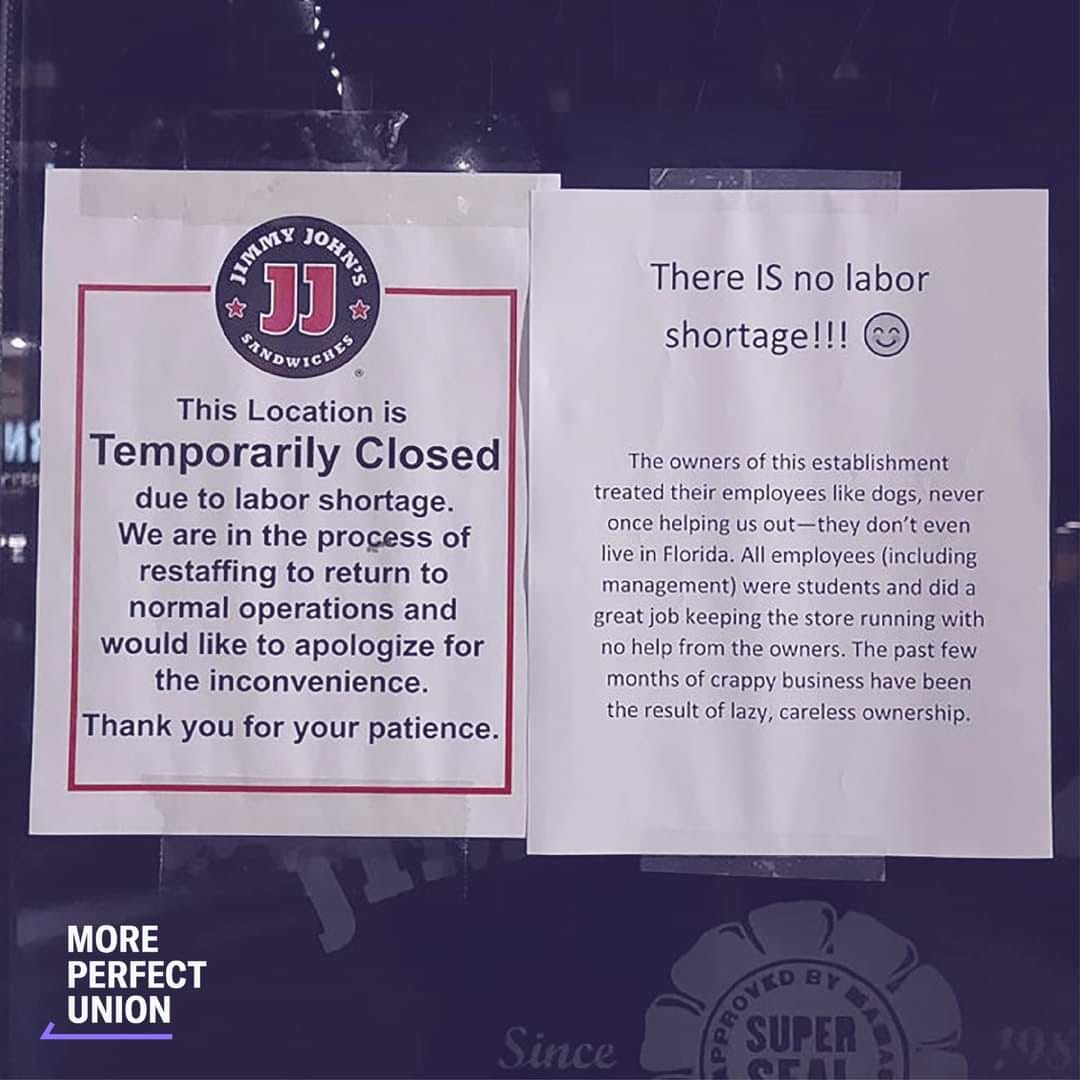
This meme is a satirical commentary on the struggles of working-class people, particularly those in the service industry. The image shows a closed sign from a Jimmy John's restaurant, with a humorous note explaining that the closure is due to a lack of employees, but the real reason is that the owners are too lazy to hire new staff. The text reads: "This location is closed due to a lack of employees. We are not hiring. We are not looking for new employees. We are not hiring. We are not looking for new employees. We are not hiring. We are not looking for new employees. We are not hiring. We are not looking for new employees. We are not hiring. We are not looking for new employees. We are not hiring. We are not looking for new employees. We are not hiring. We are not looking for new employees. We are not hiring. We are not looking for new employees. We are not hiring. We are not looking for new employees. We are not hiring. We are not looking for new employees. We are not hiring. We are not looking for new employees. We are not hiring. We are not looking for new employees. We are not hiring. We are not looking for new employees. We are not hiring. We are not looking for new employees. We are not hiring. We are not looking for new employees. We are not hiring. We are not looking for new employees. We are not hiring. We are not looking for new employees. We are not hiring. We are not looking for new employees. We are not hiring. We are not looking for new employees. We are not hiring. We are not looking for new employees. We are not hiring. We are not looking for new employees. We are not hiring. We are not looking for new employees. We are not hiring. We are not looking for new employees. We are not hiring. We are not looking for new employees. We are not hiring. We are not looking for new employees. We are not hiring. We are not looking for new employees. We are not hiring. We are not looking for new employees. We are not hiring. We are not looking for new employees. We are not hiring. We are not looking for new employees. We are not hiring. We are not looking for new employees. We are not hiring. We are not looking for new employees. We are not.
detailed-analysis (gemma3-27b-vision)
Okay, let's break down this image of the Jimmy John’s sign and the handwritten note through the lenses you've requested. It's a rich little document for analysis!
Visual Description
The image depicts two pieces of paper affixed to a storefront window. The left side shows a standard Jimmy John’s sign announcing the location is "Temporarily Closed due to labor shortage." The sign is red with white lettering and the Jimmy John’s logo. To the right of that, a separate, handwritten note is posted. The note appears to be written in black marker and conveys a contrasting message: "There is no labor shortage!!!" It goes on to accuse the owners of mistreatment and carelessness, stating the business has suffered due to their lack of support. The bottom left corner shows the words "MORE PERFECT UNION" and the bottom right corner has a circular stamp saying "APPROVED BY SUPER SEAL". The visual contrast between the corporate announcement and the passionate, handwritten rebuttal is striking. The contrast between the official Jimmy John’s branding and the messy, handwritten note immediately suggests a power imbalance and a contested narrative.
Foucauldian Genealogical Discourse Analysis
Foucault's concept of discourse is key here. The corporate sign utilizes the discourse of labor shortage. This discourse isn't just a statement of fact, but a productive one. It frames the issue as a structural economic problem, obscuring the potential role of exploitative labor practices. It absolves the owners of any agency or responsibility. The handwritten note actively challenges this discourse. It doesn't simply deny the "labor shortage", but constructs an alternative genealogy – a different account of how this situation arose. It traces the issue back to the actions (or inactions) of the owners – their treatment of employees, lack of support, and presumed financial disregard. It's an attempt to dismantle the dominant discourse by revealing the power dynamics at play – the owners’ discourse of "shortage" is presented as a way to avoid responsibility.
Critical Theory
From a Critical Theory perspective (drawing on thinkers like the Frankfurt School), the image exemplifies the alienation and dehumanization inherent in late capitalism. The "labor shortage" is presented as an objective problem, but the handwritten note suggests it's a subjective experience of exploitative labor practices driving workers away. The fact that student employees are doing "a great job keeping the store running" and are then not supported by the owners underscores a lack of reciprocity and a disregard for human agency. It highlights the tension between capital's need for labor and the human need for dignity and fair treatment. The image functions as a mini-case study of how corporate messaging can mask underlying issues of power and exploitation.
Marxist Conflict Theory
This image is practically textbook Marxist Conflict Theory. The core conflict is between the owners (the bourgeoisie) and the workers (the proletariat). The owners attempt to frame the situation as a lack of labor (a commodity), while the handwritten note reveals the human experience behind the labor: exploitation, lack of support, and a perceived lack of value. The "labor shortage" is presented as a consequence of the owners' own actions. The note is, in essence, a statement of class consciousness – a recognition of the inherent power imbalance and the exploitation inherent in the relationship. It implicitly calls for better working conditions and a fairer distribution of wealth.
Postmodernism
From a Postmodern perspective, the image disrupts the idea of a single, objective truth. The corporate sign and the handwritten note offer competing narratives, both claiming to explain the same situation. There is no "real" truth to be found; only representations of reality. The handwritten note, with its passionate, subjective language, rejects the sanitized, corporate discourse of the sign. The image also embodies the idea of the death of the author/grand narrative. The "official" explanation from Jimmy John's is undermined by the counter-narrative, challenging the authority of the corporation.
Queer Feminist Intersectional Analysis
While the visual doesn’t explicitly state gender or sexuality, an intersectional approach can still be applied. The "student" employees mentioned might be disproportionately women, people of color, or individuals from marginalized groups who often take on low-wage service jobs. The exploitation experienced could be compounded by these intersecting identities. The fact that the owners are absent and "never live in Florida" also implies a form of distance and detachment, possibly mirroring broader power dynamics where those in charge are disconnected from the realities of those they exploit. The act of writing the note itself, as a form of resistance and visibility, can be seen as an assertion of agency against a system that seeks to silence and dehumanize. This can be read as a form of queer/feminist resistance – disrupting the dominant narrative and asserting a counter-voice.
Hopefully, this detailed breakdown provides a comprehensive analysis of the image from the perspectives you requested! Let me know if you’d like me to focus on any particular aspect or explore another theoretical lens.
simple-description (llama3.2-vision)
This meme is a humorous image that pokes fun at the COVID-19 pandemic's impact on businesses. The image shows a "Closed" sign from a fictional "Jimmy John's" location with a handwritten note explaining that the reason for the closure is a lack of employees, not a lack of customers. The note reads: "This location is temporarily closed due to a lack of employees. Not a lack of customers. We are in the process of re-staffing. Sorry for the inconvenience."
tesseract-ocr
i =f) By D \ = , se CEL iy un = ca ae There IS no labor i } w w | shortage!!! © i / ey 8 - | This Location is U] Temporarily Closed | The owners of this establishment aa | due to labor shorta e treated their employees like dogs, never | Wi inth ge. f once helping us out—they don’t even x ? | e are un © progess o live in Florida. All employees (including } restaffing to return to management) were students and did a | normal operations and great job keeping the store running with would like to apologize for no help from the owners. The past few the inconvenience. months of crappy business have been / i the result of lazy, careless ownership. | Thank you for your patience. } | eel) MORE ag ata ite), UN