First Seen
2025-07-11T20:19:28+00:00
detailed-analysis (gemma3_27b-it-q8_0)
Okay, let's break down the meme (the image of a computer's internal components) through the lens of Anti-Capitalism, specifically regarding minimum wage, utilizing the requested theoretical frameworks where applicable.
Visual Description
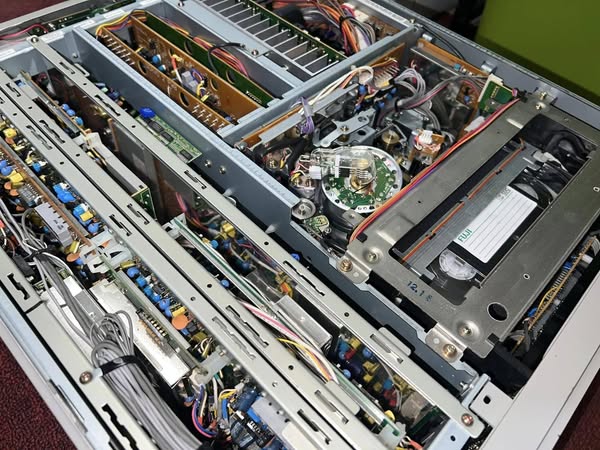
The image depicts the incredibly complex internal workings of a computer. We see circuit boards, wires, cooling systems, hard drives, and numerous other components packed tightly together. The visual emphasizes intricacy, density, and, most importantly, a hidden world of complex interconnectedness that makes the smooth functioning of the visible, usable technology possible. It's a chaotic yet ordered system, far removed from the simple interface most users experience. The sheer amount of 'stuff' required to make something "simple" happen is notable.
Marxist Conflict Theory
This image is a powerful visual metaphor for the relationship between labor and value within a capitalist system.
- Hidden Labor: The internal complexity of the computer represents the vast, often invisible, labor required to produce even a single seemingly simple consumer good. This labor occurs in mines extracting raw materials, in factories assembling components, in design labs, and in the transport/logistics chains. The final product's price rarely reflects the total labor input.
- Extraction of Surplus Value: Capitalism relies on extracting surplus value from labor – the difference between the value a worker creates and the wages they receive. This image highlights how much of that value is hidden, and how little of the final cost of the computer reflects the actual compensation to the laborers involved.
- Alienation: The image can represent worker alienation. The individual who solders a single component on one of those boards is deeply disconnected from the end product and the value derived from their labor. They are a cog in a much larger machine and have little say in the ultimate fate or value of their contribution.
- Minimum Wage as Symptom: The demand for a living wage, or even a minimum wage, is directly linked to this exploitation. A minimum wage is a battle to reclaim some of that extracted surplus value, to provide a more equitable share for those who contribute to the creation of such complexity. The image screams "Look at all the work that went into this! Is it really fair that the people doing this work struggle to survive?"
Critical Theory
The image fits well within the Frankfurt School’s tradition of critical theory, particularly as it relates to the “culture industry.”
- Commodity Fetishism: The finished computer is a commodity that obscures the labor and social relations that brought it into being. Consumers are encouraged to focus on the use value of the computer (what it does for them) rather than the exploitative exchange value (how its price is determined). This image rips away the polished exterior and forces us to confront the material conditions of its production.
- Ideology & Obscuration: The smooth, seamless experience of using a computer is ideological; it hides the messy, exploitative reality behind it. The image disrupts that illusion. It challenges the consumer to think critically about the systems that underpin their comfort and convenience.
- Reason and Domination: The intricacy of the internal workings could be interpreted as 'instrumental reason' taken to an extreme – a purely technical logic that prioritizes efficiency and control, often at the expense of human well-being. Capitalism instrumentalizes everything, including human labor.
Foucauldian Genealogical Discourse Analysis
Applying Foucault's methods, we can trace the historical development of the discourse around labor and technology.
- Power/Knowledge: The "knowledge" about how to build computers is concentrated in the hands of those who hold power (corporations, engineers, etc.). This knowledge is not neutral; it is power. The way labor is organized within the computer industry reflects and reinforces existing power dynamics.
- Discipline & Control: The assembly lines and intricate supply chains needed to produce computers are sites of discipline and control over workers. The image symbolizes this – the precision and regimentation required for such a complex undertaking. The push for lower wages is often tied to increasing worker 'discipline' (i.e., maximizing output with minimal resistance).
- Normalization: The idea that complex technologies are simply "normal" and that the workers who create them are not worthy of high compensation is a normalized discourse. This image aims to denormalize that idea by revealing the effort and complexity involved.
Postmodernism
While perhaps less directly applicable, postmodern thought can offer some insights.
- Deconstruction of the "Object": Postmodernism questions the idea of a stable, inherent meaning in an "object." The computer, as depicted, isn't a single unified thing. It's a fragmented, constantly shifting assemblage of components and processes. This deconstruction can extend to the idea of "work" and "value" – both are socially constructed and not fixed.
- The Simulacrum & Simulation: The user interface of a computer is a simulation of reality. The complexity beneath is often hidden, creating a gap between the representation and the real. The image exposes that gap.
In Summary
The image serves as a potent anti-capitalist meme because it visually represents the vast, often hidden, labor and complexity required to create the products we consume. It invites us to question the fairness of a system that extracts surplus value from workers, particularly those earning minimum wage, and obscures the true cost of production. It’s a call to confront the material reality behind the smooth, seamless surface of modern technology and demand a more equitable distribution of wealth and power.
Disclaimer: My analysis is based on my understanding of these theoretical frameworks. Interpretations can vary.
simple-description (llama3.2-vision_11b)
The meme is a screenshot of a computer's internal hardware, specifically the motherboard, with a red "X" marked through it. The text overlaying the image reads "Minimum Wage: $0.00/hour". This meme is a humorous commentary on the struggles of low-income workers, suggesting that even the minimum wage is not enough to cover basic expenses.
detailed-analysis (gemma3-27b-vision)
Okay, here's an analysis of the image of the opened computer system, broken down into the requested sections where appropriate. It's a complex image, and these analyses are necessarily interpretations, so they will layer on meaning.
Visual Description
The image shows the interior of a vintage computer, likely from the 1980s or early 1990s, with its casing open. It is densely packed with circuit boards, cabling, and various components. Key features include:
- Dense Circuitry: Multiple green circuit boards, populated with various chips and components, dominate the view. These boards are arranged in a relatively linear fashion, suggesting modular construction.
- Cabling: A tangled web of multi-colored cables (red, white, blue, black, yellow) connects the various components. This cabling is visible and disorganized, appearing like an exposed nervous system.
- Disk Drive: A visible floppy disk drive on the right side, a stark reminder of older data storage. There's a label on it indicating a unit ID.
- Fans: A metal fan structure is visible at the top of the frame, suggesting a cooling system.
- Materiality: The overall appearance is of robust, physical hardware, contrasting sharply with the ethereal nature of the data it once processed.
- Color Palette: Predominantly green (circuit boards), silver/grey (metal chassis), with splashes of color from the cabling.
- Condition: The system appears to be well-preserved, though the interior cabling suggests it hasn’t been recently maintained or cleaned. The frame has a bit of wear.
Foucauldian Genealogical Discourse Analysis
The exposed interior of the computer can be seen as a manifestation of the ‘archaeology’ and ‘genealogy’ as described by Michel Foucault.
- Discipline and Control: The internal organization of the computer, despite its seeming chaotic cabling, represents a system of discipline. Each component has a defined function and place within the larger system, reinforcing a control system that structures data processing. The arrangement isn't organic; it's engineered for efficiency and control over information flow.
- Power/Knowledge: The computer itself is an instrument of power/knowledge. It isn’t neutral; it’s an apparatus that creates knowledge through its ability to process and organize data, simultaneously reinforcing and legitimizing certain forms of knowledge over others. The way this technology became normalized shaped our modern understanding of information.
- Historical Contingency: The very architecture of the system—the use of floppy drives, the type of circuit boards—is a product of historical contingency. It represents a specific moment in technological development, and its now-obsolete elements reveal how our understandings of what "computing" is has changed.
- Discourse of Efficiency: The internal layout speaks to a discourse of efficiency and optimization. Every cable, every chip, is positioned to maximize performance – a discourse prevalent in the development and marketing of this technology.
Critical Theory
Looking through a Critical Theory lens, particularly drawing from the Frankfurt School, we can see this computer as representing:
- Instrumental Reason: The computer's design embodies instrumental reason – a focus on efficiency, calculation, and control. It prioritizes how things are done over why they are done, potentially obscuring ethical or social considerations. This "rationalization" of computing, while making it more powerful, can lead to a dehumanizing effect.
- Technological Determinism: The image can provoke thoughts around technological determinism – the idea that technology shapes society rather than the other way around. The computer’s architecture has demonstrably impacted the way we work, communicate, and even think.
- Commodification of Information: The computer is a vehicle for the commodification of information. Its ability to process and store data facilitates its conversion into a marketable resource.
- Alienation: While the computer ostensibly reduces labor, it also contributes to alienation. The complexity of the internal components obscures the process of computation, potentially distancing individuals from the means of knowledge creation.
Marxist Conflict Theory
From a Marxist perspective, the computer interior represents:
- Means of Production: The computer is a clear example of the means of production, used to generate economic value. The complex arrangement of components embodies the division of labor inherent in capitalist production.
- Class Relations: The computer, and the knowledge to build and operate it, are not distributed equally. Access to technology and the skills to utilize it contribute to class stratification and the reproduction of inequality.
- Commodity Fetishism: The smooth, functional exterior of a computer often obscures the complex and exploitative labor practices involved in its production. The focus shifts from the social relations of production to the commodity itself.
Postmodernism
From a postmodern perspective:
- Deconstruction of the Technological Narrative: The opened computer challenges the seamless, unified narrative of technological progress. The tangled cabling and exposed components reveal the messy, contingent, and imperfect reality behind the polished exterior.
- Simulacra and Simulation: The computer, as a tool for creating and manipulating data, can be seen as contributing to the creation of simulacra – representations that have become detached from reality. The image hints at the virtualization of experience enabled by the computer.
- Fragmentation and Discontinuity: The array of components and cables represents a fragmentation of the technological whole. This echoes a broader postmodern concern with the breakdown of grand narratives and the embrace of multiplicity and difference.
Important Note: These analyses are interpretations, and there's room for other readings. The strength of these analyses depends on the specific theoretical focus you're employing. The image is rich enough to support multiple lenses.
simple-description (llama3.2-vision)
This meme is a picture of a computer's internal components, with a focus on the "motherboard" and "hard drive" labels. The image is likely meant to be humorous or ironic, possibly referencing the idea that someone is "hard" (like a hard drive) or "mother” (like a mother) of a particular thing.