First Seen
2023-06-15T22:29:33+00:00
simple-description (qwen3.5_2b-q8_0)
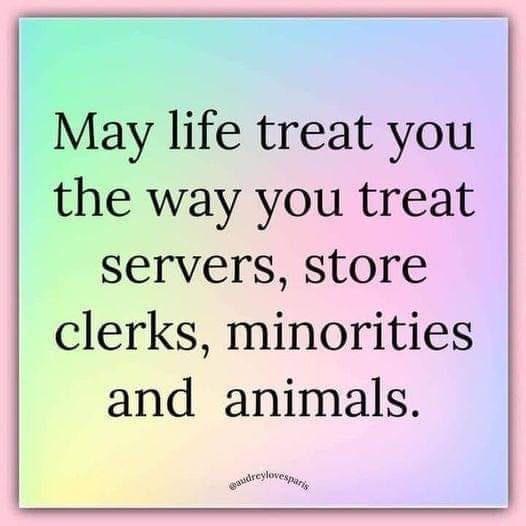
The image displays a cynical variation of the "Mama Bear" meme, which suggests that if you treat people (specifically low-status workers, vulnerable minorities, and animals) with cruelty, prejudice, or indifference, life will reciprocate that harshness. In an "Anti-Conservative" context, this likely implies a worldview that rejects traditional moral absolutes, asserting that life is indifferent to your behavior and will return exactly the same treatment you give to the world around you.
simple-description (llama3.2-vision_11b)
The meme is a humorous take on the idea that some people might be unhappy about the way they're treated by servers, clerks, or other service workers. It suggests that these individuals might be more concerned about being treated poorly by people in positions of power, rather than by those who serve food or drinks.
detailed-analysis (gemma3-27b-vision)
Okay, let's break down the image and its potential interpretations through the requested theoretical lenses.
Visual Description
The image is a square-shaped graphic with a vibrant, multi-colored background that transitions from a pale pinkish-purple on top to a gradient of green, yellow, and blue towards the bottom. Centered within the square is black text that reads: “May life treat you the way you treat servers, store clerks, minorities and animals." The text is in a simple sans-serif font. At the bottom right corner is the watermark "@audreylovesparis". The overall aesthetic leans towards inspirational/motivational imagery, often seen on social media.
Foucauldian Genealogical Discourse Analysis
This statement can be viewed as a challenge to established power dynamics. A Foucauldian approach would focus on the discourse surrounding service work, racial/ethnic classifications (“minorities”), and the treatment of animals.
- Power/Knowledge: The statement implies that there's a relationship between how one acts towards these groups (servers, clerks, etc.) and how one experiences life. Foucault argues that power isn’t simply repressive; it produces knowledge and ways of being. Treating these groups poorly establishes a certain way of seeing the world, one that then returns to the actor in the form of their life experiences.
- Genealogy: To understand the current situation, we’d need to trace the historical “genealogy” of our attitudes toward these groups. How did we arrive at systems that allow for the exploitation of service workers or the systematic oppression of racial/ethnic groups? The statement subtly suggests that these attitudes are not natural or inevitable, but historically constructed.
- Discipline & Normalization: The statement implicitly challenges the normalization of disrespectful treatment. Our societal structures often normalize treating those in service positions as “less than” or overlooking injustice toward marginalized groups. The statement advocates for a disruption of this normalization.
Critical Theory
From a critical theory perspective (drawing on thinkers like Adorno, Horkheimer, and Marcuse), this statement can be interpreted as a rejection of instrumental reason and the domination of one group over others.
- Domination & Oppression: The statement directly addresses relationships marked by power imbalances. Service workers, store clerks, and minorities are often subject to social, economic, and even physical vulnerability. Animals are systemically exploited. The statement suggests that reciprocal treatment is a form of ethical resistance to these systems.
- Critique of Enlightenment Reason: Critical theory questions the idea that reason is inherently progressive. Sometimes, reason can be used to justify domination. The statement implies that treating others with respect isn’t about a rational calculation, but about empathy and ethical responsibility.
- Emancipatory Potential: The statement has an emancipatory quality. It calls for a shift in consciousness and a re-evaluation of how we interact with others. It implicitly argues that a more just society requires treating all beings with dignity.
Marxist Conflict Theory
Through a Marxist lens, this statement highlights class conflict and the exploitation inherent in capitalist systems.
- Class Relations: Servers and store clerks are typically part of the working class, engaged in service labor. Their treatment is often dictated by the demands of capital (maximizing profit). The statement implies that respectful treatment is a form of solidarity with the working class.
- Exploitation: The statement implicitly recognizes that these individuals are often exploited – receiving low wages, facing precarious working conditions, and being subjected to disrespect.
- Alienation: The statement could suggest that treating these individuals poorly contributes to alienation – the separation of individuals from their labor and from each other.
- Animal Exploitation: Under a Marxist lens, this can also be viewed as the use of animals as a commodity for use and profit.
Postmodernism
A postmodern interpretation would focus on the instability of meaning and the rejection of universal truths.
- Deconstruction of Power: The statement challenges the idea that power operates in a straightforward, top-down manner. It suggests that power is fluid, relational, and can be resisted through everyday actions.
- Relativism: While advocating for respectful treatment, postmodernism wouldn’t necessarily assert a universal ethical code. It would emphasize the importance of context and interpretation.
- Critique of Grand Narratives: The statement rejects any “grand narrative” that justifies the exploitation or mistreatment of others. It suggests that our moral obligations are not derived from abstract principles, but from concrete relationships.
- Emphasis on Difference: The statement acknowledges the difference in social positions (server vs. customer, clerk vs. shopper) and implies that ethical interactions require recognizing and respecting those differences.
Queer Feminist Intersectional Analysis
This lens combines queer and feminist perspectives with an emphasis on intersectionality (the interconnected nature of social categorizations such as race, class, and gender).
- Interlocking Systems of Oppression: This analysis recognizes that individuals often experience multiple forms of oppression simultaneously. A server might also be a person of color, a woman, or a member of the LGBTQ+ community, compounding their vulnerability.
- Challenging Normative Power Structures: The statement implicitly challenges the patriarchal, capitalist, and heteronormative structures that perpetuate exploitation and discrimination.
- Care Ethics: The statement aligns with care ethics, which emphasizes the importance of empathy, compassion, and relationality. Treating others with respect is seen as a fundamental moral obligation.
- Animal Liberation: Queer feminist thought often extends to animal liberation, recognizing the common threads of domination and exploitation that affect all marginalized groups. The inclusion of animals in the statement reflects this intersectional concern.
- Disrupting Social Hierarchy: The statement implicitly challenges a system that elevates certain groups (those with economic power, cisgender, heterosexual individuals) over others. It advocates for a more egalitarian approach to social interactions.
I hope this detailed analysis is helpful! Let me know if you'd like me to elaborate on any of these points.
simple-description (llama3.2-vision)
This meme is a humorous commentary on the concept of "treat others the way you want to be treated" being applied to the internet. The image features a quote that reads, "May life treat you the way you treat servers, store clerks, minorities and animals." The text is presented in a simple, modern font, with no images or graphics to accompany it. The tone is lighthearted and tongue-in-cheek, poking fun at the idea that people often treat others poorly, but expect to be treated with kindness in return.
tesseract-ocr
May life treat you the way you treat servers, store clerks, minorities and animals.