First Seen
2023-09-07T15:43:26+00:00
simple-description (qwen3.5_2b-q8_0)
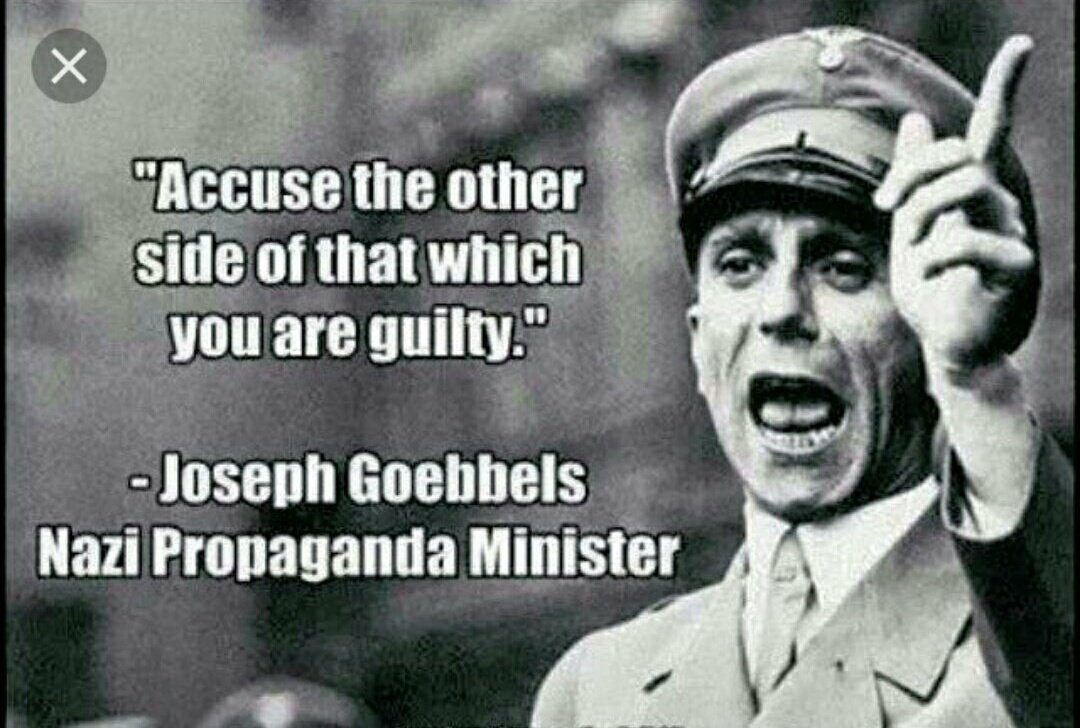
This meme presents a controversial political quote attributed to Nazi propaganda minister Joseph Goebbels to represent a rigid, uncompromising worldview. The text implies a fundamentalist stance where one should only tolerate absolute purity and refuse to compromise. In this "Anti-Conservative" context, it mocks social flexibility, portraying the speaker as a purist who demands strict adherence to ideology and rejects any softness or deviation from group rules.
simple-description (llama3.2-vision_11b)
This meme is a play on the phrase "The devil's in the details," which is a common idiomatic expression meaning that the true nature of something is hidden in its specifics. The meme features a quote from Joseph Goebbels, a Nazi propaganda minister, saying "When I read things, I say to myself, so this is what I know." The meme is likely to be shared in a context that is critical of conservative ideology, implying that the speaker is aware of the nuances of the issue at hand, but is not willing to accept the truth.
detailed-analysis (gemma3-27b-vision)
Okay, let's break down this image and quote through the lenses you requested, addressing only those sections that are relevant and offering nuanced analysis.
Image Description
The image is a black and white photograph of Joseph Goebbels, the Nazi Propaganda Minister, mid-speech. He is shown in a dramatic pose: mouth open in a shout, one finger raised in accusation or emphasis. He wears a military-style cap and uniform, indicating authority. The photo appears to be a still from a propaganda film or newsreel, emphasizing the calculated and theatrical nature of his public persona. The overall effect is one of impassioned oratory and, crucially, the exertion of power through rhetoric.
Foucauldian Genealogical Discourse Analysis
This image and quote are ripe for a Foucauldian analysis. The quote itself ("Accuse the other side of that which you are guilty") is a discourse, a system of thought, ideas, and representations. Foucault's work focused on how discourses construct reality, power relations, and subjectivity.
- Power/Knowledge: Goebbels' statement demonstrates the inextricable link between power and knowledge. The Nazis understood that shaping narratives and attributing blame could create truth and justify their actions. This isn't about objective truth; it's about constructing a narrative that maintains their power.
- Genealogy: Tracing the genealogy of this tactic (accusation as projection) reveals its long historical presence. While the Nazis perfected it, the strategy of deflecting blame and projecting one's own faults onto others is ancient. Examining its evolution illuminates how power dynamics have consistently functioned.
- Disciplinary Power: This strategy contributes to disciplinary power by creating an atmosphere of suspicion and fear. It normalizes the idea that accusations, even baseless ones, can be wielded as a tool for control. The discourse establishes a framework in which the "other" is inherently suspect and can be targeted.
- Discursive Practice: The quote is a prime example of a discursive practice – a routine way of speaking and acting that reinforces power relations. Goebbels, as a master propagandist, actively employed and disseminated this practice.
Critical Theory
From a Critical Theory perspective (rooted in the Frankfurt School), this image and quote illuminate the dangers of ideology and instrumental reason.
- Ideology: The quote is a core element of Nazi ideology. It reveals how propaganda functions to distort reality and manipulate public opinion. The Nazis used this tactic to create a "scapegoat" (Jews, communists, etc.) onto whom they could project their own anxieties and guilt.
- Instrumental Reason: The quote reflects a purely instrumental approach to reason. It doesn't concern itself with truth or justice; it's solely focused on achieving a desired outcome (maintaining power). This is a key concern for Critical Theorists, who saw instrumental reason as dehumanizing and contributing to social domination.
- Mass Deception: The image points to the power of mass media and propaganda in creating a distorted reality. The highly theatrical presentation of Goebbels in the image suggests a deliberate attempt to manipulate emotions and bypass rational thought. This points to the manipulation of the public by the Nazi regime.
Marxist Conflict Theory
Through a Marxist lens, this image can be understood within the context of class struggle and the maintenance of bourgeois power.
- False Consciousness: The use of scapegoating and projection, as embodied in the quote, can be seen as a tactic to create false consciousness among the working class. By diverting attention to an "enemy" (Jews, communists, etc.), the Nazis prevented the working class from recognizing their true oppressors – the capitalist class.
- Ideological Apparatus: Goebbels, as Minister of Propaganda, was a key figure in the state's ideological apparatus – the institutions that disseminate ideology and maintain the existing power structure. His role was to construct a narrative that legitimized the Nazi regime and suppressed dissent.
- Maintaining the Status Quo: The tactic of accusation and projection serves to preserve the power of the ruling class by shifting blame and preventing collective action against systemic inequality. It reinforces the existing power dynamics.
Important Note: It is important to recognize that this analysis is complex and multifaceted. There are other theoretical frameworks that could be applied, and different scholars may offer different interpretations.
Let me know if you would like me to elaborate on any of these points or explore other theoretical angles.
simple-description (llama3.2-vision)
This meme features a black-and-white image of Joseph Goebbels, the Nazi propaganda minister, with a quote overlaid on top. The quote, in a bold, white font, reads: "Accuse the other side of that which you are guilty." This is a quote often attributed to Goebbels, but it's actually a misquote of a phrase often attributed to George Orwell.
tesseract-ocr
. gz Pa * 7 4 ~~) , | Le UIT ll Va—— a Py SUDURUEI UG ay? Fee all ww TCA TT | cael ee | SCR eh | Nazi Propaganda Minister / od —— - WI