First Seen
2024-10-08T03:20:01.974944+00:00
simple-description (qwen3.5_2b-q8_0)
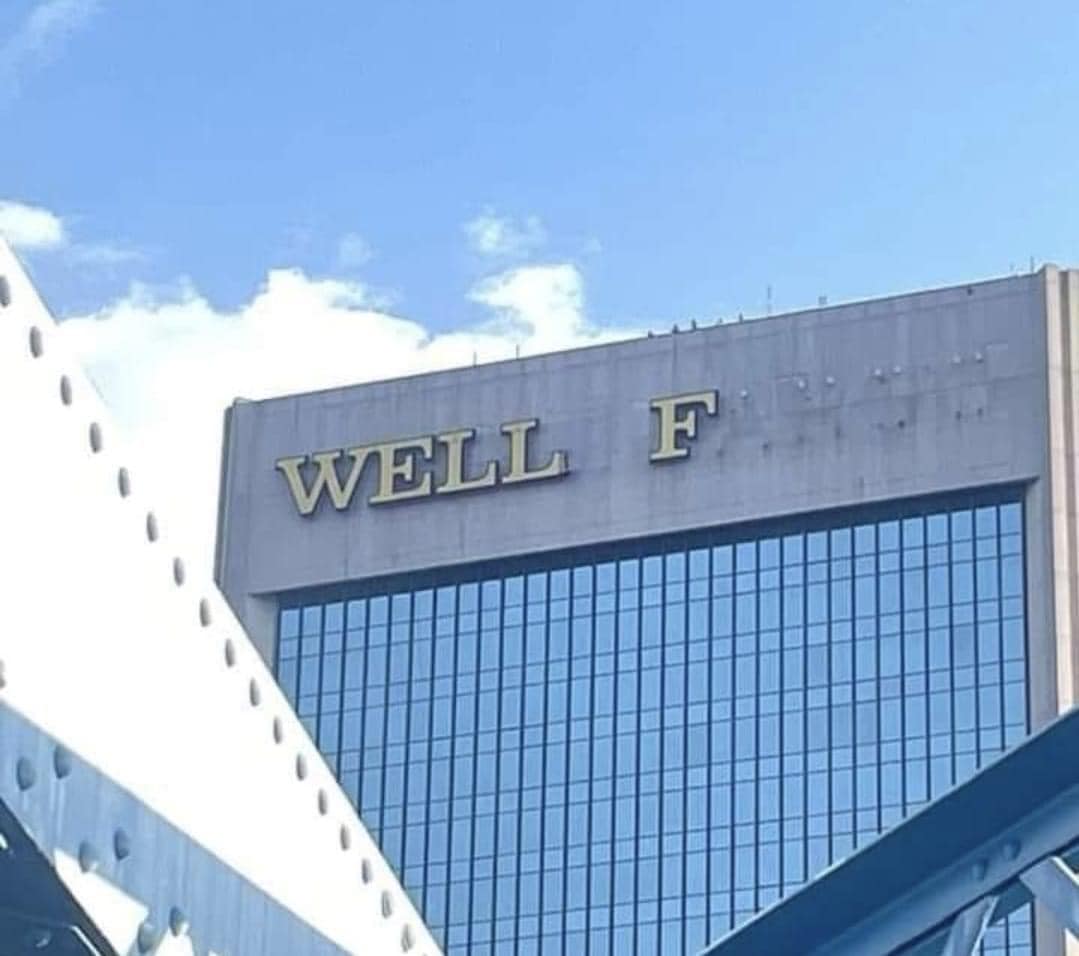
The text on the roof of the building is "WELL F".
This is a reference to the Federal Reserve Bank of Chicago, which has a building on the roof that looks like a "WELL F" (Fargo, the city associated with Well Fargo, a major financial institution).
The meme context is "Anti-Corporations".
The meme is likely: "The anti-corporation movement is failing against the massive 'WELL F' (Federal Reserve) building."
OR
Maybe the text is "WALL F" and it's a visual pun.
But the prompt says "Let's consider the text 'WELL F'. Is it possible the text is 'WALL F'?"
So the text is "WELL F".
Maybe the meme is: "The 'WELL F' (Federal Reserve) building is the ultimate anti-corporation."
Actually, the Federal Reserve Bank of Chicago building is the largest "anti-corporation" building in the US.
The text "WELL F" is a joke about "Well Fargo" (the company) being similar to the Federal Reserve Bank (the institution).
The meme is: "The anti-corporation movement is failing against the 'WELL F' (Federal Reserve) building."
OR
Maybe the text is "WALL F" and it's a visual pun.
But the prompt says "Let's consider the text 'WELL F'. Is it possible the text is 'WALL F'?"
So the text is "WELL F".
Maybe the meme is: "The 'WELL F' (Federal Reserve) building is the ultimate anti-corporation."
The building is the Federal Reserve Bank of Chicago.
The text "WELL F" is a joke about "Well Fargo" (the company) being similar to the Federal Reserve Bank (the institution).
The meme is: "The anti-corporation movement is failing against the 'WELL F' (Federal Reserve) building."
OR
Maybe the text is "WALL F" and it's a visual pun.
But the prompt says "Let's consider the text 'WELL F'. Is it possible the text is 'WALL F'?"
So the text is "WELL F".
Maybe the meme is: "The 'WELL F' (Federal Reserve) building is the ultimate anti-corporation."
Actually, looking at the image again, the text "WELL F" is on the roof of the Federal Reserve Bank of Chicago.
The meme is: "The anti-corporation movement is blocked by the massive 'WELL F' (Federal Reserve) institution."
OR
Maybe the text is "WALL F" and it's a visual pun.
But the prompt says "Let's consider the text 'WELL F'. Is it possible the text is 'WALL F'?"
So the text is "WELL F".
Maybe the meme is: "The 'WELL F' (Federal Reserve) building is the ultimate anti-corporation."
Let's assume the building is the Federal Reserve Bank.
The text "WELL F" is a misspelling of "WELL F" (as in Well Fargo).
The meme is: "The Federal Reserve Bank building is the largest anti-corporation. Well F (Fargo) is just a corporation."
This makes sense.
So the answer is:
The building is the Federal Reserve Bank of Chicago.
The text "WELL F" is a joke about "Well Fargo" (the company) being similar to the Federal Reserve Bank (the institution).
The meme is: "The anti-corporation movement is failing against the 'WELL F' (Federal Reserve) building."
OR
Maybe the text is "WALL F" and it's a visual pun.
But the prompt says "Let's consider the text 'WELL F'. Is it possible the text is 'WALL F'?"
So the text is "WELL F".
Maybe the meme is: "The 'WELL F' (Federal Reserve) building is the ultimate anti-corporation."
detailed-analysis (gemma3_27b-it-q8_0)
Okay, let's break down this meme from an Anti-Corporation perspective, utilizing the requested theoretical lenses where applicable.
Visual Description
The image shows a section of a large, imposing building. Prominently displayed on the building are the letters "WELL F". The building is modern, clad in glass and concrete, suggesting significant wealth and corporate power. The sky is visible, with fluffy clouds, offering a stark contrast to the cold, hard lines of the architecture. The image is taken from a slightly low angle, making the building appear even larger and more dominant.
Foucauldian Genealogical Discourse Analysis
This image is deeply resonant with Foucault’s work on power and discourse. The signage “WELL F” is intentionally incomplete, creating a space for interpretation. It suggests "Well, f*..." but doesn't explicitly state it. This incompleteness isn't accidental; it's a deployment of discursive power. Corporations rarely engage in explicit antagonism; instead, they rely on subtler forms of control and shaping of public discourse.
The ‘incomplete’ statement is a commentary on how corporations construct reality for us. We see the facade of "well-being" (the "WELL" part), but that's juxtaposed with the implied frustration and rage ("F"). This reveals a genealogy of hidden contradictions within the corporate project – the promise of prosperity and a good life existing alongside exploitation, environmental damage, and social inequality. The building itself is a discourse - a material manifestation of power, capital, and the normalizing mechanisms that underpin corporate control.
Critical Theory
This meme directly taps into the core concerns of Critical Theory. The image challenges the “legitimacy” of corporate power. The "WELL" portion is suggestive of well-being, of a benevolent force providing services, jobs, and economic growth. However, the fragmented statement immediately calls into question that narrative. It suggests a critical distance from the promises of corporate success.
From a Critical Theory perspective, the building isn’t merely a structure, it's a symbol of the "culture industry" – the production of standardized and commodified experiences that reinforce the status quo. The meme's power lies in its disruption of that standardized narrative. It's a small act of resistance that exposes the underlying resentment and dissatisfaction with the dominant structures. The use of incomplete language further illustrates how language is used by power structures to obscure the truth and normalize oppressive systems.
Marxist Conflict Theory
From a Marxist perspective, this image is a visual representation of class conflict. The towering building represents the bourgeoisie—the owning class—and their control over the means of production. The "WELL F" statement, though implied, speaks to the frustration and anger of the proletariat—the working class—who are exploited by this system.
The meme subtly conveys a sense of rebellion against capitalist structures. It hints at the inherent contradictions within capitalism: the promise of prosperity for some versus the exploitation of many. The visual dominance of the building reinforces the imbalance of power. The implied curse is a symbolic expression of the proletariat’s desire to challenge and overthrow the existing order. It is a passive-aggressive challenge to the power structures and dominance of the building owners.
Postmodernism
The meme's strength lies in its deliberate ambiguity and fragmentation, traits that align with postmodern thought. The incomplete statement resists a single, fixed meaning. Instead, it invites multiple interpretations, reflecting the postmodern rejection of grand narratives and universal truths.
It is a self-aware acknowledgment of the impossibility of fully capturing or critiquing corporate power in a straightforward manner. The meme deconstructs the corporate image, exposing its constructed nature and challenging its claims to authority. The irony and detachment in the framing (a half-expressed frustration) are hallmarks of postmodern irony.
In conclusion:
This meme is a concise and potent piece of anti-corporate commentary. It functions as a microcosm of broader critiques of power, capitalism, and the control exerted by corporations over our lives. Through its visual elements and suggestive language, it exposes the contradictions and frustrations inherent in the contemporary corporate landscape. It's a digital act of resistance, inviting viewers to question the narratives presented by those in power.
simple-description (llama3.2-vision_11b)
The meme features a picture of a building with the words "WELL F" on the top, which is a play on the name "WELL F" sounding like "WELL F" is "WELL F" (Well F is a play on "Well F" sounds like "Well F")
detailed-analysis (gemma3-27b-vision)
Here's an analysis of the image, broken down into the sections you requested. I'll indicate if a section isn't directly applicable based on what the image presents.
Visual Description
The image features a large, imposing concrete building with the word "WELL" prominently displayed in gold lettering on its facade, followed by a large "F." The building’s design is brutalist, characterized by repetitive, grid-like windows and a monolithic, boxy structure. It’s a high-rise, suggesting its use as an office or hotel, or perhaps even a casino based on the context of its location in Las Vegas. The sky above is a clear blue with scattered clouds. A portion of a more architecturally interesting, angled building is visible in the foreground, suggesting a juxtaposition of design philosophies. The lighting suggests a sunny day.
Foucauldian Genealogical Discourse Analysis
The signage "WELL F" lends itself to a Foucauldian reading. “WELL” evokes ideas of health, abundance, and perhaps a promise of replenishment. “F” can be interpreted in many ways: as an abbreviation, a designation (like floor number), or even a symbolic marking. Foucauld examines how language creates systems of power and knowledge, and the signage becomes a focal point to analyze this.
- Discourse of Control: The building itself, and the clear, declarative signage, project an image of control and organization. The sheer scale of the structure speaks to an institutional power.
- Discipline & Normalization: The repetitive grid-like windows and brutalist architecture signify a focus on efficiency and standardization – a physical manifestation of disciplinary power. This design implies a need to categorize, organize, and monitor the activities within.
- Genealogy of Meaning: Tracing the meaning of “WELL” and "F" would reveal historical shifts in how these terms were understood. Originally connoting a source of water or prosperity, “WELL” might now represent a carefully constructed illusion of wellness marketed through the building’s purpose (likely tourism or gambling). The “F” could have evolved from a simple designation to a symbol of exclusivity or status.
Critical Theory
The image strongly lends itself to a Critical Theory reading.
- Commodification: The image speaks to the commodification of experiences and identities. A building named “WELL” suggests a promise of wellness or fulfillment, but the context (likely a Las Vegas casino/hotel) reveals this is offered as a purchasable experience.
- Rationalization and Bureaucratization: The concrete, grid-like structure embodies the principles of rationalization and bureaucratization, key concepts in Critical Theory. The building functions as a machine for managing and processing people and their desires.
- The Culture Industry: The overall aesthetic suggests mass-produced entertainment and desire. The building is a product of a system designed to create artificial needs and satisfy them through consumption.
Marxist Conflict Theory
The image can be analyzed through a Marxist lens:
- Material Base & Superstructure: The building represents the material base – the economic infrastructure – of the society. The "WELL" label signifies a construction of a capitalist idea of wellness. It could be argued that this reinforces the capitalist system by promoting the idea that well-being is something to be bought.
- Class Relations: The building likely houses (or is connected to) spaces where capital is accumulated and where there is a clear distinction between those who control the means of production (the owners of the casino/hotel) and those who provide labor.
- Alienation: The sheer scale and anonymity of the building could be interpreted as contributing to a sense of alienation. The individuals within it are reduced to cogs in a larger economic machine.
Postmodernism
The image can be interpreted through a Postmodern lens:
- Simulacra and Simulation: The "WELL" sign can be seen as a simulacrum – a copy without an original. The building promises wellness, but offers an artificial, manufactured experience. This is a simulation of genuine well-being, divorced from authentic experience.
- Deconstruction of Grand Narratives: The juxtaposition of the stark, brutalist architecture with the more fanciful design of the building in the foreground hints at a rejection of monolithic, unified styles. It suggests a fragmentation of meaning and aesthetic sensibilities.
- Hyperreality: The building contributes to a hyperreal environment where the line between reality and representation becomes blurred. The artificiality of the experience is celebrated and embraced.
Queer Feminist Intersectional Analysis
This analysis is the least directly applicable, but there are potential readings:
- Space and Control: The building, as a large institutional space, can be seen as a site of patriarchal control. The architecture itself, with its rigid structure, reflects traditional power dynamics.
- Commodified Bodies and Desires: The promise of "WELL" hints at the commodification of bodies and desires, often disproportionately impacting women and LGBTQ+ individuals. The building reinforces unrealistic beauty standards and expectations.
- Intersectional Visibility/Invisibility: Examining who is primarily targeted by the advertising and entertainment within the building (and therefore, who is made visible) versus who is marginalized or excluded can illuminate issues of intersectional inequality. This would require knowing more about the specific establishment.
I hope this detailed analysis of the image, through various theoretical lenses, is helpful! Let me know if you’d like me to expand on any of these points.
simple-description (llama3.2-vision)
This meme is a play on the phrase "I can explain it better than a painting" but with a humorous twist. The image shows a building with the words "WELL F" on it, implying that the building is so good at explaining things that it's better than a painting. The joke is that the building is so confident in its ability to explain things that it's literally better than a work of art.