First Seen
2023-05-10T21:03:33+00:00
simple-description (llama3.2-vision_11b)
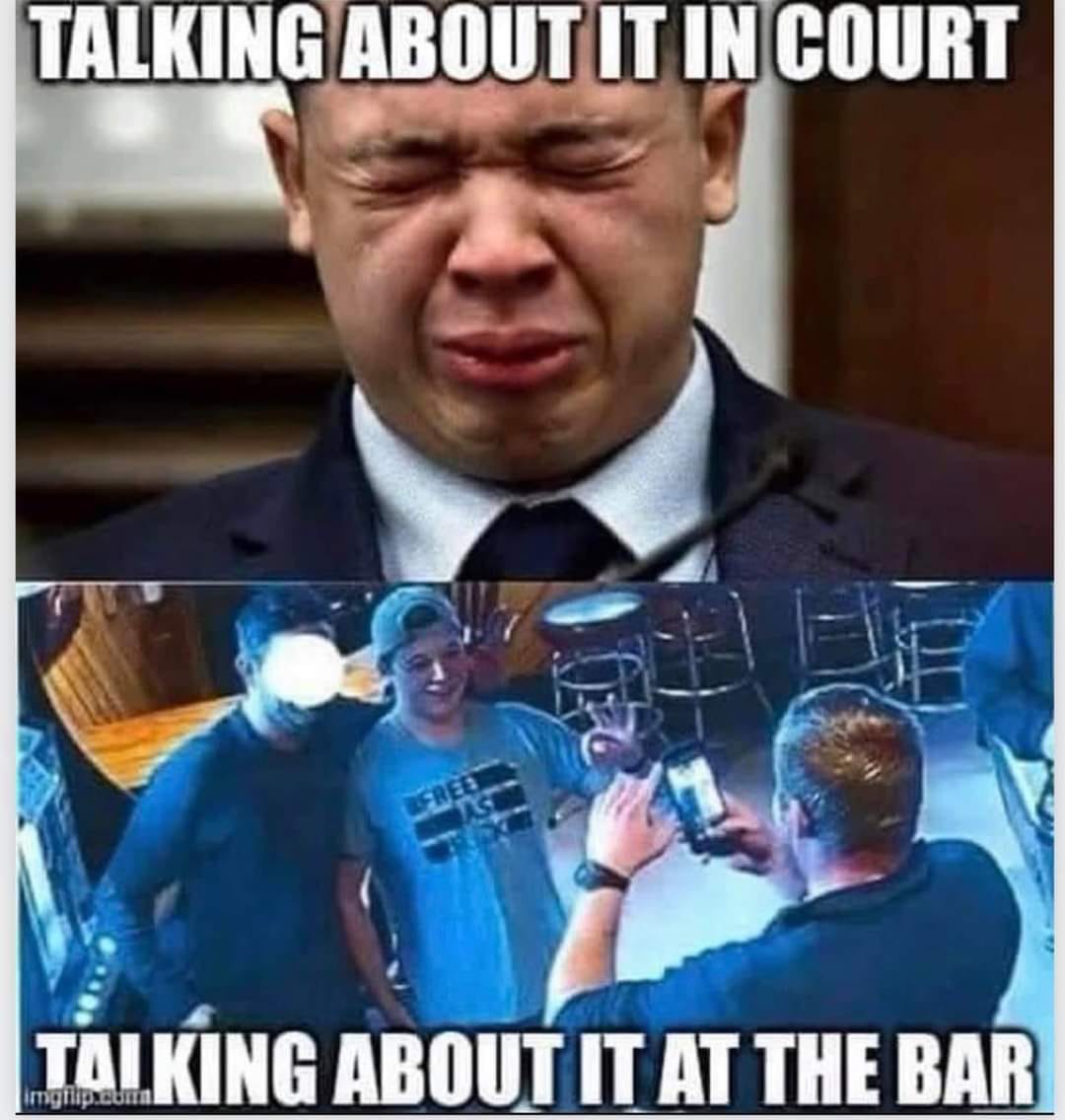
The meme is a humorous take on the concept of "free speech" being used as an excuse for hate speech. The image shows a person ( likely a politician or public figure) being confronted by a group of people who are upset about something, with the caption "I'm just talking about it in court" implying that the person is trying to use their "free speech" rights to justify their hate speech. The second image shows the same person being confronted by a group of people, with the caption "I'm just talking about it at the bar" implying that the person is trying to use their "free speech" rights to justify their hate speech in a more informal setting.
detailed-analysis (gemma3-27b-vision)
Okay, let's break down this meme with the requested theoretical lenses. It's important to note that memes are complex, often multi-layered, and open to interpretation. These analyses are potential readings, not definitive statements.
Visual Description
The meme is a two-panel image.
- Top Panel: A close-up of actor Keith David, likely a screencap from a dramatic courtroom scene. He appears upset, frustrated, or in emotional turmoil. His facial expression conveys intensity.
- Bottom Panel: A blurry image of two men at a bar, seemingly deep in conversation. One is holding a beer, and their body language suggests a casual, informal setting.
- Text: The text overlays the images: "Talking about it in court" over the Keith David image, and "Talking about it at the bar" over the image of the men in the bar. The text is meant to create a humorous juxtaposition. The bottom of the image contains a watermark for imgflip.com
Foucauldian Genealogical Discourse Analysis
This meme invites a Foucauldian reading centered around the construction of discourse and power dynamics surrounding shared confidences or traumatic events.
- Power/Knowledge: The meme highlights how the same "it" (the undisclosed subject of conversation) is framed and expressed differently based on where it's discussed. The courtroom represents the formalized, legal discourse of the state, governed by rules of evidence, procedure, and accountability. The bar represents informal, unregulated speech, where social norms (but not necessarily legal rules) dictate what's permissible.
- Genealogy of Truth: The meme subtly questions the production of truth. What is considered “true” or “legitimate” disclosure shifts dramatically based on context. The courtroom seeks "objective" truth, presented through specific modes of language. The bar fosters subjective, anecdotal exchange.
- Disciplinary Power: The courtroom image evokes the panoptic gaze and the mechanisms of discipline within the legal system. Keith David’s expression reflects the weight of being scrutinized, judged, and potentially punished. The bar image is a space of relative freedom from such surveillance, allowing for different modes of expression.
Critical Theory
From a critical theory perspective, this meme illustrates the ways in which social norms and institutions shape individual experience and expression.
- Ideology: The meme subtly exposes the ideological differences between legal and social/personal spheres. The legal system ideologically claims to be a neutral arbiter of truth and justice, but the meme implies that this claim is inherently biased by the formal structures of power. The bar, in contrast, is a space for unmediated expression, but also potentially a space for reinforcing existing social hierarchies or biases.
- Hegemony: The meme suggests that the legal system’s attempts to control discourse (through rules of evidence, court procedure, etc.) represent a form of hegemonic control – a system of domination that is accepted as “natural” or “inevitable.”
- Emancipation: The contrast between the two scenes implies that true emotional or personal expression may be suppressed by the rigidity of formal institutions. The bar is presented as a potentially liberating space, though it’s also important to acknowledge that bars can also be sites of oppression or exploitation.
Marxist Conflict Theory
While not overtly Marxist, the meme can be interpreted through the lens of class and power dynamics.
- Power Relations: The courtroom represents the state apparatus, often used to enforce the interests of the dominant class. The bar represents a space where individuals might share experiences outside of the direct control of the state, potentially fostering resistance or solidarity.
- False Consciousness: The meme could be read as a commentary on how the legal system can mask the underlying social inequalities and power structures that produce conflict. The courtroom may appear to be a neutral space for resolving disputes, but it’s actually embedded in a system of class-based privilege.
- Alienation: The intense frustration on Keith David’s face could be interpreted as a form of alienation – a sense of disconnection from the legal system and its values. The men at the bar, while seemingly relaxed, could also be alienated from institutions.
Postmodernism
This meme, as a short-form digital communication, embodies several characteristics of postmodern culture.
- Irony and Parody: The juxtaposition of the serious courtroom scene with the casual bar scene is inherently ironic. The meme parodies the idea that there’s a “right” way to talk about difficult things.
- Deconstruction of Grand Narratives: The meme implicitly questions the “grand narrative” of the legal system as a source of objective truth and justice.
- Fragmentation and Intertextuality: The meme relies on the viewer's knowledge of both courtroom dramas and bar culture to create meaning. This intertextuality reflects the fragmented and collage-like nature of postmodern culture.
Queer Feminist Intersectional Analysis
This reading requires a bit of extrapolation, as the meme doesn't directly address gender or sexuality. However, the meme can be examined through an intersectional lens of vulnerability and power.
- Silencing and Disclosure: The meme highlights how the context of disclosure (court vs. bar) dramatically affects who gets to speak, how they’re listened to, and what consequences they face. This is particularly relevant for marginalized groups (e.g., LGBTQ+ individuals, people of color) who may face greater scrutiny or disbelief when speaking truth to power.
- Emotional Labor: The intensity of Keith David's expression suggests the emotional toll of being subjected to formal scrutiny. This emotional labor can be particularly burdensome for individuals who are already marginalized.
- Space and Safety: The bar, while imperfect, potentially represents a space where marginalized individuals can find solidarity and support. The courtroom, as a site of state power, may be perceived as hostile or threatening.
Disclaimer: These are interpretations based on theoretical frameworks, and there are many other ways to analyze the meme. The meme is ultimately open to multiple readings.
simple-description (llama3.2-vision)
This meme is a play on the phrase "talking about it in court" versus "talking about it at the bar." The top image shows a person looking somber and serious, with the text "TALKING ABOUT IT IN COURT." The bottom image shows a person laughing and taking a photo with friends, with the text "TALKING ABOUT IT AT THE BAR." The meme suggests that someone's story or experience can be told in a serious, formal setting (in court) or in a more casual, social setting (at the bar), and that the latter might be more fun or [ … ].
tesseract-ocr
UEC SET UU Oe e -s a Ts Y 4 ie SS * aeeuey= a 2 > ee ae 3 Y | | 5 TOLKING ABOUT IT AT THE BAR