First Seen
2023-05-10T21:03:34+00:00
simple-description (llama3.2-vision_11b)
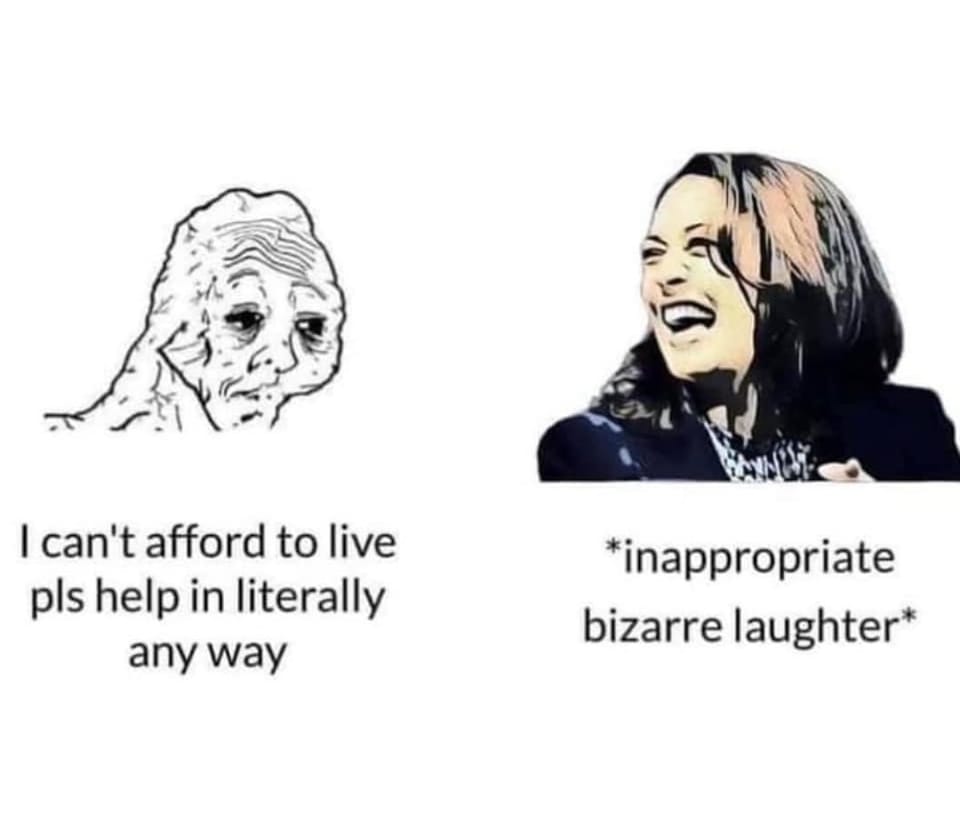
The meme is a commentary on the absurdity of neoliberalism's emphasis on individual responsibility and the lack of support for those in need. The image juxtaposes a quote from a neoliberal politician with a photo of a woman laughing at the absurdity of the situation. The text "I can't afford to live, pls help in literally any way" is a humorous exaggeration of the struggles of living on a low income, highlighting the absurdity of expecting someone to simply "help" in a literal sense.
detailed-analysis (gemma3-27b-vision)
Okay, here's an analysis of the image/meme, broken down into the requested theoretical frameworks where applicable. I'll explain why a section is skipped if the theory doesn't meaningfully apply.
Visual Description
The image is a two-panel meme.
- Panel 1: Features a heavily stylized, almost grotesque drawing of a face in deep distress, resembling a weeping and distorted humanoid form. The drawing appears to be black-and-white, with harsh lines. Text below reads, "I can't afford to live pls help in literally any way."
- Panel 2: Displays a portrait of a woman laughing. She is depicted in a dark setting and has a somewhat exaggerated, theatrical expression. The text below reads, "inappropriate bizarre laughter."
The contrast between the two images is striking. The first evokes vulnerability, desperation, and suffering, while the second presents an unsettling and dismissive response.
Foucauldian Genealogical Discourse Analysis
This meme is ripe for Foucauldian analysis. It illustrates how discourses surrounding precarity and socioeconomic suffering are constructed and operate.
- The Discourse of Need: The first panel presents a direct expression of need, a plea for survival. This plea is embedded within a discourse of scarcity, economic hardship, and the normalization of systemic precarity. The language ("literally any way") is a desperate acknowledgement of the limited options available.
- The Discourse of Detachment/Mockery: The second panel is crucial. The “inappropriate bizarre laughter” represents a counter-discourse—one that responds to the plea for help not with empathy or action, but with a strange, unsettling amusement. This laughter can be interpreted as a performance of power—a way to symbolically assert dominance over someone in a vulnerable position.
- Power/Knowledge: Foucault argues that power and knowledge are inextricably linked. The laughter isn't simply a reaction; it's an exercise of power through a particular way of knowing (or not knowing) how to respond to suffering. It highlights a knowledge system that prioritizes detachment or even mockery over compassion.
- Genealogy: A genealogical approach would trace the historical development of these discourses. Why have we arrived at a point where a response of “bizarre laughter” to suffering isn't necessarily considered shocking or inappropriate? It points to a desensitization to economic hardship and a normalization of indifference within certain circles.
Critical Theory
This meme reflects a central concern of Critical Theory: the critique of systems of domination and the ways in which they shape individual experience.
- Alienation: The image powerfully depicts the alienation inherent in late capitalism. The individual expressing need is isolated and seemingly unheard, while the response highlights a breakdown in empathy and social connection.
- Commodification: The request for help, framed in terms of survival, can be seen as a desperate attempt to navigate a system that treats everything, including basic needs, as a commodity. The plea is almost a bid for social "currency" – attention, assistance, validation.
- Ideology: The meme subtly reveals an ideology that normalizes suffering and indifference. The laughter suggests that the speaker is either unaware of the gravity of the situation or actively chooses to dismiss it. This reinforces a system that prioritizes individual comfort over collective responsibility.
- Repression: The laughter could also be read as a form of repression. By dismissing the plea, the laughing individual avoids confronting the uncomfortable truth about systemic inequalities and their own privilege.
Marxist Conflict Theory
The meme clearly illustrates the core tenets of Marxist Conflict Theory.
- Class Struggle: The image underscores the fundamental conflict between those who have economic security and those who do not. The desperate plea for help highlights the precarity faced by those at the bottom of the social hierarchy, while the laughter can be interpreted as a symbol of the indifference of those in positions of power.
- Exploitation: The implied context suggests that the person seeking help is likely a victim of economic exploitation. The meme implicates a system that generates inequality and leaves individuals vulnerable.
- False Consciousness: The laughter might represent a "false consciousness" – a state of being unaware of one's own exploitation or the systemic forces that perpetuate inequality. The laughing individual is seemingly oblivious to the suffering of others and the role they play in maintaining the status quo.
- Alienation from Labor: (Connected) The speaker's desperation could result from a lack of meaningful labor that affords the ability to live and thrive. The disconnect represented in the meme underscores the potential alienation from labor.
Postmodernism
While applicable, postmodernism is a less central lens here than the others.
- Irony and Parody: The meme’s juxtaposition of desperate need and bizarre laughter is deeply ironic. It can be seen as a parody of the disconnect between individual suffering and the indifference of modern society.
- Deconstruction of Meaning: The meme challenges the assumed meaning of empathy and compassion. The laughter disrupts our expectations of how someone should respond to a plea for help, forcing us to question the meaning of these concepts.
- Simulacra and Simulation: The meme itself is a simulacrum – a copy without an original. It's a digital representation of a complex social reality, and it relies on shared cultural references to convey its message.
Queer Feminist Intersectional Analysis
This lens, while potentially relevant, needs to be carefully applied. It depends on who the laughing individual is. If the laughing individual is understood to represent a dominant group dismissing the needs of a marginalized individual (who could be impacted by multiple systems of oppression), then it is a relevant lens.
- Intersectionality: The person pleading for help could be facing multiple forms of oppression based on their gender, race, class, sexuality, etc. This increases their vulnerability and makes it even more difficult to access resources. The laughing individual might be enacting a form of privilege based on their own position within these systems.
- Silencing and Marginalization: The laughter could be read as a form of silencing – a way to dismiss the voices and experiences of those who are already marginalized.
- Power Dynamics: The meme highlights the power dynamics inherent in social interactions. The laughing individual has the power to dismiss the plea for help, while the other individual is left feeling vulnerable and unheard.
- Toxic Positivity: The laughter can represent a harmful expression of “toxic positivity”—the insistence on happiness and denial of suffering, which silences legitimate needs and experiences.
I hope this detailed breakdown is helpful! Let me know if you’d like me to elaborate on any particular aspect.
simple-description (llama3.2-vision)
This meme features a split-screen image with two contrasting reactions to a situation. On the left, a character with a confused and worried expression is shown with the text "I can't afford to live, pls help in literally any way". On the right, a character with a happy and carefree expression is shown with the text "inappropriate bizarre laughter". The meme is likely poking fun at the idea that someone's response to a serious problem (not being able to afford to live) is met with an absurd and humorous response (bizarre laughter).
tesseract-ocr
, SN * FARES > ~ WD) SAS i\\ “KB c \ Ly = eo cS LY > q (a oF Y ae | \ aod Tt] ‘ NM ? | can't afford to live ‘inappropriate Is help in literall . P P Y bizarre laughter* any way