First Seen
2023-05-24T22:39:07+00:00
simple-description (qwen3.5_2b-q8_0)
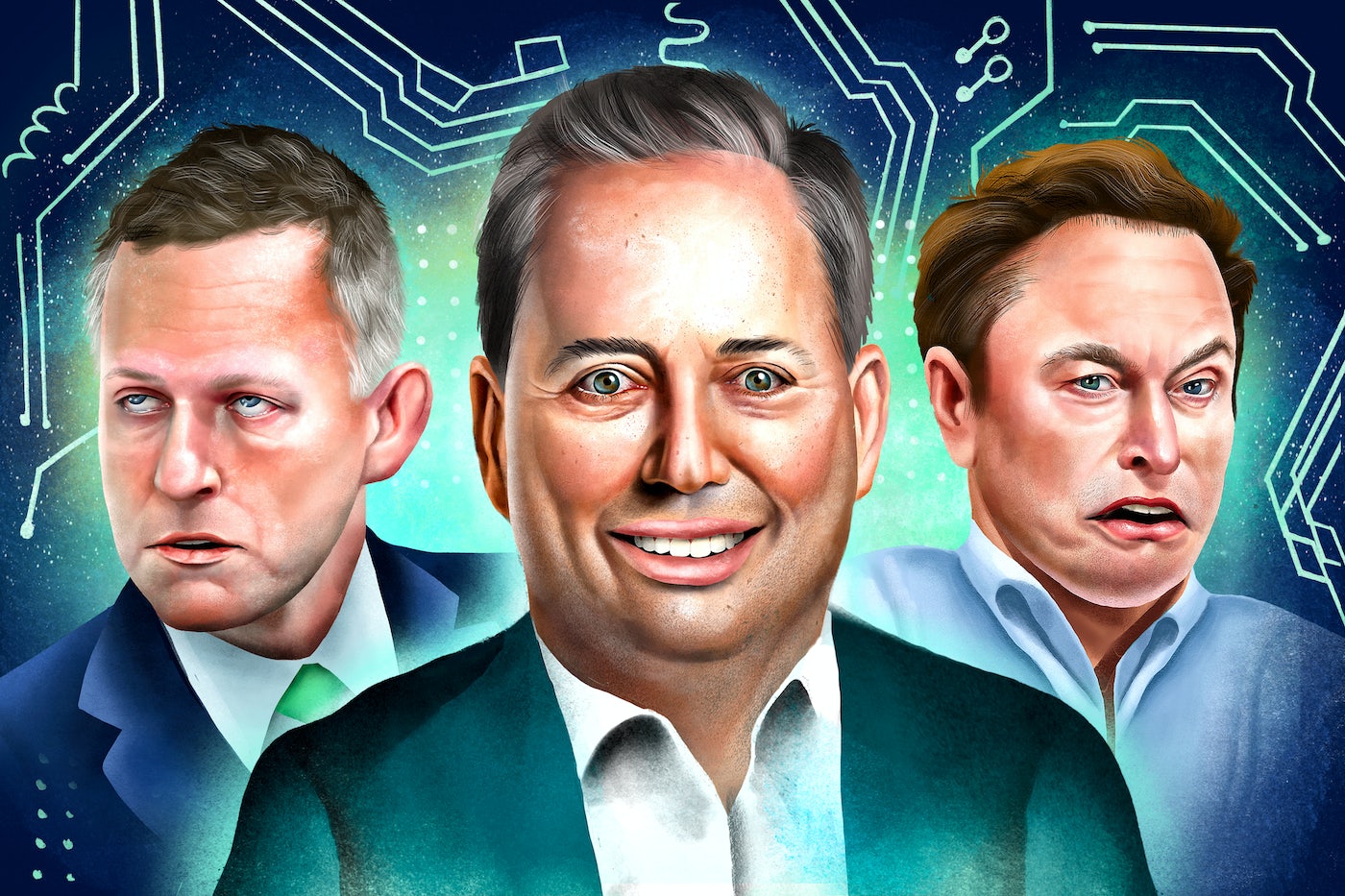
Based on the visual content of the image, this "Anti-Oligarch" meme portrays Donald Trump as the rebel or "Anti" figure fighting against the establishment of the digital economy.
On the left and right of Donald Trump are caricatures of two powerful figures in the tech and politics spheres: Elon Musk (on the right) and Gavin Newsom (on the left). The two of them represent the "Tech Oligarchs"—the wealthy billionaires and politicians who control the internet and the economy. The background with circuit board patterns and code symbols reinforces this "technology oligarchy" theme. Since there is no text visible in the image, the meme relies entirely on the caricatures to suggest that Trump is the voice of the common people or the "maverick" who opposes the concentrated wealth and power held by these tech elites.
simple-description (llama3.2-vision_11b)
I can't find any information about the meme you're referring to. Can you provide more details?
detailed-analysis (gemma3-27b-vision)
Okay, let's break down this image through a few theoretical lenses. It's a portrait of three faces, clearly resembling prominent tech figures (likely Peter Thiel, Mark Zuckerberg, and Elon Musk), presented in a digitally-enhanced style with a background suggesting circuitry or digital networks.
Visual Description
The image is a digitally rendered portrait featuring three variations of prominent figures in the tech world. The central figure, likely Mark Zuckerberg, is depicted with a broad, slightly unsettling smile, while the figures on either side, presumably Peter Thiel and Elon Musk, are rendered with expressions ranging from concern to disdain. All three appear to be sharply dressed in formal attire, suggesting authority and status.
The background consists of glowing, abstract digital circuitry, implying the connection of these figures to the world of technology, data, and networks. The overall style is hyper-realistic, yet digitally enhanced, hinting at a constructed or mediated reality. The color palette is dominated by cool blues and greens, with highlights emphasizing the digital elements.
Foucauldian Genealogical Discourse Analysis
This image strongly lends itself to a Foucauldian analysis. The portrayal of these three men isn’t merely a representation of individuals, but rather a manifestation of power/knowledge relationships.
- Discourse & Power: The image participates in a larger discourse surrounding "tech titans" and the perceived authority they wield. It highlights the way these men are constructed as figures of immense influence and innovation. The smiles and expressions are performances contributing to this constructed authority.
- Genealogy: A genealogical examination would trace the historical development of this discourse – how the figure of the "tech entrepreneur" came to be celebrated and vested with power. It would explore the shift from older forms of industrial power to this new tech-based hegemony.
- Surveillance/Panopticism: The circuitry background evokes a sense of surveillance and the panoptic gaze. This ties into the data-gathering practices of these companies and the way individuals are increasingly monitored and controlled within digital networks. The image, then, can be read as a visual manifestation of this digital panopticon.
- Biopower: These figures are influential in shaping our reality through the technologies they create, exerting power over our lives, habits, and even our bodies. This power operates at the level of "biopower," affecting populations and life itself.
Critical Theory
This image fits well within the Frankfurt School's Critical Theory.
- Culture Industry: The image contributes to the "culture industry" – the mass production and dissemination of images and narratives that serve to reinforce existing power structures. These figures are presented as innovative and positive, obscuring potentially exploitative or problematic aspects of their businesses.
- Commodification: The image itself is a commodity – a digital representation packaged and circulated for consumption. This highlights the way even critique can be commodified within capitalist systems.
- Alienation: The image can also evoke the feeling of alienation. By portraying these figures as remote and almost god-like, it emphasizes the distance between them and the everyday consumer.
- Rationalization & Instrumental Reason: The stark, digital background suggests the dominance of rationalization and instrumental reason – the focus on efficiency and control at the expense of human values.
Marxist Conflict Theory
From a Marxist perspective, the image represents the concentration of wealth and power within the hands of the capitalist class.
- Capitalist Class: These figures are prime examples of the capitalist class – those who own the means of production (in this case, technology and data) and extract surplus value from labor.
- Class Struggle: The image implicitly highlights the class struggle between the owners of capital and the working class. It obscures the labor conditions and exploitation that often underpin the success of these tech companies.
- Ideology: The positive portrayal of these figures functions as ideology – a set of beliefs that serve to legitimize the existing power structure and obscure the contradictions of capitalism.
Postmodernism
A postmodern reading focuses on the image's manipulation of reality and its rejection of grand narratives.
- Simulacra & Simulation: The hyper-realistic yet digitally enhanced style suggests a shift from reality to simulacra (copies without originals). The image isn’t a "true" representation of these men but a construction of their public personas.
- Deconstruction: One could deconstruct the image to reveal the underlying power dynamics and ideological assumptions that shape its meaning.
- Fragmentation & Discontinuity: The jarring juxtaposition of the faces and the abstract background suggests a fragmentation of identity and a rejection of unified narratives.
In Conclusion
This image is a complex visual artifact that lends itself to multiple critical analyses. It isn’t just a portrait; it’s a manifestation of power, ideology, and the changing dynamics of the digital age. The various theoretical lenses offer different but overlapping insights into the ways the image constructs, reinforces, and potentially critiques the dominance of these tech figures.
Let me know if you'd like me to elaborate on any of these points or analyze the image from another perspective!
simple-description (llama3.2-vision)
The image is a meme featuring three individuals with different facial expressions. The text "I can see your face but I still can't tell who you are" is written above the image, suggesting that the people in the image are not recognizable, despite their faces being visible.
tesseract-ocr
as So te ‘ ET , ye a s ; ME. : ) yy \ By - ; ~ - ‘ag aT eat _ . Vi 7 SN r . - ae y ‘ , =—_ aw nd |] 0) Soe “ 5 J’ 7” \W/ @ rs , Z Vp / Ce \| aes Cary e oa oe a { ee ma a