First Seen
2024-04-15T04:54:59.315638+00:00
simple-description (qwen3.5_2b-q8_0)
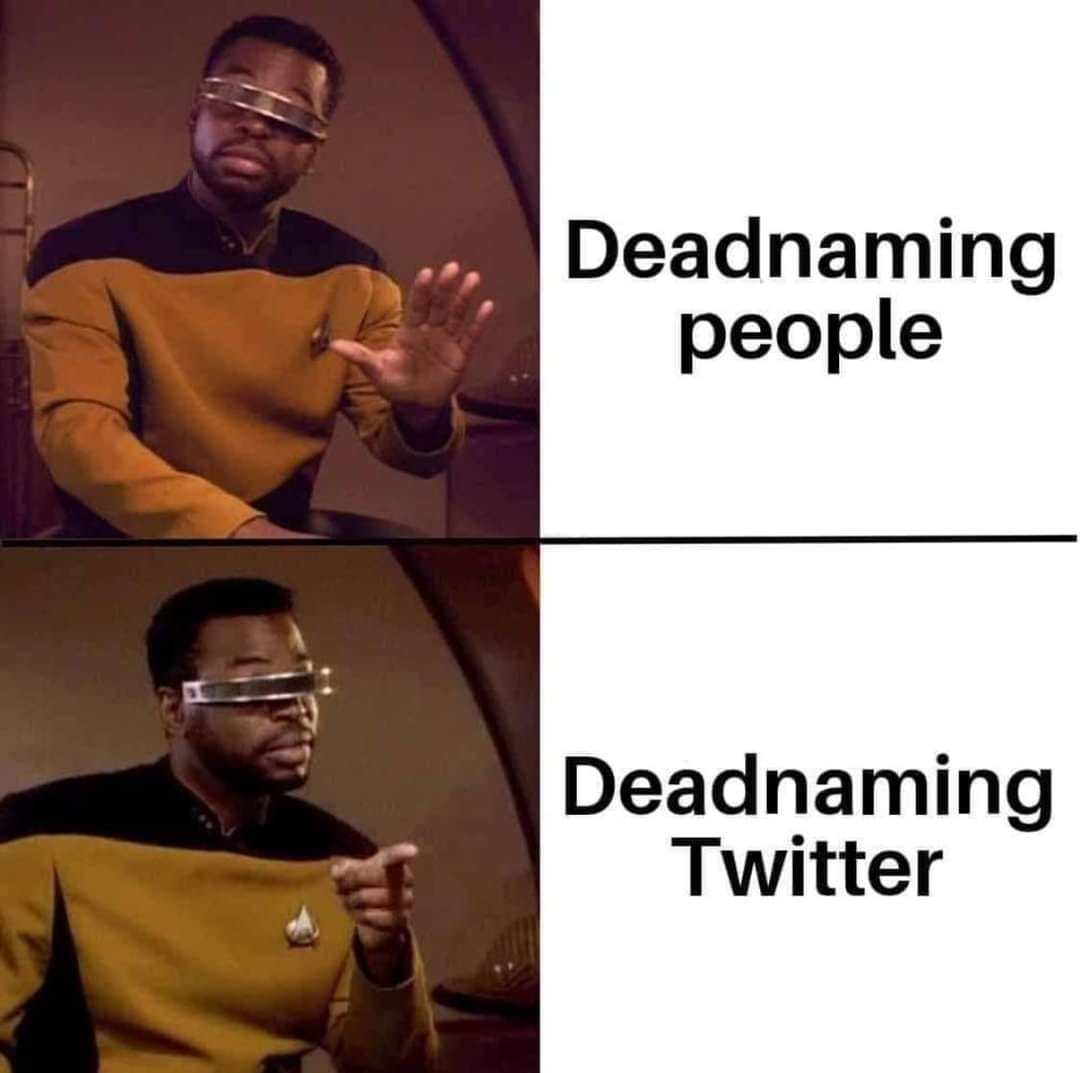
This meme, categorized under the Anti-Oligarch context, humorously satirizes the dominance of social media platforms like Twitter as political or social oligarchies.
Here is the breakdown for someone who cannot see the image:
- The Visuals: The top panel features the character Dr. Who (specifically "The Doctor") in his iconic "I am the Doctor" pose, which serves as a generic "I'm stopping you" or defensive gesture.
- The Top Text ("Deadnaming people"): This establishes the base attack—a generic insult or insult directed at a target.
- The Bottom Text ("Deadnaming Twitter"): This specifies the target of the violence. In the "Anti-Oligarch" framework, this mocks the dominant power of the social media giant (Twitter) as an entity that is being attacked. It implies that the Anti-Oligarch movement is engaging in organized, targeted violence against the platform, using "Deadnaming" as the weapon to strip it of its identity and power.
simple-description (llama3.2-vision_11b)
The meme is a play on the concept of "anti-oligarch" - a term used to describe a person who is against the concentration of power and wealth in the hands of a few individuals. The meme is likely referencing the idea that some people, particularly on Twitter, are "anti-oligarch" in the sense that they are opposed to the concentration of power and wealth in the hands of a few individuals, specifically on the platform. The text in the image likely reads "I'm not anti-oligarch, I'm just anti-oligarch on Twitter".
detailed-analysis (gemma3-27b-vision)
Okay, here's an analysis of the meme, broken down into sections based on the requested theoretical frameworks. Note that some frameworks will be more relevant than others.
Visual Description
The meme utilizes the "Drakeposting" format. It features two panels depicting Patrick Stewart as Captain Jean-Luc Picard from Star Trek: The Next Generation.
- Top Panel: Picard is looking at something with a slight expression of mild disapproval or distaste, his palms facing upwards in a gesture that suggests a rejection. The text overlay reads "Deadnaming people".
- Bottom Panel: Picard is looking at something with a strong look of disapproval, even disdain, his hand is slightly clenched in front of him. The text overlay reads “Deadnaming Twitter”.
The contrast in Picard’s expressions and body language implies a hierarchy of disapproval: deadnaming individuals is bad, but deadnaming Twitter (likely meaning engaging in public shaming/call-outs) is worse.
Queer Feminist Intersectional Analysis
This is where the meme hits the hardest.
- Deadnaming: The very topic of the meme is deeply relevant to queer and transgender experiences. "Deadnaming" is the act of referring to a transgender or non-binary person by their birth name (the name they used before transitioning) after they have adopted a new name, often intentionally. It is considered disrespectful, invalidating, and harmful because it disregards a person’s affirmed gender identity and chosen name.
- Intersectionality: The meme implicitly acknowledges the complexities of responding to harm. Deadnaming itself is harm. But publicly reacting to deadnaming on a platform like Twitter can create a different set of power dynamics and potentially escalate harm. It suggests a nuance lost in simple outrage.
- The Problem of Call-Out Culture: The meme subtly critiques the dynamics of "call-out culture" prevalent on social media. While calling out harmful behavior can be a form of accountability, it can also be performative, unproductive, and even contribute to further harassment or silencing. The meme implies that online shaming, even when directed at someone who has engaged in harmful behavior, can be its own form of harm.
- Navigating Harm & Accountability: The meme suggests that the act of addressing harm (deadnaming) can itself be problematic. The expression on Picard’s face shows disdain not towards deadnaming itself but towards the behavior of people reacting to it on Twitter. The idea is not to excuse deadnaming, but to critique the way it is often addressed.
Foucauldian Genealogical Discourse Analysis
- Power/Knowledge: Foucault's concept of power/knowledge is applicable. The act of naming—and renaming—is a key way in which power operates. The power to assign (or recognize) a name is the power to define identity. Deadnaming subverts this power dynamic by attempting to impose an earlier definition of identity onto someone who has actively redefined themselves.
- Discursive Formation: The conversation surrounding deadnaming is a “discursive formation” – a system of thoughts, language, and practices that create a particular way of understanding something. This meme participates in that discourse by highlighting the complexities of responding to deadnaming and the potential pitfalls of online activism.
- Genealogy of "Correctness": A Foucauldian approach would also look at the history of how understandings of gender, identity, and respectful address have evolved. What was once considered acceptable (or simply unquestioned) – using a person’s birth name – is now widely recognized as harmful. The meme implicitly acknowledges this historical shift.
Postmodernism
- Deconstruction of Binaries: While not a primary focus, the meme touches on the postmodern deconstruction of binaries – in this case, the simple binary of "harmful/not harmful." The meme suggests that the situation is more complex than a straightforward condemnation of deadnaming.
- Meta-Commentary: The meme itself is a form of meta-commentary, commenting on the dynamics of online discourse and the ways in which conversations about social justice issues can become performative or unproductive.
Critical Theory
- Ideology: The meme subtly challenges the ideology that any expression of outrage towards a wrong-doer is automatically progressive. The meme could be read as critiquing the performative outrage that pervades social media, implying that it can be more about signaling virtue than achieving meaningful change.
Marxist Conflict Theory
This framework is the least applicable here. While there are power dynamics at play, they don't neatly map onto class struggle or material conditions. The conflict is primarily about cultural values and identity, not economic structures.
In summary, the meme is most powerfully understood through a Queer Feminist Intersectional lens, as it directly addresses the harms of misgendering and deadnaming. It also engages with broader themes of power, discourse, and the complexities of online activism, which can be analyzed through the frameworks of Foucault and Critical Theory.
simple-description (llama3.2-vision)
This meme is a play on the Star Trek: The Next Generation character Commander Jean-Luc Picard's famous "make it so" phrase. The meme features two images of Commander Picard, with the first image captioned "Deadnaming people" and the second image captioned "Deadnaming Twitter". The text is meant to be humorous, implying that the process of "deadnaming" (removing someone's preferred name or pronouns) is so tedious that it's like trying to navigate the complex and ever-changing landscape of Twitter.
tesseract-ocr
| 7 Deadnaming ae people = =y Deadnaming "ef Twitter