First Seen
2023-05-10T21:03:34+00:00
simple-description (llama3.2-vision_11b)
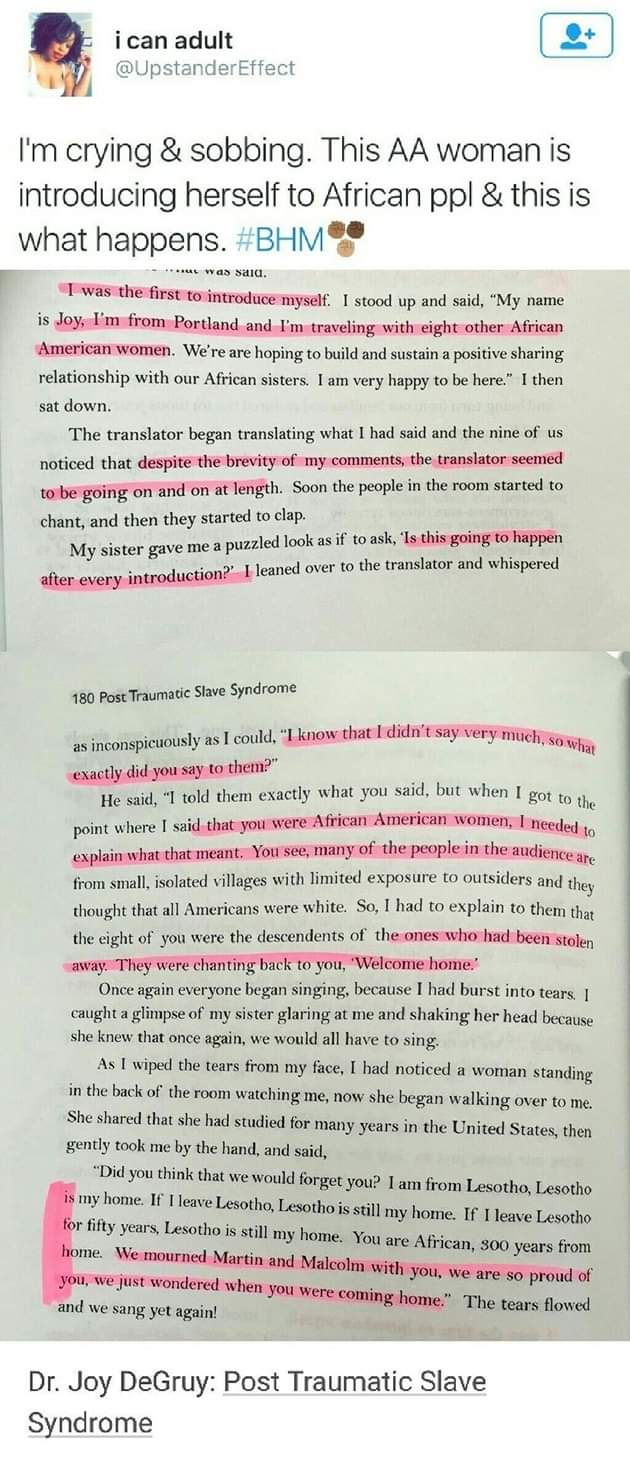
The meme is a screenshot of a Twitter post from "i can adult" where they are introducing themselves to an African American woman as an "African American woman" and then immediately correcting themselves to "I am an African American woman". The text is a satirical commentary on the common practice of introducing oneself as a specific racial or ethnic group, highlighting the absurdity of doing so when the person is already known to be African American. The post is accompanied by a quote from the Twitter user's own bio, "I can adult".
detailed-analysis (gemma3-27b-vision)
Here's an analysis of the provided text, broken down into sections as requested. It's a complex piece, and several of the theoretical lenses are applicable, particularly those dealing with power, trauma, and identity.
Please be aware: This is a complex and sensitive topic. I will approach the analysis with respect and acknowledging the gravity of the issues raised in the text. The analysis is based solely on the provided image and its content. It is a preliminary analysis and deeper engagement with the theoretical frameworks would require a larger body of work and a more nuanced approach.
1. Visual Description
The image is a screenshot of a Twitter post (now X). The post consists of text laid over a white background. The text is a first-person account detailing an emotional experience during a meeting with African people. The poster describes a moment of intense emotional release – crying and sobbing – while introducing herself, coupled with a powerful response from the group. There's a signature at the end, “Dr. Joy DeGruy, Post Traumatic Slave Syndrome.” The hashtag #BHM (Black History Month) is present, signaling a context of historical awareness and reflection. The formatting is fairly simple, indicating the raw, immediate nature of the post.
2. Foucauldian Genealogical Discourse Analysis
This text is deeply implicated in power dynamics and the construction of knowledge about trauma. Foucault’s work focuses on how discourses (systems of thought, language, and practice) create and maintain power relations.
- Genealogy of Trauma: The mention of “Post Traumatic Slave Syndrome” (PTSS) is crucial. Dr. DeGruy has written extensively on this concept, which posits that the intergenerational trauma of slavery continues to manifest in the African American community. From a Foucauldian perspective, the concept of PTSS itself is a discourse – a way of understanding and naming an experience that wasn’t previously articulated in such a way. It’s a counter-discourse to dominant narratives that minimize or ignore the ongoing effects of historical trauma.
- Power/Knowledge: The text demonstrates how knowledge (understanding trauma) is linked to power. The speaker experiences a deeply emotional release because the group validates her experience, recognizing it as part of a shared history. This validation is empowering because it challenges the dominant discourse that often marginalizes or pathologizes Black emotional responses.
- Disciplinary Power: The history of slavery and its aftermath represent a powerful disciplinary regime that sought to control and erase Black identity and emotional expression. This experience can be seen as a rejection of that power.
3. Critical Theory
The text lends itself to analysis through the lens of Critical Theory, which seeks to uncover power structures and challenge dominant ideologies.
- Ideology Critique: The initial emotional breakdown happens because the speaker's identity is finally recognized by those of African descent. This suggests that, despite being an American citizen, she felt a lack of recognition and belonging. This speaks to the ideology of racial identity and the ways in which it shapes belonging.
- Emancipation and Self-Realization: The speaker’s emotional release can be interpreted as a moment of emancipation – a breaking free from the constraints of a society that has historically denied her full humanity. The experience allows for a self-realization and a claiming of identity.
- Alienation: The speaker's initial state suggests a form of alienation - a feeling of disconnect from both her American identity and her African heritage. The experience with the group resolves that alienation, offering a sense of reconnection.
4. Marxist Conflict Theory
While not the primary framework, Marxist conflict theory can offer some insights.
- Historical Materialism: The text highlights the historical material conditions of slavery and its continuing effects on the African American community. The trauma of slavery represents a fundamental conflict between enslaved people and their oppressors.
- Class and Racial Oppression: While focusing on race, the historical context of slavery involved a clear class dynamic. The speaker’s experience can be seen as a manifestation of the ongoing struggles of the oppressed against those who historically benefited from their exploitation.
- False Consciousness: The lack of recognition before entering the space suggests a degree of "false consciousness"—a lack of awareness of the true nature of one’s oppression—that is dispelled through the validation of the group.
5. Queer Feminist Intersectional Analysis
This framework is particularly resonant, given the layers of identity and power at play.
- Intersectionality: The text powerfully demonstrates the concept of intersectionality—the ways in which race, gender, and historical trauma intersect to shape individual experiences. The speaker is not simply experiencing trauma as a “person” but as a Black woman, whose experience is shaped by the unique challenges and oppression faced by that group.
- Marginalization & Validation: The experience reveals the ways in which marginalized identities are often rendered invisible or invalidated by dominant cultures. The group’s recognition is crucial because it disrupts this pattern, offering validation and affirmation.
- Emotional Labor: The speaker’s act of introducing herself and sharing her story can be understood as a form of emotional labor—the work of managing one’s emotions in a way that is expected by others. The emotional release happens when this labor is alleviated by the group’s understanding.
- Reclaiming Narrative: The narrative itself is an act of reclaiming agency and resisting dominant narratives that often silence or misrepresent the experiences of marginalized communities.
Disclaimer: This analysis is based solely on the text provided. A more comprehensive understanding would require further research and a deeper engagement with the theoretical frameworks.
simple-description (llama3.2-vision)
The meme is a screenshot of a Twitter post with a quote from a woman who is a Black American and a native speaker of a language that is not English. She is expressing her frustration with the fact that she is being asked to translate for a group of people who are not speaking her native language. The text of the tweet reads: "I'm crying & sobbing. This AA woman is introducing herself to African people & this is what happens."
tesseract-ocr
ican adult ( 2} @UpstanderEffect “i I'm crying & sobbing. This AA woman is introducing herself to African ppl! & this is ee what happens. #BHM “3 ; aa “TPiwasthe first tosintroduce myself I stood up and said, “My name is Joys I'm from: Portland, and_t'm traveling with eight other African ‘American'women. We're are hoping to build and sustain a positive sharing relationship with our African sisters, I am very happy to be here.” I then sat down. The translator began translating what I had said and the nine of us noticed that despite the brevity of my comments; the translator: seemed tobe\going on and on at length. Soon the people in the room started to chant, and then they started to clap. ‘ if to ask, ‘Is this going to happen i fe mea puzzled look as i A Ee ae >» [leaned over tothe translator and whispered i 480 Post Traumatic Slave Syndrome 4s inconspicuously as I could, “Lknow:thatilididn'tsayverymuetirso ps, tly di dl-you say to them?” He said, “I told them exactly what you said, but when T got to shy point where T said, that-yourweresA rican "American womenssI needed 1, from small, isolated villages with limited exposure to outsiders and they thought that all Americans were white. So, I had to explain to them thar the eight of you were the descendents of the ones whovhad been stolen Once again everyone began singing, because I had burst into tears, | caught a glimpse of my sister glaring at me and shaking her head because she knew that once again, we would all have to sing: | As L wiped the tears from my face, [ had noticed a woman standing in the back of the room watching me, now she began walking over to me. She shared that she had studied for many years in the United States, then gently took me by the hand, and said, “Did you think that we would forget you? 1am from Lesotho, Lesotho ee If Heave Lesotho, Lesotho is still my home. If Leave Lesotho e | ty years, Lesotho is al my home. You are African, 300 years from Nesoosrned:Mantnedlvcl nuns SSE WAS SF of and we sang yet again! ” The tears flowed Dr. Joy DeGruy: Post Traumatic Slave Syndrome