First Seen
2024-11-08T05:31:37+00:00
simple-description (qwen3.5_2b-q8_0)
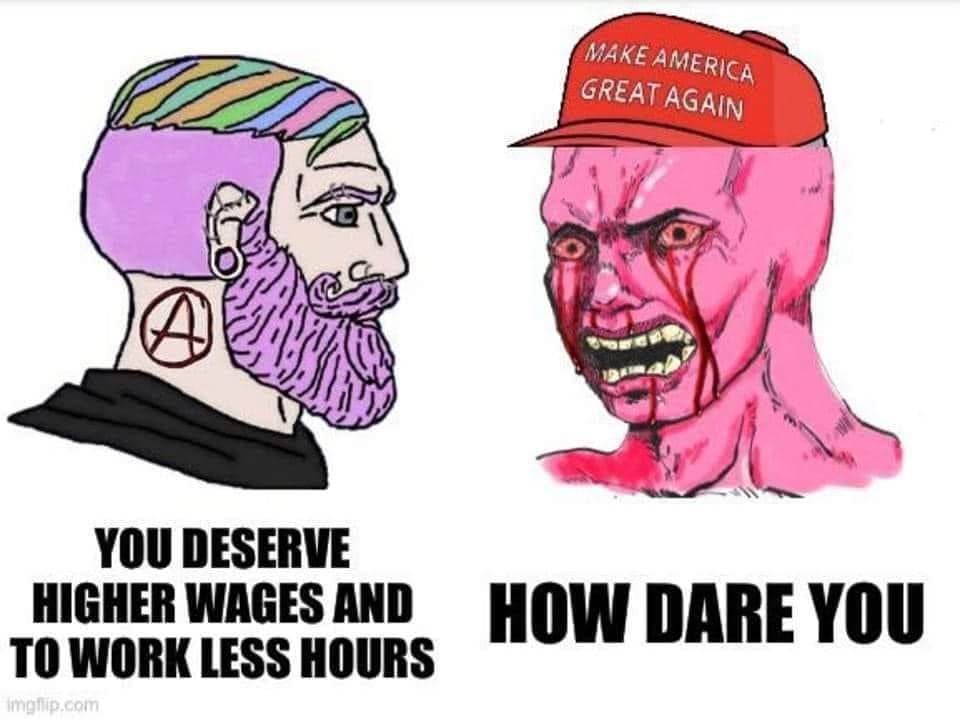
The left side of the meme features a character arguing that a person deserves higher wages and to work less hours. On the right, a reactionary figure responds with hostility using the text "HOW DARE YOU." This dynamic satirizes the extreme reactions to reasonable economic claims.
detailed-analysis (gemma3_27b-it-q8_0)
Okay, let's break down this meme from an anti-reactionary perspective, utilizing the frameworks you've requested where relevant. This is a complex image, and its meaning is heavily dependent on the online subcultures it draws from.
Important Note: This analysis will contain interpretations of subcultural meaning and political ideologies. It's intended to explain the meme's significance within its specific context, not to endorse the views expressed within it. The meme itself is born from a highly polarized online landscape.
Visual Description
The meme is a side-by-side comparison utilizing the "Chad" and "Soyjak" meme formats. The left panel depicts a character generally known as “Chad,” though heavily modified. This Chad has a neatly trimmed pink beard, bright pink hair with rainbow streaks, an anarchist “A” symbol on his chest, and a pierced ear. He exudes a calm, collected, slightly smug demeanor. The text below reads: "YOU DESERVE HIGHER WAGES AND TO WORK LESS HOURS."
The right panel depicts a distorted, furious "Soyjak." This Soyjak is wearing a "Make America Great Again" (MAGA) hat, and is contorted into a rage-filled expression, with blood dripping from his mouth. The text below reads: "HOW DARE YOU."
The overall visual contrast is stark: a composed, arguably 'aesthetic' figure on the left facing an enraged, chaotic figure on the right. The coloring, with the pinks and rainbow on one side against the harsh red on the other, further reinforces this opposition.
Foucauldian Genealogical Discourse Analysis
From a Foucauldian perspective, the meme illustrates a struggle over the discourses that define legitimate desires and power dynamics. The "Soyjak" embodies a discourse of traditional work ethic, nationalistic pride, and hierarchical power structures. This discourse has historically been used to normalize exploitation, discipline labor, and justify existing inequalities. It's a discourse rooted in the notion of sacrificing for the nation or for 'success' as defined by a capitalist system. The rage ("HOW DARE YOU") represents the anxiety and resistance to any disruption of that discourse. The 'right' to exploit labor is being challenged.
The "Chad" represents a counter-discourse, one that challenges these established norms. The phrase "YOU DESERVE HIGHER WAGES AND TO WORK LESS HOURS" is a direct assertion of new entitlements and a rejection of the disciplined, productive subject that Foucault identified. The anarchist symbol suggests a desire to dismantle the power structures that necessitate exploitative labor in the first place. This is a re-writing of the discourse of "deserving" - shifting it from deserving based on hard work and adherence to norms, to deserving based on inherent worth.
The power here lies in the ability to shape the discourse, to make certain ideas seem natural and legitimate. The meme functions to disrupt the existing, dominant discourse and offer an alternative.
Marxist Conflict Theory
This meme is extremely resonant with Marxist Conflict Theory. It depicts a clear class antagonism.
- The Bourgeoisie/Reactionary: The Soyjak wearing the MAGA hat represents, in this context, the capitalist class or those aligned with preserving the capitalist system. The rage is a defense of their ability to extract surplus value from labor. The demand for uninterrupted exploitation is the core of the conflict.
- The Proletariat/Progressive: The "Chad" embodies a nascent, but developing, class consciousness. The demand for higher wages and reduced working hours is a fundamental challenge to the capitalist mode of production. It seeks to reclaim the value produced by labor for the workers themselves.
The meme highlights the inherent conflict within capitalism: the interests of those who own the means of production versus those who sell their labor. The "HOW DARE YOU" is the outrage of capital when its power is questioned. The anarchist symbol suggests a desire to move beyond the inherent contradictions of capitalism itself. This is a direct rejection of the 'natural' order of things in capitalist society.
Postmodernism
From a postmodern perspective, the meme embraces pastiche and irony. It appropriates existing meme formats ("Chad", "Soyjak") and repurposes them to convey a specific political message. The deconstruction of traditional notions of masculinity (the aestheticized Chad) and the exaggeration of reactionary anger (the distorted Soyjak) both serve to destabilize dominant narratives.
There's a deliberate blurring of "high" and "low" culture – combining academic concepts (deserving wages, labor rights) with internet slang and meme aesthetics. The "truth" is no longer a fixed entity but is constructed through these ironic and playful engagements. The meme acknowledges its own constructedness and relies on the audience's understanding of meme culture to derive its meaning.
Queer Feminist Intersectional Analysis
This is where things get particularly layered. The "Chad" figure's aesthetic choices (pink hair, beard, pierced ear) deliberately challenge traditional gender norms and potentially represent a queer/non-binary identity. The demand for less work hours is also a feminist point, as women historically bear the disproportionate burden of unpaid care work, making reduced working hours crucial for equity.
The intersectionality comes into play when considering who benefits from exploitative labor practices. Capitalism relies on the marginalization of specific groups – women, people of color, queer individuals – to maintain cheap labor and suppress wages. The "Soyjak's" rage can be seen as a defense of a system that inherently perpetuates these inequalities.
The "Chad" figure’s aesthetics and the demand for a better quality of life are not simply about individual liberation; they are about dismantling the systems that create and benefit from oppression.
Anti-Reactionary Context and Overall Meaning
Within the "anti-reactionary" online sphere, this meme functions as a rallying cry. It's an expression of defiance against what is seen as a resurgence of conservative, nationalist, and often explicitly hateful ideologies. The meme's success comes from its ability to concisely encapsulate a complex set of political beliefs and anxieties within a relatable and shareable format.
It's a rejection of the idea that economic precarity and overwork are inevitable or virtuous. It's a declaration that a more just and equitable world is possible – and deserved. It weaponizes meme culture to push back against the perceived onslaught of reactionary politics.
I hope this detailed analysis is helpful! Let me know if you have any other questions.
simple-description (llama3.2-vision_11b)
This meme is from the perspective of the Anti-Reactionary category, which critiques and challenges the ideologies of Reactionary and Alt-Right movements. The meme juxtaposes two opposing views on social and economic issues, using humor to highlight the absurdity of certain perspectives. The text "You deserve to work 100 hours a week for minimum wage" is a satirical commentary on the extreme views of some Reactionary and Alt-Right ideologies, which often prioritize individual freedom over social and economic justice.