First Seen
2023-12-17T04:19:22+00:00
simple-description (qwen3.5_2b-q8_0)
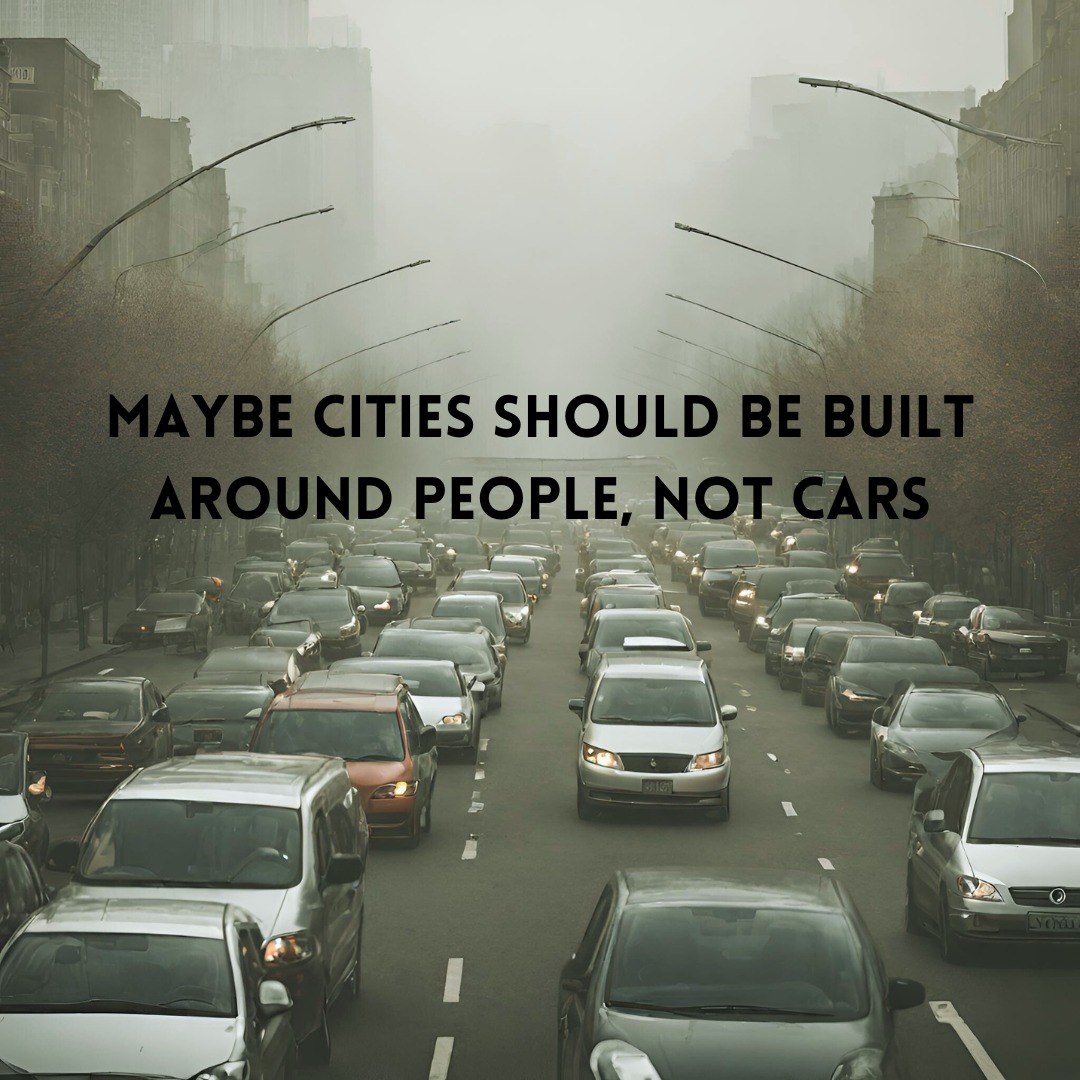
This meme utilizes the concept of arcology—a futuristic, highly integrated planning model designed to combine living spaces, infrastructure, and greenery into a single "super-block"—by suggesting a utopian vision where the city is built primarily for people rather than for motorized traffic. Visually, the image depicts a massive, dense grid of vehicles, illustrating a world where the layout of the streets is designed to prioritize human comfort and movement over the obstruction of cars. The text serves as a call to action for a future where urban planning focuses on the human experience and needs, rather than on accommodating heavy vehicle congestion.
simple-description (llama3.2-vision_11b)
The meme is a humorous commentary on the concept of arcology, which is a futuristic urban planning approach that integrates living spaces with technology and sustainability. The image is a photo of a crowded city street, with the text "MAYBE CITIES SHOULD BE BUILT LIKE FORESTS, NOT SKYSCRAPERS" superimposed over it. The text is a satirical commentary on the traditional approach to urban planning, suggesting that cities should be designed like forests, with green spaces and natural habitats, rather than towering skyscrapers.
detailed-analysis (gemma3-27b-vision)
Okay, let's break down the image and its implied message through the requested theoretical lenses.
Visual Description
The image depicts a crowded urban street dominated by cars. A dense stream of vehicles fills the frame, largely silver and gray, creating a visual sense of congestion. The street appears to be in a city with older architecture, possibly Eastern European based on the building style. There are glimpses of pedestrians between the cars, but they are largely overwhelmed by the traffic. A low-hanging mist or fog adds to the oppressive atmosphere. The image is desaturated, with a prominent greenish-gray cast, contributing to a somewhat bleak and somber mood. Superimposed on the scene is bold white text that reads: "MAYBE CITIES SHOULD BE BUILT AROUND PEOPLE, NOT CARS".
Foucauldian Genealogical Discourse Analysis
This image, through a Foucauldian lens, highlights how discourses surrounding urban planning and modernization have constructed the car as central to the concept of “progress” and “freedom.” The genealogical approach would trace the historical development of these discourses. Initially, the automobile was seen as a luxury, then a symbol of status, and finally (through marketing, policy, and infrastructure development) as a necessity for modern life. This process involved power/knowledge relations. Experts (engineers, city planners, economists) produced “knowledge” justifying car-centric urban design, and this knowledge legitimized the power structures that funded highway construction, suburban sprawl, and the marginalization of alternative transportation modes. The image implicitly asks us to question the ‘truths’ we take for granted about the supposed benefits of car-dependence. It asks us to recognize that the way cities are isn’t natural, but the result of specific historical forces. The density of cars demonstrates the pervasive power of this discourse, the extent to which it has materialized and become dominant.
Critical Theory
From a Critical Theory perspective, the image exemplifies the “instrumental reason” of the Enlightenment gone awry. The initial intention of technological advancement (in this case, the automobile) was to improve human life. However, the relentless pursuit of efficiency and economic growth has led to a situation where the means (cars) have overshadowed the ends (human well-being). The image embodies the concept of “reification,” where a social construct (car dependency) becomes perceived as natural and immutable. The prioritization of cars over people is seen as a form of domination, reinforcing systems of power and control. The implicit statement "cities should be built around people, not cars" is a call for a reevaluation of values, a shift toward prioritizing human needs (walkability, community, accessibility) over the demands of capitalist production and consumerism. It suggests the need for a rational critique of existing social structures to overcome alienation and achieve true liberation.
Marxist Conflict Theory
From a Marxist viewpoint, the image vividly illustrates the conflict between the needs of capital and the needs of the working class. The prioritization of cars and highways benefits industries associated with automobile manufacturing, oil, and road construction (the bourgeoisie). This benefits are achieved at the expense of the working class, who are forced to rely on expensive transportation, endure traffic congestion, and experience the negative consequences of pollution and urban sprawl. The image shows a material condition of inequality; the space is taken by cars, limiting space for pedestrians, cyclists, or public transit. It signifies the commodification of mobility; access to transportation becomes tied to the ability to purchase a vehicle. The statement in the image acts as a challenge to the existing mode of production, calling for a re-distribution of resources and a more equitable allocation of space in urban environments.
Postmodernism
A postmodern reading of this image might emphasize the deconstruction of the idea of a "rational" or "modern" city. The image challenges the grand narratives of progress and efficiency associated with modernist urban planning. The chaotic density of cars, rather than representing a streamlined system, suggests a fragmented and disjointed urban landscape. The statement "maybe cities should be built around people" is not a definitive answer, but a questioning of established norms and a recognition of multiple perspectives. Postmodernism would recognize the image as a simulacrum; the idea of the ‘car-centric city’ has become a self-referential sign, disconnected from any genuine improvement to the quality of life. The image emphasizes the fluidity of meaning and the constructed nature of reality.
Queer Feminist Intersectional Analysis
While not immediately apparent, a queer feminist intersectional analysis can reveal subtle layers of meaning. Car-centric urban design disproportionately impacts marginalized groups. The focus on individual car ownership often excludes those who cannot afford a vehicle (disproportionately affecting low-income communities, people of color, and disabled individuals). This creates barriers to accessing essential services, employment, and social participation. The image suggests that prioritizing cars also creates hostile and unsafe environments for pedestrians and cyclists, impacting women, children, and LGBTQ+ individuals who may be more vulnerable to harassment or violence in public spaces. The image can be read as a critique of the heteronormative assumption that everyone has access to or desires individual mobility. A feminist perspective would highlight how urban planning has historically been shaped by male-dominated power structures, prioritizing speed and efficiency over care and community. The image calls for a more inclusive and equitable urban design that prioritizes the needs of all residents, recognizing the interconnectedness of social justice issues.
Let me know if you'd like me to expand on any of these analyses!
tesseract-ocr
j . Tae ern a ~~ : RN bi ; we =< , ES SHOULD _ ea ee ee gl i So 2 a ar Saad — fA cas = ae ele - ine © = ) (Cwm <9) —- “4 & J 3 A ~ 4 rl F a’ iy 39 | a | So, a a | fe N it Y
simple-description (llama3.2-vision)
This meme is an image of a crowded city street with cars and pedestrians. The text "MAYBE CITIES SHOULD BE BUILT AROUND PEOPLE, NOT CARS" is overlaid on the image, suggesting that the city's design should prioritize the needs of its inhabitants rather than its infrastructure.