First Seen
2023-12-17T04:21:22+00:00
simple-description (qwen3.5_2b-q8_0)
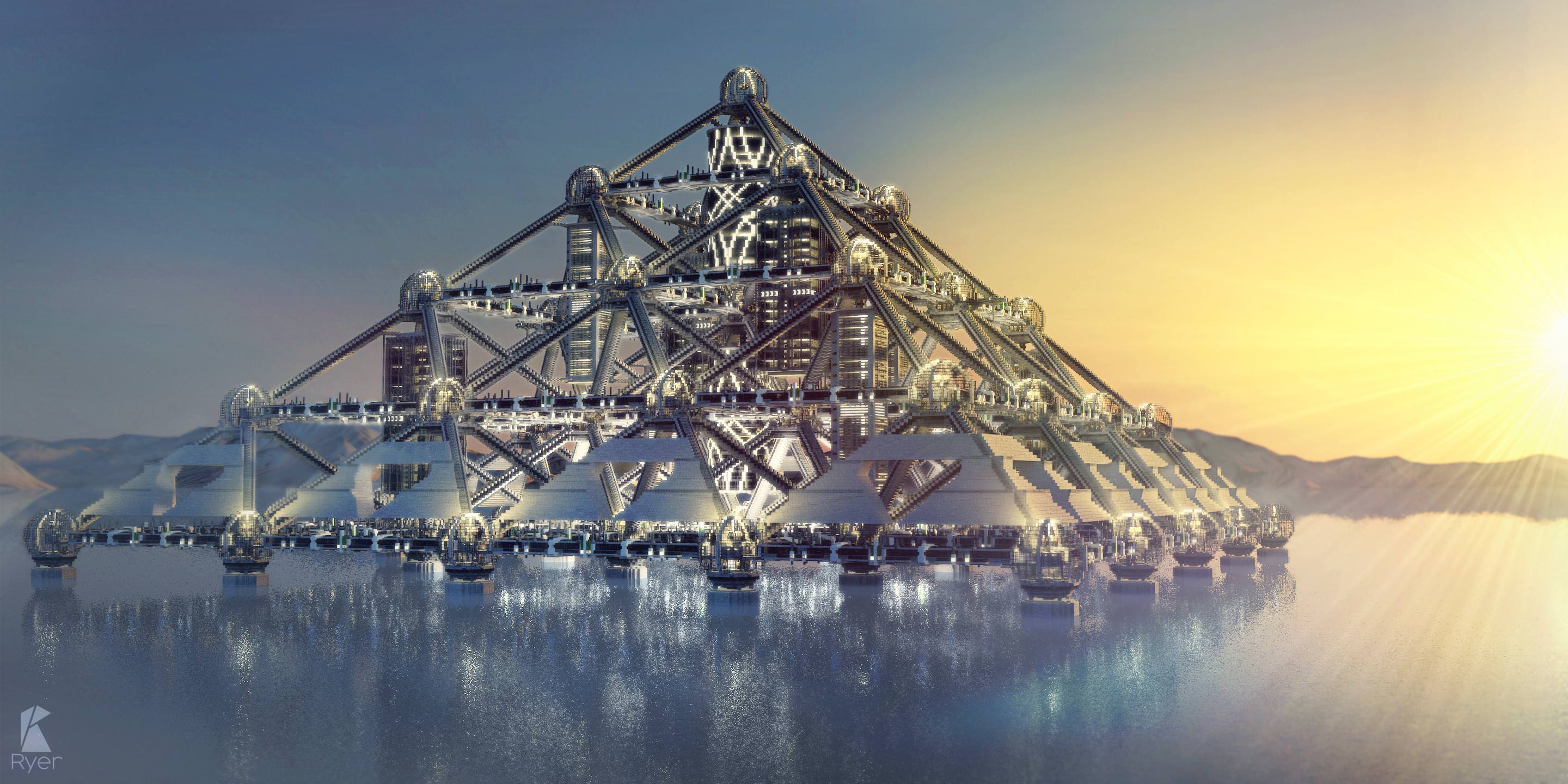
This image depicts a massive, futuristic meme (conceptual rendering) representing an Arcology, a colossal structure designed to house millions of people in a single giant pyramid floating over water. The complex framework holds up glass pods and platforms that glow against the sunset. At the bottom left corner, the text Ryer appears as a watermark.
simple-description (llama3.2-vision_11b)
The meme is a futuristic illustration of a city built on a massive, curved, and elevated structure, resembling a giant, interconnected, and complex network of interconnected structures. The text in the image reads "Arcology: The Future of Sustainable Cities" and features a logo with a stylized letter "A" made up of interconnected lines, symbolizing the connection and harmony between nature and architecture.
detailed-analysis (gemma3-27b-vision)
Okay, let's break down this striking image through the lenses you've provided. It's a rich visual and offers opportunities for nuanced analysis.
Visual Description
The image depicts a colossal, futuristic pyramidal structure floating on a body of water. It's a monumental feat of architecture and engineering. The pyramid is composed of a complex network of interconnected platforms, arches, and towers, creating a layered, almost organic appearance. The structure is metallic, presumably some advanced alloy, reflecting light and casting long, dramatic shadows on the water.
The color palette is dominated by cool blues, grays, and silvers, creating a sense of technological coldness, but also of scale. The water is realistically rendered, reflecting the structure and the warm glow of the setting or rising sun in the background. The horizon is a hazy blend of earth and sky, suggesting a distant, perhaps desolate landscape. The pyramid itself feels simultaneously imposing and fragile, the intricate framework almost suggesting a delicate balance. The scale is massive, dwarfing any potential human presence, hinting at a society built for/by a future civilization.
Foucauldian Genealogical Discourse Analysis
This image is ripe for a Foucauldian examination. The pyramid doesn’t merely exist; it represents a specific discourse of power, knowledge, and control.
- Discipline & Panopticism: The very structure is evocative of Foucauldian principles. The interconnected platforms and visible 'layers' of the pyramid create a feeling of surveillance. The structure suggests an attempt to create a totalizing environment where activity is visible and therefore controllable. While not a literal panopticon, the network of spaces implies a regime of visibility and potential control.
- The Archaeology of Knowledge: The pyramidal form itself is historically laden. Pyramids historically represented a concentration of power, spirituality, and a hierarchical social structure. This futuristic pyramid re-inscribes that historical discourse onto a new technological context. The genealogy would trace the evolution of pyramid structures from ancient monuments of kings to this imagined future.
- Power/Knowledge: The construction of such a structure requires enormous knowledge (engineering, materials science, logistics). This knowledge, however, isn’t neutral. It's a form of power itself. Those who possess the knowledge to build this pyramid also control the means of production and the narratives surrounding its purpose. The image begs the question: who decided to build this, and for what reasons? What ideologies are embedded in its design?
Critical Theory
Framed through the lens of Critical Theory (drawing on the Frankfurt School), the image invites analysis of the potential for technological rationalization and its impact on human existence.
- Instrumental Reason: The pyramid represents the ultimate expression of instrumental reason—the application of technological skill and knowledge to achieve a specific (unspecified) end. However, the image lacks a clear articulation of purpose. This raises a critical question: is this technology serving genuine human needs, or is it simply technology for technology’s sake, becoming a self-perpetuating system of control?
- Domination & Control: The sheer scale of the structure and its apparent detachment from a natural landscape suggest a desire to dominate the environment. The image could be seen as a visual representation of the modern project’s attempt to control and “master” nature. It raises questions of ecological impact and the consequences of unchecked technological advancement.
- Reification: The pyramid can be seen as a reified object - an object that has become detached from its human origins and appears to exist as an independent force. This highlights the alienation of modern life, where human creations take on a life of their own, potentially dominating their creators.
Marxist Conflict Theory
From a Marxist perspective, the image immediately suggests class divisions and the concentration of power.
- Means of Production: The pyramid embodies the means of production in the most extreme form. Whoever controls this structure controls resources, technology, and likely the labor needed to maintain it. The image implies a stark division between those who possess the means of production and those who do not.
- Superstructure & Ideology: The pyramid is part of the "superstructure" - the cultural and ideological institutions that maintain the dominant class's power. Its very existence broadcasts a message of control, permanence, and technological superiority, legitimizing the ruling class's position.
- Alienation: The structure could be interpreted as a symbol of alienation. The inhabitants, if any, would likely be disconnected from the natural world and subjected to a rigid, hierarchical social structure. The image suggests a society where labor is specialized and dehumanized, serving the interests of the controlling class.
Postmodernism
Postmodern analysis emphasizes the breakdown of grand narratives and the celebration of fragmentation and simulacra.
- Hyperreality & Simulacra: The structure seems to exist beyond function. It's a spectacle, a signifier divorced from a clear signified. Is it a city? A fortress? A monument? The image feels less about what it is and more about the impression it creates. This aligns with Baudrillard's concept of simulacra, where representations replace reality.
- Deconstruction: A postmodern approach would deconstruct the historical associations with pyramids, questioning their inherent symbolism of power and hierarchy. The futuristic redesign could be seen as an attempt to subvert or reimagine these traditional meanings, but it ultimately remains a symbol of control.
- Fragmentation & Loss of Meaning: The complex, interconnected structure can also be seen as a metaphor for the fragmented nature of postmodern experience. The lack of a clear, central purpose reflects the loss of overarching narratives and the embrace of ambiguity.
Queer Feminist Intersectional Analysis
This is where the analysis gets a bit more speculative, as the image lacks direct representation of individuals. However, intersections can still be explored.
- Spatial Politics: The pyramid's architecture actively defines and controls space. Who has access to different levels or areas within the structure? This reflects how power operates spatially, historically excluding marginalized groups. Is it a space of safety, or is it a fortress of exclusion?
- Hierarchical Systems & Control: The pyramidal structure is a hierarchy. Feminist analysis highlights how hierarchical systems perpetuate gender inequality and other forms of oppression. This structure reinforces dominant power structures and silences alternative voices. How does this space marginalize bodies that don't fit into rigid societal norms?
- Technological Determinism & Gender: The emphasis on technology raises questions about whose knowledge and perspectives shaped its development. Often, technological advancements have historically been driven by patriarchal ideologies, further marginalizing women and gender-nonconforming individuals. Is this technology designed to serve everyone equally?
- Intersectionality: Intersectional analysis would explore how different forms of oppression (gender, race, class, etc.) intersect within the context of this structure. Who benefits from its construction, and who is excluded? Whose labor built it, and under what conditions?
Let me know if you'd like me to elaborate on any of these points or explore a different theoretical framework.
tesseract-ocr
—_ Y ‘4 i gh-ubes Ge PR. tke ae gt =F \ ee oith a ei eA tice Am oe =) oe ad iti ora a * oi yp i] a = 4 = My , iy as He Aro ecg 2 Se: ih — ‘ 3H ee : . aT eh ba) =") Oe, e gt si hh, cat fe ==SF Ss BS Bile phe Sats ako, | ef Ss en ~~ fe i 2s = eee i Ao oo a, ot Se abt d PPO Ars soy.» Te, a i i. as See eV ee: ae eat , a ae PY = ae au POD. “To Se | z i) ba * a So Sen sy = va _ ee ae sais ork Brier ie i el oe ae ; a ‘oo is ed ed ” F ee a * op F i le ripe ae : a ee ea ‘a a, Seas, ~ 2 rai ve gen? oe ed cog BE - ~ _ 3 : J e Ne ca Ps 3 * . a 7 . ce rage 7 , J j me 5 Pr in ce nar A ait ; =e ; Pink “ati il SSO ae sar th * cli era I aD ro a — ay +‘ e a ata [* - 2 2 ph ple! = ings So Set geal cel eh a . Be oe s a. were he 1 es ae - oe 7. oe i ye : aoe oni Be se : 8 ee ned Fa Cree eee E ea oad at es, i Be ga: ae aaa ee ane a bev ee ee my ee se ae i ee ee ea ma : a . oe oe ie eee oe . Coe Ae oe os ee a Pa oe. ee ee a ec s— vps e : eee Rees q “ae Co ECO i a a = Fo a. Ses
simple-description (llama3.2-vision)
The meme is a screenshot of the 1995 movie "Waterworld" with a caption that reads "When you finally get to the water world...".