First Seen
2024-04-05T18:54:38.254057+00:00
simple-description (qwen3.5_2b-q8_0)
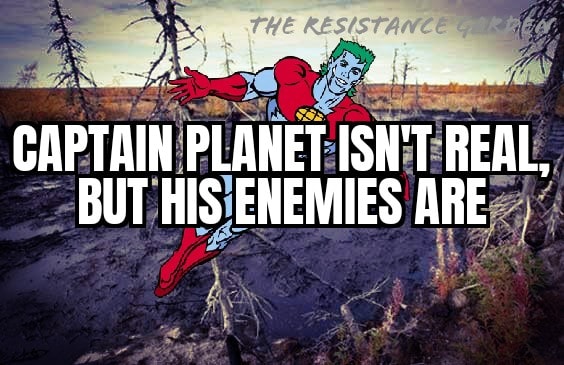
This image features a distressed superhero running through a barren, dead landscape to visually represent a planet in ruins. The text "CAPTAIN PLANET ISN'T REAL, BUT HIS ENEMIES ARE" plays on the irony that a fictional world is treated as real, contrasting with the actual reality of environmental destruction. This relates to the Climate Change category by humorously implying that the threats facing the planet are genuine and dangerous realities.
simple-description (llama3.2-vision_11b)
This meme is a satirical image that compares the fictional character of Captain Planet to the real-world climate crisis. The image shows Captain Planet, a superhero from a 1990s cartoon, standing amidst a destroyed environment with the caption "Captain Planet is a fictional character, but climate change is real".
detailed-analysis (gemma3-27b-vision)
Here's an analysis of the image, broken down into sections based on the requested theoretical frameworks. Note that some frameworks don't apply particularly well, and I'll explain why if that's the case.
Visual Description
The image depicts Captain Planet, a superhero known for his environmental advocacy, in flight. He is rendered in the classic cartoon style, but with a slight digital grain and placed against a strikingly bleak and desolate landscape. This backdrop isn’t a cartoon-style forest, but an image of what appears to be a barren, burnt, and environmentally damaged area – possibly a post-industrial or heavily polluted site.
Superimposed over this scene in bold, black, sans-serif font is the text "CAPTAIN PLANET ISN'T REAL, BUT HIS ENEMIES ARE." In the upper right corner there is what looks like a signature or writing in cursive, and says "THE RESISTANCE." The overall effect is a juxtaposition of the idealistic, cartoonish figure of Captain Planet against the grim reality of environmental destruction, creating a sense of urgency and suggesting the true villains are not fantastical but all too real.
Foucauldian Genealogical Discourse Analysis
This image lends itself well to a Foucauldian analysis. The statement "Captain Planet isn't real, but his enemies are" can be seen as an assertion that the discourse surrounding environmental issues is powerful and materialized in real entities.
- Power/Knowledge: The "enemies" represent the power structures that create environmental damage – corporations, systems of production, consumer culture, etc. Foucault argued that power and knowledge are intertwined; these entities possess both the power to exploit the environment and the knowledge (or the intentional blindness) to continue doing so.
- Genealogy: A genealogical analysis would trace the historical origins of these “enemies.” The image suggests a lineage of practices and ideologies that prioritize profit over ecological sustainability. It implies that these enemies aren't simply individuals but are rooted in historical and social structures.
- Discourse and Materiality: The contrast between the cartoon and the stark landscape points to how discourse (the idealized vision of Captain Planet, of environmental protection) can be countered by material reality (environmental degradation). This isn't just about ideas; it’s about how power operates through physical practices and impacts on the world. The phrase "The Resistance" also implies a challenge to that power dynamic.
Critical Theory
The image is deeply resonant with many themes of critical theory, particularly the Frankfurt School.
- Culture Industry: Captain Planet, as a cartoon hero, represents a commodified attempt to address environmental problems. While appearing progressive, this can be seen as a way to manage public concern rather than fundamentally challenge the structures causing the harm. The image’s contrast suggests that this “solution” is insufficient.
- Domination and Enlightenment: Critical theorists argued that the Enlightenment’s emphasis on reason and control over nature has contributed to environmental exploitation. Captain Planet, as a figure embodying control over elemental forces, could be read as a continuation of this problematic tradition. The enemies are those who are perpetuating that pattern.
- Reification: The image highlights the reification of environmental problems – turning complex ecological crises into simplistic, manageable “issues.” Captain Planet's easily defeated villains (in the cartoon) contrast with the intractable reality of environmental damage.
Marxist Conflict Theory
The image readily aligns with Marxist conflict theory.
- Class Conflict: The "enemies" are readily interpretable as the capitalist class and the systems of production they control. Environmental destruction is seen as a direct result of the pursuit of profit and the exploitation of natural resources. The barren landscape is evidence of this exploitation.
- Material Base & Superstructure: The material base (the means of production and the environment) is being damaged by the superstructure (the ideologies, institutions, and culture that support capitalist accumulation). Captain Planet, though a hopeful figure, is largely symbolic; the real struggle requires challenging the underlying economic and political systems.
- Alienation: Environmental degradation can be seen as a form of alienation, separating humanity from nature and from its own essential being. The image emphasizes this disconnect through the juxtaposition of the cartoon and the desolate landscape.
Postmodernism
Postmodern analysis can be applied, though it's perhaps a less central lens than the others.
- Simulacra and Simulation: Captain Planet, as a fictional hero, could be seen as a simulacrum – a copy without an original. This raises questions about the authenticity of environmental activism and the role of media in shaping our understanding of these issues.
- Deconstruction: The image deconstructs the simplistic narrative of good versus evil often presented in superhero stories. The “enemies” aren’t cartoon villains; they are complex forces embedded in real-world systems.
- Meta-Narratives: The image challenges the grand narrative of environmental protection as something achievable through individual heroism. It suggests a more nuanced and critical understanding of the problem.
Queer Feminist Intersectional Analysis
This is the least naturally fitting framework, though potential connections exist.
- Environmental Justice: The image can be connected to environmental justice movements, which highlight how marginalized communities disproportionately bear the brunt of environmental damage. The "enemies" can be interpreted as those who perpetuate these inequalities.
- Ecofeminism: Ecofeminism posits a connection between the domination of women and the domination of nature. The image, while not explicitly gendered, could be seen as a critique of patriarchal systems that contribute to both social and ecological exploitation.
- Intersectionality: The damage depicted in the landscape does not impact everyone equally. Examining who is most vulnerable to this environmental harm (based on race, class, gender, etc.) could provide an intersectional analysis, and those who profit from this harm are the 'enemies'.
Let me know if you'd like me to elaborate on any of these analyses or focus on a particular theoretical framework.
tesseract-ocr
ac x i Gy eT TL Talat = PUA a aul) Sd
simple-description (llama3.2-vision)
This meme features a character from the DC Comics universe, Lobo, who is known for his violent and brutal nature. The text overlay reads "Captain Planet is not real, but his enemies are". The image is likely a humorous take on the idea that Captain Planet's enemies are more believable and real than the hero himself.