First Seen
2023-05-10T20:59:57+00:00
simple-description (llama3.2-vision_11b)
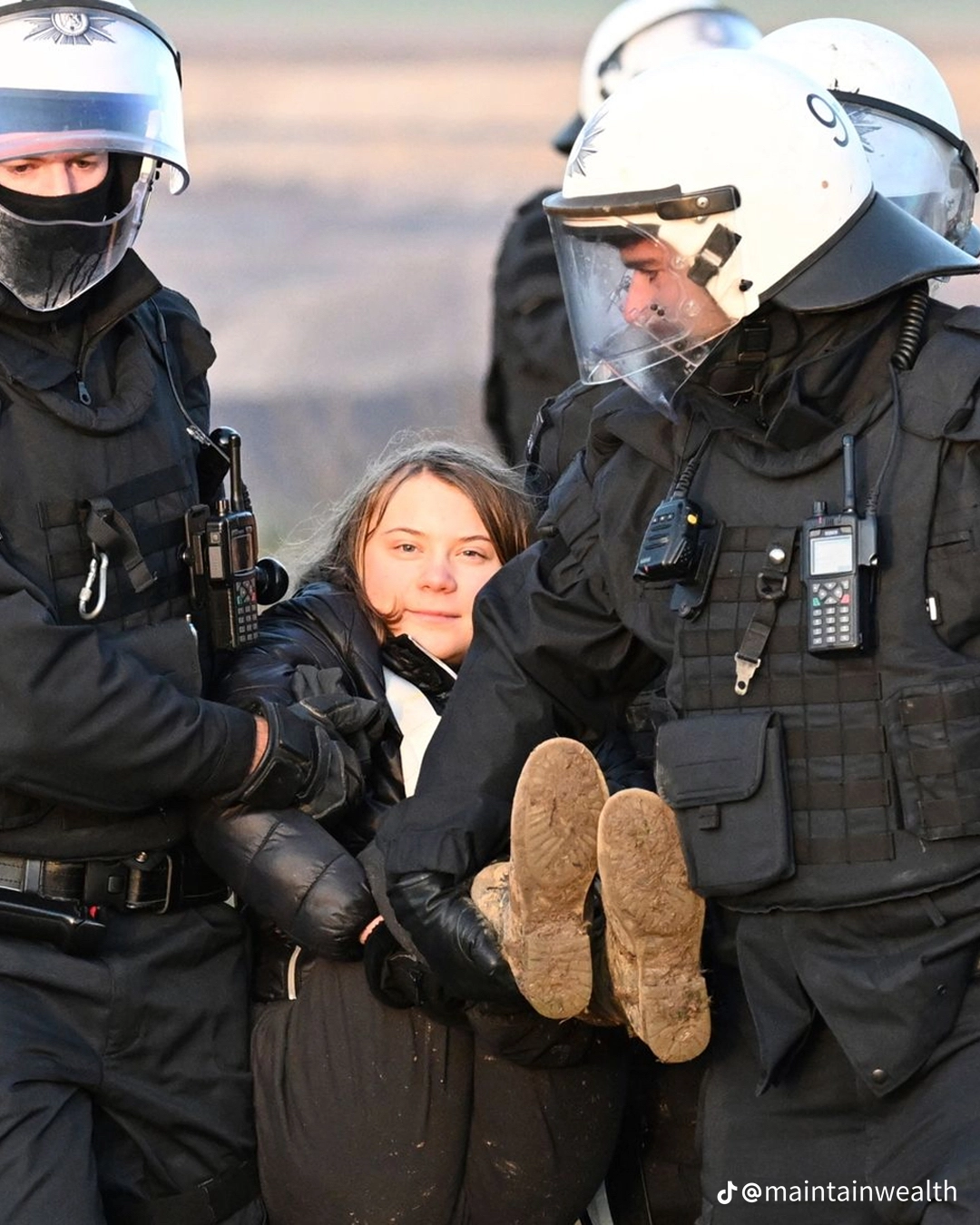
This meme features a photo of a young woman being carried by two riot police officers. The caption "I'm not arguing, I'm just explaining why climate change is real" is a humorous way of poking fun at the common frustration of trying to have a rational conversation with someone who refuses to accept climate change as a real issue. The image is likely meant to be ironic and relatable, as it's a common experience for people to feel like they're being "carried away" by others' opinions when trying to discuss climate change.
detailed-analysis (gemma3-27b-vision)
Okay, here’s an analysis of the image, broken down into the sections you requested, only including sections relevant to the image's content. It's important to note that any single image can be interpreted through multiple lenses. This is one possible analysis.
Visual Description
The image depicts a stark scene of an individual being forcibly carried by two uniformed police officers. The person appears to be resisting, with legs dangling and arms extended awkwardly. They are wearing a dark dress and work boots. The police officers are clad in full riot gear – helmets with visors, bulletproof vests, gloves, and multiple pouches carrying equipment. They grasp the individual's arms tightly. The background appears to be a street or plaza, with a slightly overcast or pale sky. The overall mood is one of confrontation, oppression, and resistance. The person being carried appears vulnerable, while the police officers represent authority and force. The image seems to document a moment during a protest or demonstration. The watermark at the bottom reads "@maintainwealth."
Foucauldian Genealogical Discourse Analysis
This image is profoundly insightful through a Foucauldian lens. The scene vividly illustrates the operation of power/knowledge. The riot-gear clad police officers represent the state's legitimate (or claimed legitimate) authority, which relies on discourses that define acceptable and unacceptable behavior. The act of carrying the individual is the exercise of power, manifested as physical control and an assertion of the state’s right to define and enforce norms.
The image can be read as a demonstration of discipline (as outlined in Discipline and Punish). The individual's body is controlled and objectified, a display of power rather than a response to specific "crime". The uniform and gear of the police aren't just about protection, they are constitutive of a discourse about order and control.
A genealogical approach would ask how this scenario came to be. What historical discourses about public order, protest, and dissent have shaped the laws, procedures, and tools that are being deployed here? How has the definition of "disorder" been constructed over time? The image becomes a concrete example of the abstract power dynamics described by Foucault.
Critical Theory
From a Critical Theory perspective, the image represents the inherent power imbalances within society. The individual is a civilian, while the police embody the state's coercive apparatus. The act of forceful removal suggests a silencing of dissent and a suppression of potentially challenging ideologies.
The image prompts us to ask who benefits from this display of power. Is this a case of protecting the status quo? Is the individual's viewpoint threatening to established interests? Critical Theory would emphasize the role of ideology in legitimizing this unequal power dynamic. The image challenges the assumption that the state is a neutral arbiter of justice, suggesting it actively serves to maintain existing hierarchies.
The image resonates with the Frankfurt School’s concerns about the instrumentalization of reason and the potential for state power to become totalitarian. The uniform and impersonal nature of the police officers illustrate the dehumanizing effects of bureaucratic control.
Marxist Conflict Theory
Through a Marxist lens, this image can be interpreted as a manifestation of class conflict. The individual being carried could be seen as a representative of the oppressed or marginalized, resisting the authority of the state, which serves the interests of the ruling class. The police represent the enforcement arm of that ruling class, maintaining the existing economic and social order.
The act of suppression itself reveals the inherent contradictions within capitalist society – the need to suppress dissent to maintain stability, while simultaneously claiming to uphold freedom and democracy. The conflict is not simply physical, but ideological, reflecting a deeper struggle over resources, power, and the meaning of justice. The visual contrast between the vulnerability of the individual and the imposing force of the police underlines the imbalance of power. The watermark "@maintainwealth" could be interpreted as a direct commentary on the economic forces at play, with a focus on the preservation of capital.
Disclaimer: These are interpretations, and other valid readings are possible. The specific meaning of the image will depend on the context in which it's viewed and the individual's own experiences and perspectives.
simple-description (llama3.2-vision)
This meme features an image of a woman being carried away by riot police during a protest. The image is captioned "when you're trying to get to the front of the line but you get caught in the wrong place at the wrong time". The text is likely referencing a common experience of being stuck in a crowded situation, but in this case, it's being used to poke fun at the idea of being caught in a chaotic situation like a protest.
tesseract-ocr
ge — 4 : / ; ey ; Oa i ; } | ee j v~ Se : w Ba ‘ J . . ) i | a | ‘f SN 4 r ee J \ oh e Be Bele Ve = ry H} . en i | 8 = = wie : EH ‘ pA y Ne a yj | ig : 4) 1 e. a Ga | er b 4 m= S. , q Z a ae. en *y A Se he ( oF Oe d @maintainwealth