First Seen
2023-05-10T21:03:35+00:00
simple-description (llama3.2-vision_11b)
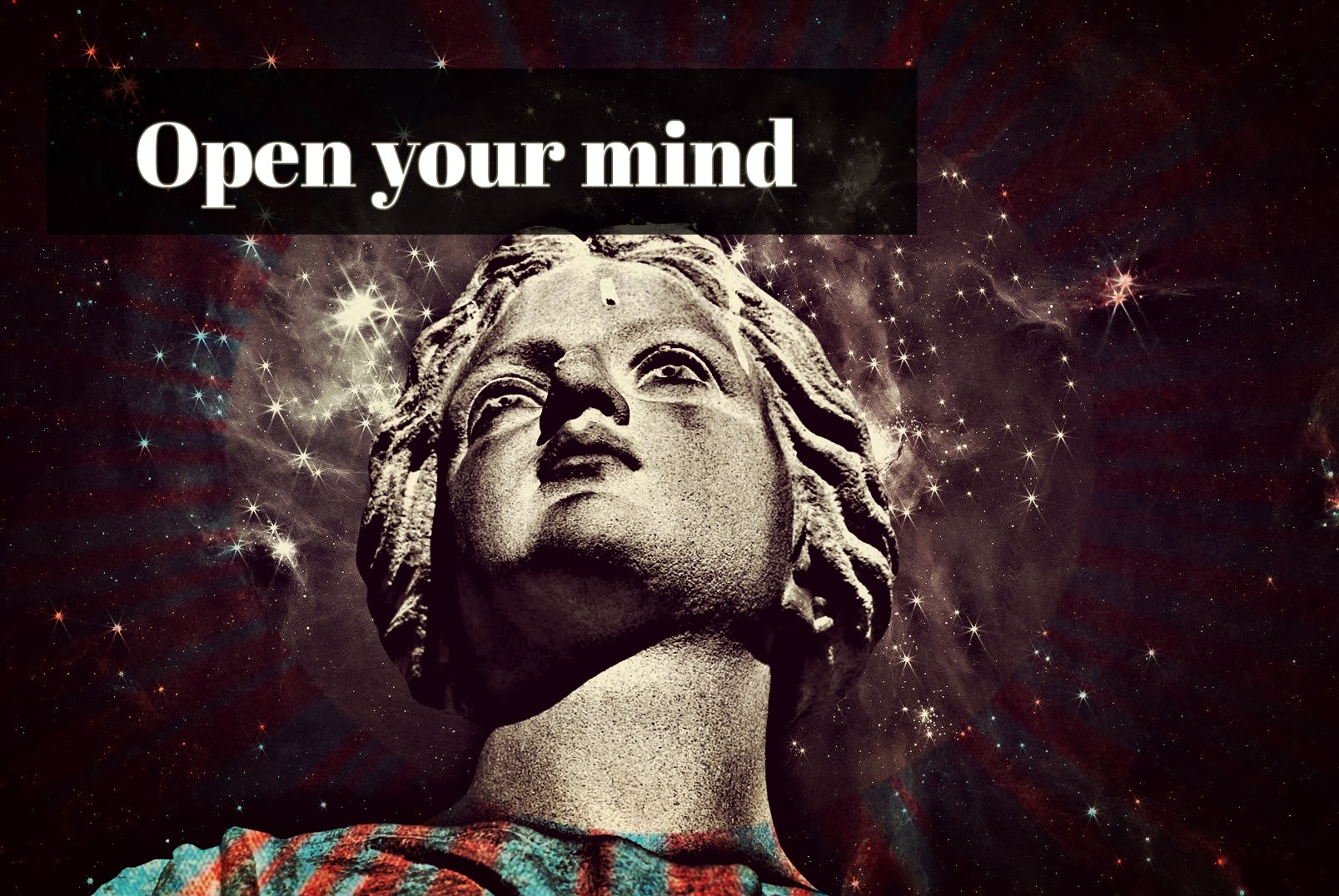
The meme features a statue of a woman with a blank expression, surrounded by a dark and mysterious background. The text "Open your mind" appears above the statue, suggesting that the image is encouraging the viewer to think outside of their normal mental boundaries and explore new ideas.
detailed-analysis (gemma3-27b-vision)
Okay, here's an analysis of the image, broken down into the requested sections. As you'll see, some sections are more applicable than others given the imagery.
Visual Description
The image features a close-up of a classical marble bust (likely a depiction of a Roman or Greek figure, possibly a god or deity) against a vividly colorful, cosmic background resembling a nebula or star field. The bust is rendered in grayscale, highlighting the texture and detail of the sculpted stone. The background is a swirling mix of deep reds, purples, and bright star-like points of light. Across the top of the image, in bold white lettering, is the text "Open your mind." The composition draws a strong contrast between the ancient and static sculpture and the dynamic, infinite expanse of the cosmos. The overall effect is ethereal and aspirational, seemingly suggesting transcendence or the pursuit of knowledge.
Foucauldian Genealogical Discourse Analysis
The image, along with the slogan "Open your mind," invites a Foucauldian analysis by positioning knowledge and openness as a form of power/knowledge. The classical bust evokes a history of Western thought, traditionally dominated by a lineage of “great men” and their established philosophical canons. "Opening your mind" becomes a discourse – a way of talking about and legitimizing certain forms of understanding over others.
A genealogical approach asks how this discourse came to be. Tracing its history, we could argue it’s tied to the Enlightenment project of reason and the valorization of objective truth. However, it also participates in a much longer tradition of Western metaphysics that centers privileged “rational” thought (often associated with masculinity and Western civilization) as the means to access ultimate truths.
The image, then, isn’t simply about openness; it’s about whose openness is being encouraged, and to what. The nebula background could be interpreted as representing the limitless potential of thought, but it also functions to “exoticize” or “other” the space of knowledge, potentially re-enforcing hierarchies of thought. The act of "opening your mind" is therefore not neutral, but a historically and culturally conditioned practice, embedded within specific power relations.
Critical Theory
From a Critical Theory perspective (drawing from the Frankfurt School, e.g., Adorno and Horkheimer), the image can be interpreted as participating in the “culture industry.” It appeals to a desire for intellectual and spiritual uplift, but does so in a superficial and commodified way. The combination of classical imagery and a cosmic background is visually appealing and designed to evoke a sense of profoundness.
The slogan, "Open your mind," functions as a form of instrumental reason – it presents itself as a pathway to liberation, but ultimately reinforces a particular worldview. The image could be seen as encouraging a passive acceptance of grand narratives about progress and enlightenment, rather than fostering genuine critical thinking or challenging dominant ideologies. It might also serve as a distraction from real social and political issues, offering an aesthetic escape instead of engagement. The “open mind” being promoted may be one that is receptive to consumption and affirmation of the status quo.
Postmodernism
From a Postmodern lens, the image represents a playful and ironic juxtaposition of high and low culture. The classical bust—a symbol of traditional authority and fixed meaning—is placed within the chaotic and infinite background of the cosmos, undermining its traditional solidity. The slogan “Open Your Mind” itself embodies the postmodern emphasis on subjectivity and relativism. It suggests that there isn't a single, correct way to think, but rather multiple perspectives and interpretations.
The image also deconstructs the idea of a singular “grand narrative” about knowledge. The vastness of the nebula implies that there are countless possibilities beyond our comprehension, challenging the idea of a linear path to truth. It's a visual representation of the postmodern embrace of fragmentation, ambiguity, and the endless play of signifiers.
Queer Feminist Intersectional Analysis
This area has slightly less direct application but can still be engaged with. Historically, the “classical” figures represented by the bust were almost exclusively male. A Queer Feminist perspective would question whose mind is being asked to “open,” and what forms of knowledge are being privileged. It asks whether the image implicitly reinforces a patriarchal canon of thought that has historically excluded the voices and experiences of women, people of color, and LGBTQ+ individuals.
An intersectional analysis would also consider how the image interacts with other forms of power and oppression. The “open mind” being promoted might be one that is receptive to certain forms of knowledge while remaining closed to others – particularly those that challenge existing social hierarchies. For example, a mind “open” to scientific inquiry might still be closed to Indigenous knowledge systems or spiritual practices.
The image, while visually arresting, could be seen as perpetuating a historically biased and exclusionary framework of knowledge, albeit in an aesthetically pleasing way.
Hopefully, this breakdown provides a nuanced understanding of the image from various theoretical perspectives. Let me know if you would like me to elaborate on any of these points.
simple-description (llama3.2-vision)
This meme features a picture of a statue of David, a famous work of art, with a caption "Open your mind" in bold, playful font. The image is likely to be humorous and ironic, as the statue is typically associated with a more serious and introspective mood. The caption is a tongue-in-cheek reference to the idea that one should be open-minded and receptive to new ideas.
tesseract-ocr
ae : Yee ¥ : : @ eC — Ss : % : . Kae rea Po RS 2 a i 9 = uel : co a. ee SN , sa. SS ay tea .. ee 3 eee. ee) ase a we a we a <a oo ea ee eS é ia gg eS Ay a " a i ‘ . a ey ili a =) oF a a4 x : Rae SS om aS 2 ae Sei eee ee S\N ee 5 ee ees aoe ee oa cass. ae Ng . ; ; eS Be i Mi A L i pee ao es: é , * Z Tae ee 7 ae . ! ee ee é 3 Re en Ore aaa ee _ v ee FE oe oe pore = oe oe é é cs ie ge —— (Ra = BN ; . " * ff Ce RN taut aoe — meee | oK a