First Seen
2023-05-10T21:03:35+00:00
simple-description (llama3.2-vision_11b)
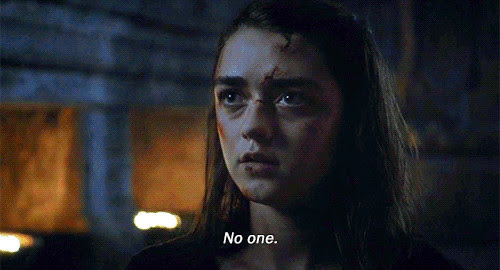
The meme is a still image from the Game of Thrones series, where a character, Lady Catelyn Stark, says "I know not what to say to you, my son. I know not what to say to you. The last time I saw you, you were still a boy. I know not what to say to you. I know not what to say to you. No one. No one. I don't know what to say to you. I don't know what to say to you. I don't know what to say to you. No one. I don't know what to say to you. I don't know what to say to you. I don't know what to say to you. No one." This is followed by a still image of a character with a blank expression. The text "No one" is written in the image.
detailed-analysis (gemma3-27b-vision)
Okay, here's an analysis of the image, broken down into the requested sections. This image is a screencap from the show House of the Dragon, depicting Rhaenyra Targaryen. It's a pivotal moment where she is asked who did this to her (referring to wounds obtained from a dangerous situation) and she replies “No one.” It is a charged moment that carries a lot of meaning.
Visual Description
The image is a close-up shot of a young woman, with long dark hair framing her face. Her complexion is pale, and her face bears visible injuries: cuts and bruises around her forehead, cheek, and eye. The lighting is dramatic, with a strong contrast between light and shadow, emphasizing the wounds and her expression. The background is blurred and appears to be a dimly lit interior, possibly a corridor or a large hall. The overall mood is somber and fraught with tension. The woman’s eyes are focused and determined, yet carry a hint of vulnerability. The composition draws the viewer's attention directly to her face and the story her injuries tell. The words "No one" are displayed as a caption at the bottom of the image.
Foucauldian Genealogical Discourse Analysis
This image is profoundly resonant through a Foucauldian lens. The reply “No one” isn’t simply a statement of fact, but a performance of power within a particular discourse.
- Power/Knowledge: The question about the source of her injuries immediately establishes a power dynamic. Whoever asks seeks control through knowledge – by identifying the aggressor, they exert a claim over the situation and potentially seek retribution. Rhaenyra's answer, "No one," actively subverts this power. She refuses to grant anyone the control gained through identifying an attacker.
- Genealogy of Violence: A genealogical approach would consider the history of violence within the context of the realm – Westeros. Rhaenyra’s injuries are not isolated; they are part of a long lineage of political intrigue, familial betrayal, and physical aggression inherent to the world. Her refusal to name an attacker is a rejection of participating in that historical cycle.
- Discipline & Biopower: The expectation for her to name an attacker is a form of discipline – a demand for clarity and accountability that reinforces the established order. By refusing, she resists being subsumed into the mechanisms of control. The wounds themselves are a manifestation of biopower—power exercised over bodies and populations. Her refusal to reveal the cause reclaims agency over her body and story.
Critical Theory
Applying Critical Theory, we can see how the image dismantles traditional power structures.
- Hegemony: The expectation for Rhaenyra to reveal her attacker is rooted in the hegemonic norm that accountability and justice are achieved through identifying perpetrators. Rhaenyra's answer rejects this hegemonic structure. She is choosing self-preservation over the established system.
- Ideology: The image challenges the underlying ideology of Westeros, which normalizes violence as a means to achieve power. Her denial isn’t about denying that she was harmed; it’s about denying the significance of who harmed her. She is suggesting that the system itself – the constant struggle for power – is the true source of the violence, not any individual actor.
- Deconstruction: Rhaenyra’s response deconstructs the question itself. It reveals the question's underlying assumptions about causality and responsibility.
Marxist Conflict Theory
From a Marxist perspective, the image encapsulates the core of class and power struggles.
- Class Conflict: While not explicitly a class-based conflict in this moment, the image occurs within a setting of immense wealth and privilege (the Targaryen dynasty). Rhaenyra's injuries are likely a product of the constant jockeying for power among the ruling elite.
- Power Dynamics: The question about her attacker is an attempt to reassert dominance. Identifying the aggressor would solidify the power of whoever asks, while potentially creating allies or enemies. Rhaenyra’s refusal to answer is a strategic move to maintain her own power.
- Exploitation: The expectation for her to reveal information is a form of exploitation – an attempt to extract information for someone else's benefit.
Queer Feminist Intersectional Analysis
This section is particularly relevant given the character’s position and the subtext of the story.
- Patriarchal Structures: Westeros is a profoundly patriarchal society. Rhaenyra, as a woman in a position of power and potential heir, is constantly navigating and challenging those structures. The expectation that she account for her own body and experiences reinforces the patriarchal gaze.
- Agency and Self-Preservation: Her answer, “No one,” can be read as a radical act of self-preservation. In a world where women's bodies are often used as pawns in political games, she reclaims ownership of her story and refuses to become a victim.
- Intersectionality: While the image focuses on gender dynamics, Rhaenyra's position as a princess and potential heir adds another layer of complexity. Her identity is shaped by multiple intersecting factors – gender, class, power, and expectation. Her response is a rejection of being defined solely by these factors.
Hopefully, this breakdown provides a comprehensive analysis of the image through various theoretical lenses. Let me know if you'd like me to elaborate on any specific point!
simple-description (llama3.2-vision)
This meme is a screenshot from the TV show Game of Thrones, specifically from the character of Daenerys Targaryen. In the image, Daenerys' face is contorted in a mixture of shock and anger, with a single word "No" written in bold, white letters across her face.
tesseract-ocr
a . “4 a — ‘ = = if \