First Seen
2023-05-10T21:03:35+00:00
simple-description (llama3.2-vision_11b)
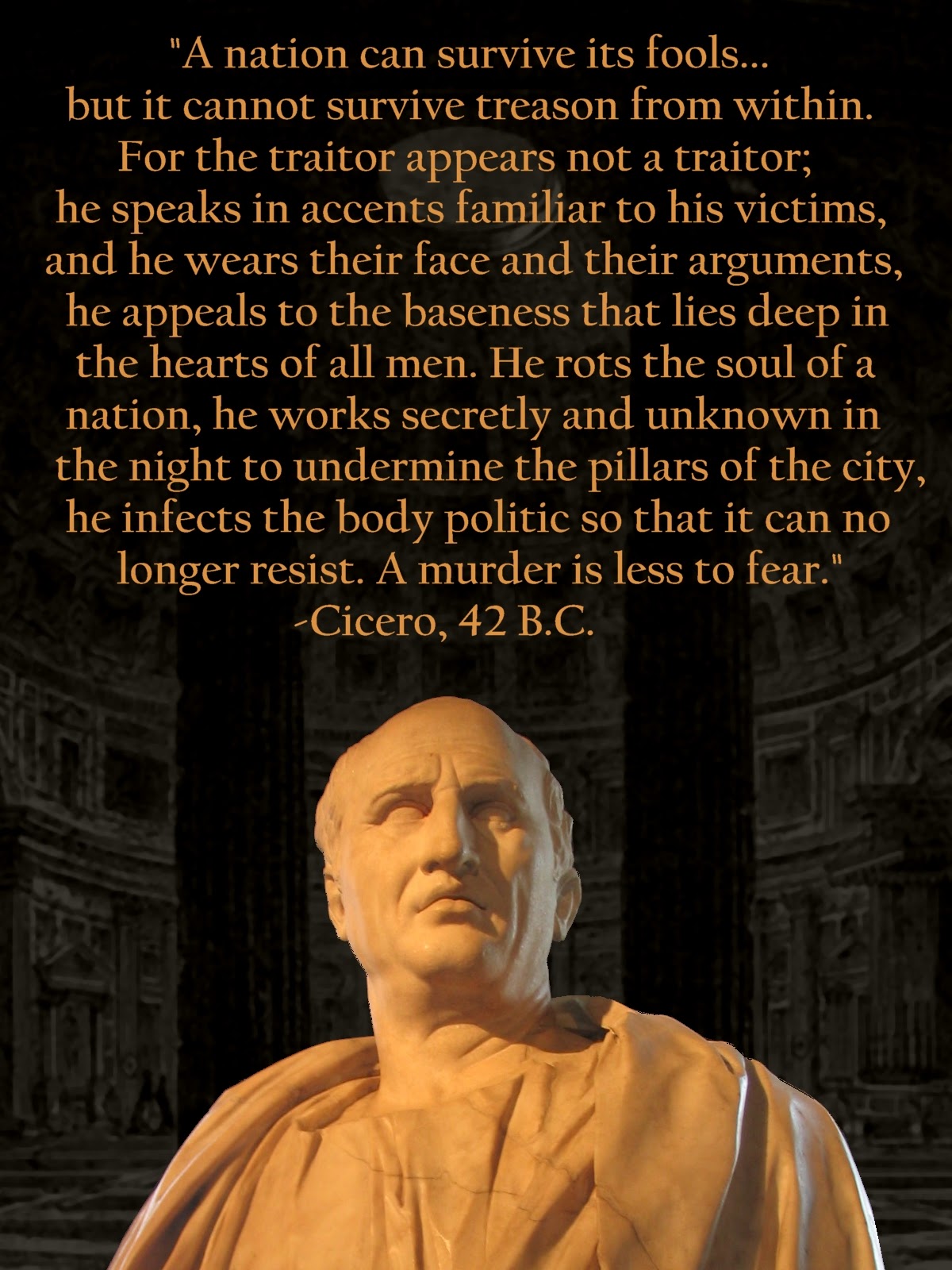
This meme is a historical quote from Cicero, a Roman statesman and philosopher, who wrote about the corrupting influence of power and the dangers of unchecked power. The quote is often used to illustrate the dangers of corruption and the importance of accountability. The meme is a humorous way to comment on the corrupting influence of power and the need for accountability in government.
detailed-analysis (gemma3-27b-vision)
Okay, here's an analysis of the image and the quote, broken down into sections as requested. I'll only include sections where the relevant theoretical framework strongly applies, and I'll indicate if a framework feels less relevant.
Image Description
The image features a bust of a Roman figure, likely Cicero given the attribution below the quote. The bust is sculpted in a classical style, with detailed rendering of facial features and drapery. The bust is made of a dark-colored stone (possibly bronze or a dark marble) and is depicted in profile. The background is an ornate, dark, and somewhat blurry architectural space, appearing to be a grand hall or library, with a decorative molding pattern. The lighting is dramatic, highlighting the face and shoulders of the bust, creating a sense of solemnity and gravitas. The text of the quote is overlaid on the image in white, using a classic serif font. The color scheme is predominantly dark, with a focus on the contrast between the dark stone bust and the white text.
Foucauldian Genealogical Discourse Analysis
This quote and image lend themselves well to a Foucauldian reading. The core concept is the discourse of treason and its construction of power/knowledge.
- Power/Knowledge: Cicero’s statement isn't simply describing a threat but constituting it through language. The traitor isn’t defined by their acts initially, but by the discourse surrounding them. The quote creates the category of the “traitor” – defining it as an insidious, internal threat that erodes the "soul of a nation." This definition allows for the justification of surveillance, control, and ultimately, punishment of those labeled as such.
- Genealogy: Tracing the "genealogy" of the concept of treason reveals how it’s not a natural or inherent category, but a historically constructed one. In Roman politics (and beyond), the definition of treason was often fluid, deployed strategically by those in power to eliminate rivals or suppress dissent. The quote exemplifies a moment in that genealogy – shaping a particular understanding of what constitutes a threat to the Roman Republic.
- Disciplinary Power: The description of the traitor working "secretly," "unknown in the night," and "infecting" the body politic evokes anxieties about surveillance and control. This rhetoric suggests a need for disciplinary mechanisms to identify and punish those who threaten the established order. The quote almost demands a system for rooting out these hidden enemies.
Critical Theory
The quote aligns with several key tenets of Critical Theory, particularly relating to ideology and the construction of the "Other."
- Ideology: The statement functions as an ideological tool, reinforcing the existing power structures of the Roman Republic. It frames any opposition or dissent as a fundamental threat to the entire nation, rather than legitimate political disagreement. This helps to legitimize the suppression of any challenge to the status quo.
- The Other: The "traitor" is constructed as the ultimate "Other" – a figure that is both internal and external to the nation. They are described as insidious and corrupting, embodying everything that the "nation" is not. This construction serves to solidify the boundaries of the in-group (the "nation") and to demonize anyone who falls outside of those boundaries.
- Hegemony: Cicero's position as a prominent Roman statesman suggests that this quote was intended to reinforce his own authority and to shape public opinion. The quote's dramatic language and appeal to anxieties about national security were likely intended to exert a hegemonic influence on the Roman populace.
Marxist Conflict Theory
While not the most prominent lens, Marxist theory can provide some insight.
- Class Conflict (Subtle): Though not explicit, the "nation" Cicero speaks of likely represents the ruling class/elite of Roman society. The fear of internal disruption and the condemnation of the "traitor" can be interpreted as a defense of the existing power structures and a suppression of any challenges to the elite's dominance. The “nation” is, arguably, shorthand for the ruling class's interests.
- Ideological Control: The quote can be seen as an attempt to use ideology to maintain the existing class structure. By demonizing those who challenge the status quo, Cicero seeks to prevent the development of any oppositional movements that might threaten the elite's power.
Postmodernism
Postmodern readings can focus on the instability of meaning and the constructed nature of truth.
- Deconstruction of "Treason": A postmodern analysis would question the very notion of "treason." What constitutes a "traitor?" Is it a fixed category or a fluid one, defined by those in power to suit their own interests? The quote invites a deconstruction of the term, revealing its inherent ambiguity and ideological implications.
- Simulacra and Simulation: The description of the traitor as a deceptive figure who "wears the face" of others suggests a blurring of reality and simulation. The traitor is not authentic but a representation of something else, a "simulacrum" that undermines the very foundations of trust and identity.
Queer Feminist Intersectional Analysis
This lens is the least applicable to the immediate text, but can offer interesting (though indirect) readings.
- Internal "Othering": The concept of the "traitor" as an internal threat mirrors historical patterns of how marginalized groups (based on gender, sexuality, race, etc.) have been framed as threats to national unity and social cohesion. The quote's rhetoric of suspicion and fear can be seen as a precursor to the demonization of othered groups.
- Power Dynamics: The quote reinforces traditional power dynamics, with a focus on national unity and hierarchical authority. While not explicitly gendered or sexualized, it can be seen as part of a broader system of oppression that marginalizes those who challenge the status quo.
Let me know if you'd like me to elaborate on any of these sections or explore other theoretical frameworks!
simple-description (llama3.2-vision)
This meme is a humorous image of a statue of a famous historical figure, with a quote from Cicero's "De ... (not specified) ... (not specified) ..." in the background. The image shows a statue of a man with a stern expression. The text reads: "A nation can survive its ... (not specified) ... (not specified) ... but it cannot survive ... (not specified) ... (not specified) ...".
tesseract-ocr
"A nation can survive its fools... but it cannot survive treason from within. For the traitor appears not a traitor; he speaks in accents EVEN to his victims, and he wears their face and their arguments, he appeals to the baseness that lies deep in the hearts of all men. He rots the soul of a nation, he works secretly and unknown in the night to undermine the pillars of the city, he infects the body politic so that it can no longer resist. A murder is less to fear." -Cicero, 42 B.C. ——_ wv “a cus &- an x ae