First Seen
2023-05-10T21:03:35+00:00
simple-description (llama3.2-vision_11b)
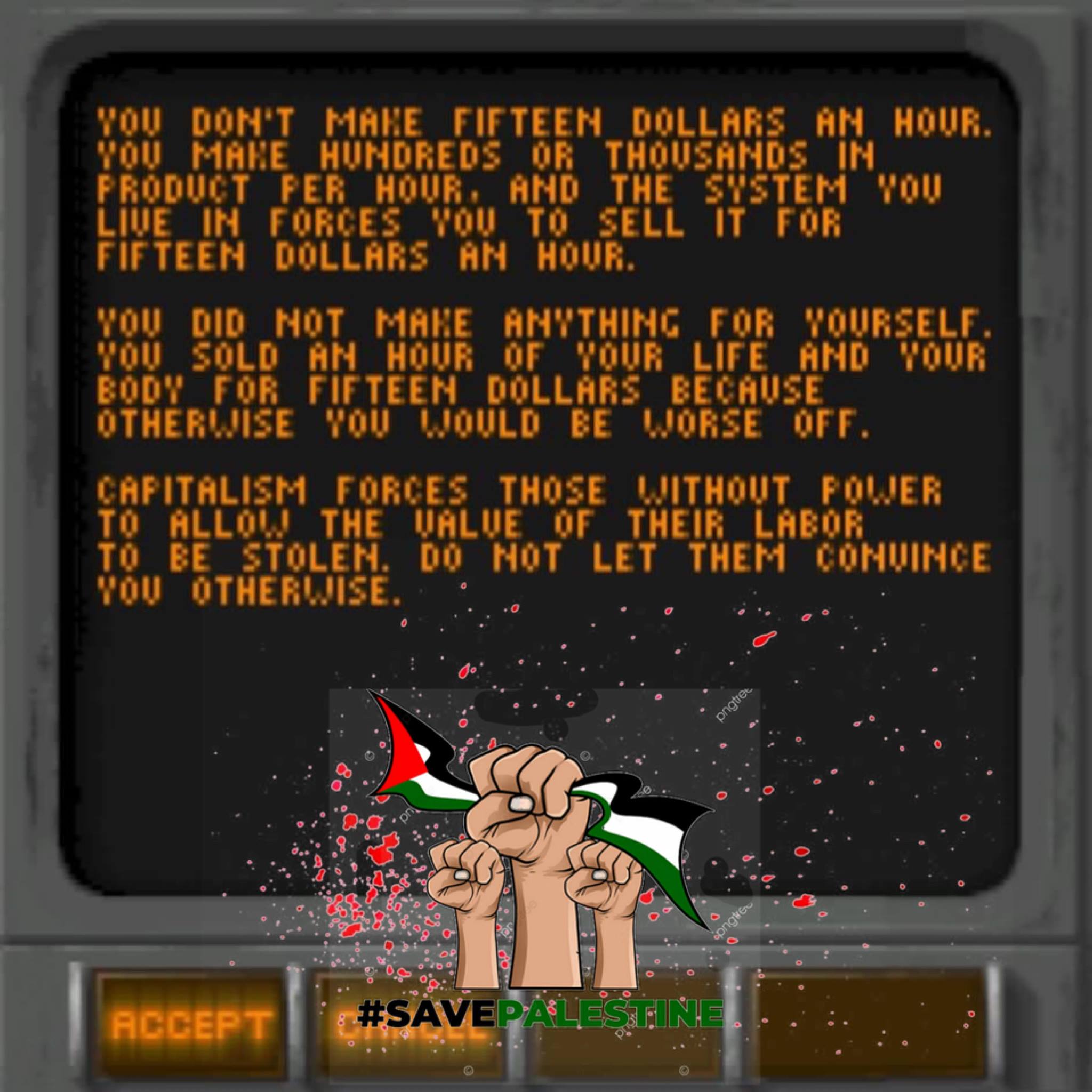
The meme is a humorous critique of the concept of value in a capitalist society, specifically in the context of the "You Don't Own Me" song by The . The image is a parody of the song's lyrics, but it is actually a text box from the 1984 movie "The ", in which a computer system explains the nature of its existence. The text in the image is a humorous, satirical commentary on the nature of the value of money in a capitalist society. The text box is a parody of the , and the text in the image is a commentary on the nature of the value of money in a capitalist society.
detailed-analysis (gemma3-27b-vision)
Okay, here's an analysis of the image, broken down into sections addressing the requested theoretical frameworks where applicable. It's a complex image, so the analysis will be detailed.
Visual Description
The image is presented as a computer monitor screen, stylized with a black bezel and a pixelated, slightly grainy aesthetic. The screen displays text in a bold, uppercase font, seemingly mimicking a system message or command prompt. The text focuses on the valuation of labor, contrasting production/value created with the wage received, highlighting economic exploitation.
Beneath the text, a pair of hands are clasped in the center. They are painted with the Palestinian flag (black, white, green, red), suggesting solidarity and connection to the Palestinian struggle. Floating around the hands are red droplets, potentially representing blood, tears, or the cost of labor. A #SavePalestine hashtag is prominently displayed at the bottom. The "Accept" and "Cancel" buttons at the bottom give the image an interactive or transactional feel, as if urging the viewer to accept or reject the presented message. The overall visual effect creates a sense of digital dystopia, combining technological interface with political protest.
Foucauldian Genealogical Discourse Analysis
This image is rich for a Foucauldian analysis. The text operates as a discourse – a system of thought, language, and practice – that constructs and regulates our understanding of labor, value, and the self.
- Power/Knowledge: The text unveils the power dynamics inherent in the capitalist system. The “system” (unnamed but clearly capitalist) wields power by defining the value of labor and extracting surplus value. This power is not simply repressive; it produces our understanding of what work is, what it should be, and how we relate to it. The discourse is about making us internalize the notion that selling our labor (and ultimately, our time/life) is a natural and unavoidable condition.
- Genealogy: A genealogical approach would trace the historical emergence of this discourse. It would investigate how the concept of "wage labor" was constructed over time, alongside changes in social structures, economic systems, and legal frameworks. It would explore the shift from feudal obligations to wage-based employment.
- Subjectivation: The text describes a process of subjectivation – how individuals are shaped into subjects within this power/knowledge network. By accepting the "system's" logic, we internalize its values and participate in our own exploitation. The hands and hashtag create a visual anchor for resistance— a call for subjects to resist this process of subjectivation.
- Discipline & Control: The image indirectly touches on disciplinary power— the subtle mechanisms of control that shape our behaviors and perceptions. By framing labor as a necessary evil, the system disciplines us to accept precarious employment conditions, long hours, and inadequate wages. The interactive "Accept/Cancel" buttons subtly suggest that we have agency but operate within pre-defined choices.
Critical Theory
The image strongly aligns with the principles of Critical Theory, particularly the Frankfurt School tradition.
- Ideology Critique: The text operates as a clear ideology critique. It deconstructs the seemingly neutral language of "economics" to reveal the underlying power structures and the ways in which the dominant ideology naturalizes exploitation.
- Alienation: The phrase "You did not make anything for yourself" touches on the concept of alienation, a core theme in Marxist and Critical Theory. Workers are alienated from the products of their labor, from the labor process itself, from other workers, and ultimately from their own humanity.
- Commodification: The image implies that even the most fundamental aspect of human existence – time and bodily exertion – are being commodified and subjected to market forces. This is a key concern of Critical Theorists like Herbert Marcuse, who argued that capitalism expands its reach into all aspects of life, turning everything into a commodity.
- Emancipatory Potential: The presence of the Palestinian flag and the #SavePalestine hashtag suggest an emancipatory project—a desire to challenge and overcome the existing system of domination. The image is not simply a critique, but a call to action.
Marxist Conflict Theory
This image is heavily rooted in Marxist Conflict Theory.
- Class Struggle: The image explicitly portrays the fundamental conflict between capital and labor. The "system" represents the capitalist class, while the "you" refers to the working class. The text highlights the exploitation of labor as a central mechanism of capitalist profit.
- Surplus Value: The discrepancy between the value created and the wage received is a direct reference to the concept of surplus value, the foundation of Marxist economic analysis. Capitalists extract surplus value from the labor of workers, creating profit at the expense of worker well-being.
- Proletarianization: The image speaks to the process of proletarianization, the transformation of individuals into wage laborers dependent on the capitalist class for their livelihood. The text suggests that this process deprives individuals of autonomy and control over their own lives.
- Revolutionary Potential: The explicit identification with the Palestinian cause potentially points to a revolutionary vision. It suggests that the struggle against exploitation is linked to broader struggles against colonialism, oppression, and national liberation.
Postmodernism
While not the primary lens, elements of Postmodernism can be seen within the image.
- Deconstruction of Grand Narratives: The image indirectly challenges the “grand narrative” of economic progress and individual achievement often presented by capitalist ideology. It exposes the inequalities and exploitations that are hidden beneath the surface.
- Hyperreality & Simulation: The digital presentation— the pixelated screen, the stylized interface—can be seen as an example of hyperreality—a simulation of reality that becomes more real than the real. The image suggests that our experience of labor is increasingly mediated through technology and digital interfaces.
- Fragmentation & Dislocation: The image's fragmented text and stark visuals create a sense of dislocation and unease. This reflects the postmodern experience of living in a fragmented and chaotic world.
Queer Feminist Intersectional Analysis
While not immediately explicit, a queer feminist intersectional analysis could add depth to this interpretation.
- Labor & Bodily Autonomy: The text's focus on selling one's "body" and "life" resonates with feminist concerns about the commodification of women's bodies and the control of reproductive labor. It implicitly critiques systems that prioritize profit over human well-being and bodily autonomy.
- Intersectionality of Oppression: Connecting the image to the Palestinian context opens up an intersectional analysis. Palestinians face not only economic exploitation but also colonial oppression, displacement, and political marginalization. The image implicitly connects struggles against capitalist exploitation with struggles against colonialism and other forms of oppression.
- Marginalized Labor: Intersectional feminism draws attention to how labor is often gendered, racialized, and sexualized. This image could invite reflection on how certain groups—particularly women, people of color, and LGBTQ+ individuals—are disproportionately affected by precarious employment and exploitation.
- Reclaiming Agency: The explicit identification with the Palestinian struggle is an act of solidarity with marginalized communities and a rejection of oppressive power structures. It implicitly challenges dominant narratives and centers the voices of those who are often silenced or ignored.
In conclusion: The image is a layered and complex piece of visual commentary. It draws on multiple theoretical frameworks to critique the exploitative nature of capitalism, highlight the importance of solidarity, and call for resistance. The visual style and the use of digital aesthetics contribute to the image's overall impact and reinforce its message of political and economic critique.
simple-description (llama3.2-vision)
The meme is a satirical commentary on the concept of labor and its relationship to capitalism. The image features a text box with a message that reads, "You don't own your life, you don't own your body, and you don't own your work. You don't own your life, you don't own your body, and you don't own your work. You don't own your life, you don't own your body, and you don't own your work." The text is presented in a style that resembles an old computer screen or a video game menu, and the message is likely meant to be humorous and satirical.
tesseract-ocr
ST eae ad dd ee Sl ; a | Se ML) Sd 2 isa ee ed 2 a BODY FOR FIFTEEN DOLLARS BECAUSE OTHERWISE YOU WOULD BE WORSE OFF. CAPITALISM FORCES THOSE WITHOUT POWER i eS a ee ee VOU OTHERWISE. «| | Olea are ; an ; - : : . > 7 Se eS ne - 3 | | eee .—l ; 5 re en oe * * ae ; By 7 eee See Mater se OUR CO 2 i aa Ue ane rT Gio S) | f aD? 5 hr cr peed FSAVEPADGS LN: ae |