First Seen
2023-05-10T21:03:35+00:00
simple-description (llama3.2-vision_11b)
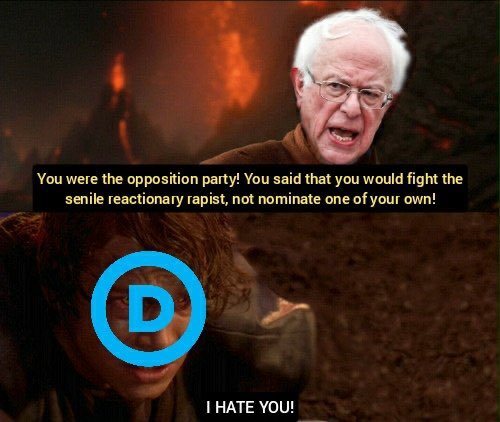
The meme features a photo of Bernie Sanders, a left-wing politician, with a superimposed image of a character from the Star Wars franchise. The text above the image reads, "You were the opposition party!" and below it says, "I HATE YOU!" The image is meant to be humorous, implying that Sanders' opposition to the Star Wars character's actions is so strong that he would rather be an enemy of the character's own side than support them. The meme is likely used to satirize the idea that people on the left are so strongly against certain things that they would rather be an enemy of someone else's side rather than support them.
detailed-analysis (gemma3-27b-vision)
Okay, let's break down this image/meme through several critical lenses. It's a potent piece of political commentary, so there's a lot to unpack.
1. Visual Description
The image is a meme comprised of two separate images combined. The top portion shows a close-up, enraged face of Bernie Sanders, seemingly shouting. The text above his head reads: "You were the opposition party! You said you would fight the senile reactionary rapist, not nominate one of your own!" The lower portion depicts a person (viewed from the back) with a large blue "D" (for Democrat) logo superimposed on their shoulder. Below this is the text "I HATE YOU!" The background appears dark and blurred, creating a heightened emotional atmosphere. The composition is intended to be jarring, expressing intense frustration and betrayal.
2. Foucauldian Genealogical Discourse Analysis
This meme operates within a specific discourse about political power, betrayal, and the construction of "enemies." A Foucauldian analysis would focus on how the meme produces meaning around these concepts rather than seeking a "truth" about the situation.
- Power/Knowledge: The meme asserts power through language. The speaker (Bernie Sanders, represented as the voice of opposition) defines who is an enemy ("senile reactionary rapist") and holds the "Democratic" party accountable for failing to uphold their stated opposition. This framing constructs a binary (us vs. them) that establishes the meme creator's position as morally superior.
- Genealogy of "Betrayal": Examining the genealogy of "betrayal" would reveal how this concept has been historically constructed within political contexts. Betrayal isn’t a natural feeling but is produced through discourses of trust, loyalty, and ideological alignment. The meme leverages this pre-existing discourse, implying the Democratic party has violated a social contract.
- Disciplinary Power: The "I HATE YOU!" declaration represents a form of discursive violence. It attempts to exert control by shaming and isolating the recipient.
3. Critical Theory
This image resonates with Critical Theory’s focus on ideology and power structures.
- Ideology: The meme deconstructs the ideology of the Democratic Party. It suggests the party's stated principles (opposition to harmful figures) are merely a facade masking self-preservation and complicity. It calls into question the authenticity of their political platform.
- False Consciousness: The author seems to be suggesting a form of "false consciousness" among Democratic voters/leaders – they are not recognizing the true nature of the person being nominated.
- Domination: The meme implies a structure of domination within the Democratic Party. The speaker feels betrayed by those in power, suggesting a lack of accountability and a disregard for the will of the people.
4. Marxist Conflict Theory
From a Marxist perspective, the meme can be interpreted as a manifestation of class conflict and the inherent contradictions within the Democratic Party.
- Internal Class Contradictions: The conflict is not about external enemies; it's a conflict within the dominant party. This can be seen as a reflection of contradictions in the party’s ideology, potentially arising from accommodating various class interests.
- False Promises: The party allegedly making promises to the population (opposing harmful people) but then nominating a person it had vowed to fight, demonstrates the exploitation of political discourse.
- The Role of Hegemony: The image suggests a breakdown in the Democratic Party’s ability to maintain hegemonic control over its base. The outrage expressed in the meme demonstrates a loss of consent among a section of the electorate.
5. Queer Feminist Intersectional Analysis
While the primary focus of the meme isn’t explicitly queer or feminist, a queer feminist intersectional analysis can still provide valuable insight.
- Patriarchal Structures and Abuse: The reference to a "rapist" is the most obvious point of intersection here. It points to how patriarchal power structures enable and protect abusers. The image’s outrage at nominating such a figure suggests a critique of systemic complicity in gender-based violence.
- Intersection with Political Power: The meme highlights how abuses of power (sexual and political) can intersect. The individual being nominated is being called out for both political failings and alleged sexual misconduct.
- Silencing and Disbelief: A queer feminist analysis might also consider how silencing and disbelief often operate in cases of abuse. The outrage expressed in the meme suggests a sense of anger that the party is potentially protecting or enabling an abuser.
It’s important to note that these analyses are not mutually exclusive. They can be combined to create a richer understanding of the meme’s meaning and implications. This image is a complex piece of political commentary that reflects broader anxieties about power, betrayal, and the state of American politics.
simple-description (llama3.2-vision)
The meme features a photo of Bernie Sanders from the movie "The Hunt" (2018), where he's being attacked by a group of people. The text overlay reads: "You were the opposition party! You said that you would fight the senile, reactionary, rapist, not nominate one of your own!" and "I hate you!"
tesseract-ocr
SE ea na Ste ary ST eR a Cue sc © eS Via ole