First Seen
2023-05-10T21:03:35+00:00
simple-description (llama3.2-vision_11b)
This meme is a play on the Star Wars character Boba Fett's infamous phrase "Never tell me the odds" and applies it to the character of Boba Fett in a left-wing context. The image shows a picture of Boba Fett with the caption "Never tell me the odds" rewritten as "Never tell me the tax rates" in a humorous way, implying that the character is now a left-wing activist fighting against tax rates.
detailed-analysis (gemma3-27b-vision)
Okay, let's break down this internet meme image with those theoretical lenses. It's a complex one, combining the "Distressed Black Man" meme format with Star Wars imagery and emotionally charged text.
1. Visual Description
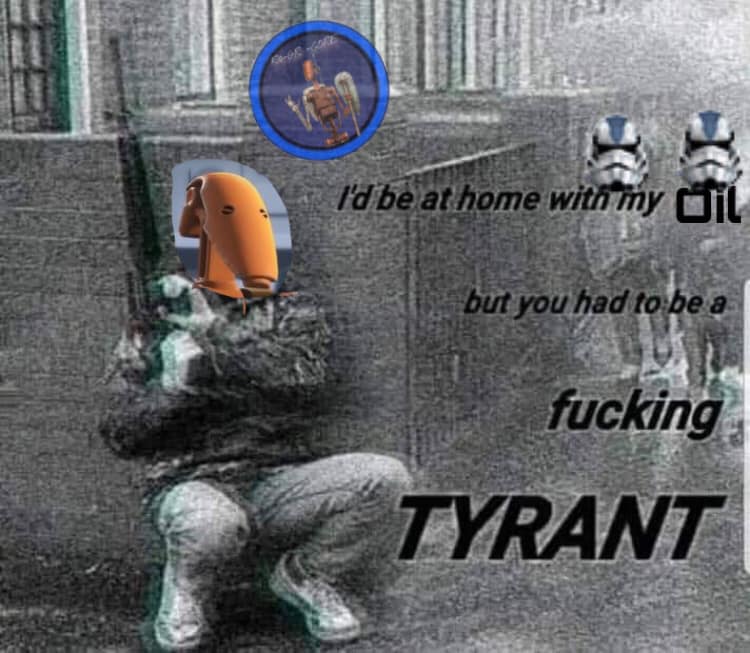
The image is a digitally manipulated meme. It's based on a black and white photograph of a man, seemingly distressed, kneeling with his head in his hands, against a blurred background of classical architecture. The original photo is often used to express sadness, frustration, or defeat.
Overlaid on this image are several digital elements:
- Character Overlays: A digitally-placed character from the video game Among Us is positioned above the man's head, and a Stormtrooper helmet from Star Wars is placed to the upper-right.
- Text Overlay: Bold, black text is superimposed, forming the phrase "I'd be at home with my Dil but you had to be a fucking TYRANT". The word "Dil" is in a different font and color.
The overall aesthetic is a chaotic, ironic juxtaposition of emotional despair and pop culture references. It leans heavily into the “dank meme” sensibility.
2. Foucauldian Genealogical Discourse Analysis
This image is ripe for Foucauldian analysis. We can examine the discourses at play and how they construct power/knowledge relationships.
- The Discourse of Distress: The original meme (Distressed Black Man) functions as a culturally recognizable signifier of emotional pain and vulnerability. It’s been normalized as a way to express those feelings online. However, this normalisation also means it is used in a variety of contexts, potentially diluting the original meaning.
- The Discourse of Gaming/Internet Culture: The Among Us character introduces the language of online gaming, where "imposters" and suspicion are central themes. This creates a metaphor for betrayal and a lack of trust.
- The Discourse of Tyranny/Power: The use of "tyrant" immediately invokes a discourse of power, control, and oppression. It suggests a power dynamic within the relationship being implied. The capitalization and bolding further amplify the perceived power.
- Genealogy of Power: By combining these discourses, the image creates a genealogy of how power operates in personal relationships. It implies that a "tyrant" (who could be a person or a system) has disrupted a potentially idyllic scenario ("at home with my Dil"). The image traces the historical emergence of this perceived oppressive force, implying a history of conflict and control.
3. Critical Theory
This image resonates with concepts from the Frankfurt School and critical theory.
- Culture Industry: The image participates in the culture industry—the mass production of standardized cultural goods. It's a remix of existing imagery and tropes, reflecting the commodification of emotional expression and the trivialization of deeper issues.
- Alienation: The juxtaposition of the distressed figure and the playful imagery of Among Us suggests a sense of alienation. The person in the image is detached from genuine emotional connection, resorting to ironic detachment and digital mediation. The meme is a symptom of a broader societal alienation.
- Ideology: The image implicitly critiques the idea of romantic relationships and the potential for power imbalances within them. It presents a cynical view of love as susceptible to corruption by "tyrannical" forces.
4. Marxist Conflict Theory
From a Marxist perspective, we can see the image reflecting class and power dynamics.
- Power Imbalance: The "tyrant" figure represents the dominant power structure in a relationship or social context. The person in the image is the oppressed, forced to endure the consequences of this power imbalance.
- False Consciousness: The ironic, meme-based presentation could be interpreted as a form of false consciousness. By framing a serious issue (emotional abuse, controlling behavior) in a humorous, trivializing way, it obscures the underlying structural causes of oppression.
- Conflict and Resistance: While the image doesn't explicitly show resistance, the very act of creating and sharing it can be seen as a form of cultural resistance against dominant power structures. It expresses frustration and critiques the behavior of the "tyrant."
5. Postmodernism
The image is deeply rooted in postmodern aesthetics and philosophy.
- Pastiche & Intertextuality: The image is a classic example of pastiche – a mixture of styles and references. It combines the distressed meme, video game characters, and emotionally charged text, creating a fragmented and self-referential work. The intertextuality—drawing on existing cultural memes—is central to its meaning.
- Deconstruction of Meaning: The image deliberately disrupts traditional meanings and conventions. The juxtaposition of disparate elements challenges the viewer to question the stability of meaning and to interpret the image in multiple ways.
- Simulacra and Simulation: The image can be seen as a simulacrum—a copy without an original. It’s a digital representation of emotional experience that is detached from authentic feeling. The image simulates emotional distress rather than expressing it directly.
6. Queer Feminist Intersectional Analysis
This is where it gets complex. The image could be interpreted through this lens, but it requires some speculation and assumptions about the creator’s intent.
- Power Dynamics in Relationships: The "tyrant" figure could represent abusive behavior in romantic or intimate relationships. Queer and feminist perspectives emphasize that abusive behavior often stems from patriarchal power structures and gender roles.
- Intersectionality of Oppression: The image may subtly point to the intersection of various forms of oppression. The distress of the figure may be a result of systemic discrimination, in addition to the oppressive behavior of the “tyrant.”
- Subversion of Traditional Gender Roles: The image could be seen as subverting traditional gender roles. The figure is presenting a vulnerability that is often discouraged in men.
- The use of "Dil" The word "Dil" in a different font and color might indicate a specific desire or a person who brings comfort. The contrast suggests a longing for intimacy that is being disrupted by the "tyrant."
Important Note: Interpretation is subjective, particularly with internet memes. The above analyses offer possible readings, but the creator’s intent and the viewer’s own background will influence how the image is understood.
simple-description (llama3.2-vision)
This meme is a humorous take on a character from the Star Wars universe, specifically the bounty hunter Cad Bane. The image features a quote from a scene where Bane is being interrogated by a Jedi, but it's been edited to make it sound like he's complaining about his living situation. The text "I'd be at home with my oil but you had to be a f**king tyrant" is written in a bold, edgy font, implying that Bane is unhappy with his current situation.
tesseract-ocr
ee ae : Hob oe ae) et | ti ay | aA ap men w sr ot conta Wg ie CO Bie oe are Site i PY oe ee ieee ie ois < fdibeathom , pate rs te By aoa With y CTL = lee ES eae aE fe ES See eee ‘eg fei ei WR. |) butyouhad tobe a Wotahe! i Steicnegee= ey, ta Vt yee x rere? S ; \ 38 | ra oe Ts Se pe os ag: 7 tite 3 fuc Fini? Sa ea STH ee mr CKING . Saag gael Beeepesene sen it ey Se bp 5 eS Aeon TU DAAIT ; be ; rea Mh ne ei "yi {a f- Ws ‘ Pee padi anc. Sa y Sp rath Ree