First Seen
2023-05-10T21:03:35+00:00
simple-description (llama3.2-vision_11b)
The meme is an image of a dimly lit, abandoned storefront with a faint sign reading "Coming Soon". The image is captioned "When you're still working on your business plan but the landlord is already renovating the space".
detailed-analysis (gemma3-27b-vision)
Okay, here's an analysis of the image, broken down into sections as requested. I’ll only include sections where the image provides significant material for the analysis, and I'll explain why I'm omitting certain perspectives if appropriate.
Visual Description
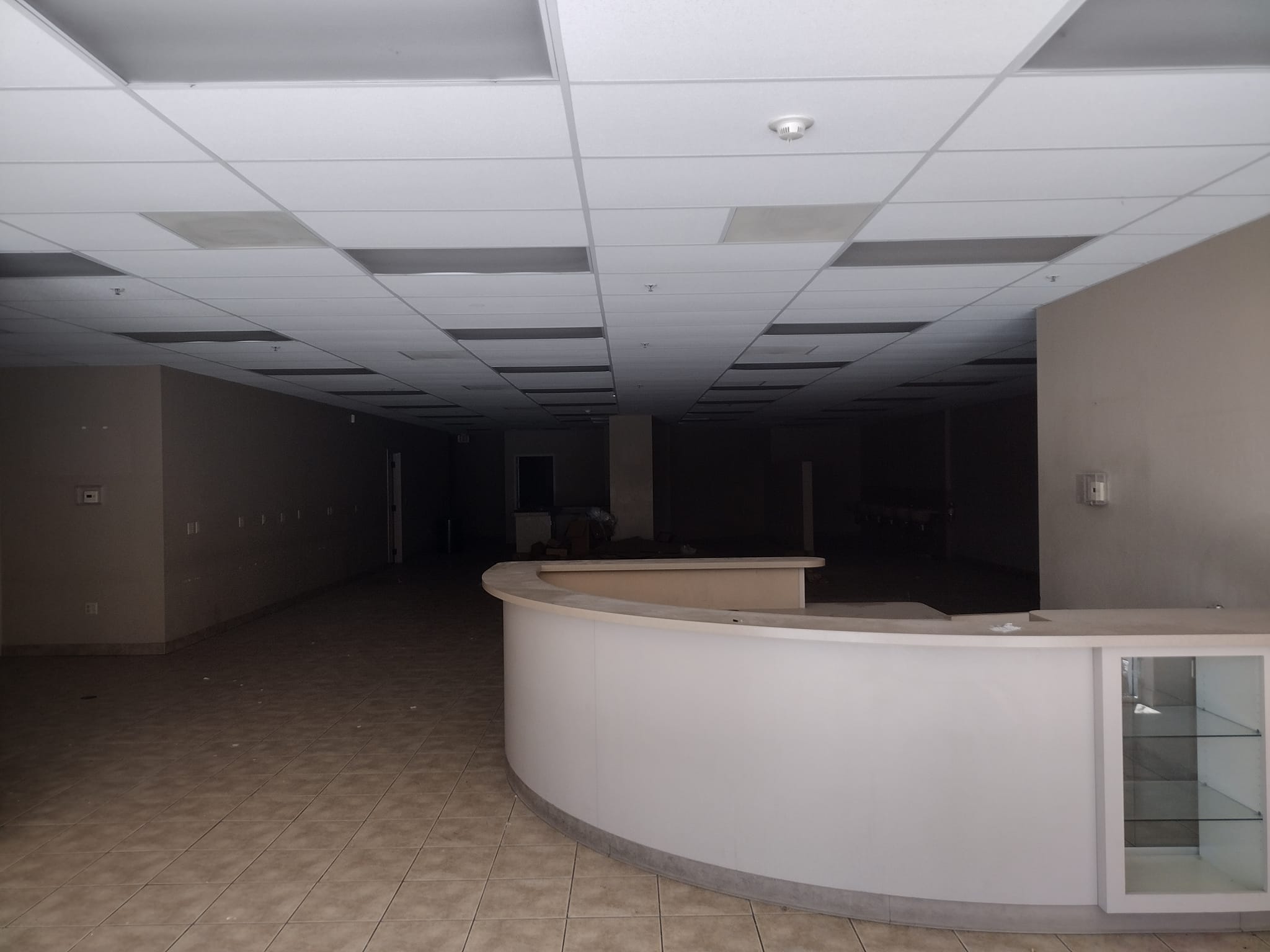
The photograph depicts an empty, commercial interior, likely a former storefront or office space. The dominant feature is a curved, white reception desk that occupies a significant portion of the foreground. The walls are painted a neutral taupe/grey, and the floor is tiled in a speckled, light brown/beige pattern. The space is largely barren, with very little furniture or decoration visible. A dark hallway or room extends into the background, seemingly devoid of detail due to low light or distance. The ceiling is a standard suspended acoustic tile grid, with recessed fluorescent lighting, creating a clinical, utilitarian appearance. There are electrical outlets and what appears to be a small display cabinet attached to the wall. The overall impression is one of abandonment, emptiness, and a sense of previous purpose now gone. The light is even, but somewhat harsh, contributing to the sterile atmosphere.
Foucauldian Genealogical Discourse Analysis
This image provides rich material for a Foucauldian analysis, particularly around the concepts of panopticism and discipline.
- The Reception Desk as a Site of Power/Knowledge: The reception desk isn’t merely a functional object; it's a crucial node in a system of surveillance and control. Historically, reception desks function as the first point of encounter within an institution (medical practice, office building, etc.). The person behind the desk has the power to grant or deny access, to categorize individuals, and to enforce rules. The curved shape creates a visual barrier, reinforcing the power dynamic. The desk positions the person within as 'knowing' and the visitor as 'subject to knowledge'.
- The Empty Space as Disciplinary Echo: While the space is currently empty, the architecture itself embodies a previous disciplinary regime. The grid ceiling, the neutral color scheme, the tiled floor – these all contribute to an environment designed to encourage conformity and order. The emptiness highlights the absent power structures that once animated the space. We can reconstruct, through this emptiness, the rules, expectations, and regulations that were enforced within.
- Genealogy of the Space: We can imagine a genealogy of this space – tracing its historical evolution from its initial purpose to its current state of abandonment. What kind of institution was it? What discourses (medical, legal, bureaucratic) shaped its practices? The emptiness allows us to see the layers of these discourses, and how they have potentially become obsolete.
- Surveillance and Normalization: Even absent bodies, the arrangement implies a system of observation. The openness of the space suggests a lack of hiding places, encouraging self-regulation and normalization of behaviour.
Critical Theory
From a Critical Theory perspective, this image exposes the alienation and reification inherent in modern capitalist structures.
- The Commodity Fetish: The reception desk itself can be seen as an example of the commodity fetish – an object invested with social significance beyond its inherent utility. It’s not just a place to sign in; it's a symbol of the institution’s legitimacy and power. The emptiness surrounding it exposes the artificiality of this symbolic value – it's value is tied to a system that is, in this instance, absent.
- Dehumanizing Space: The sterile, impersonal environment contributes to a sense of alienation. The lack of warmth or personality suggests that individuals were treated as interchangeable units within a bureaucratic system. The space isn't designed for human flourishing; it's designed for function.
- The Absence of Labor: The emptiness points to the absence of labor that once animated the space. Workers are missing, replaced by an architectural echo of their tasks. This absence highlights the exploitative nature of capitalism, where human labor is often treated as a disposable commodity.
- Systemic Breakdown: The abandoned state of the space implies a breakdown in the capitalist system—a failure of a business, a relocation due to economic forces, or simply a decline in demand. The emptiness is a material manifestation of this breakdown.
Marxist Conflict Theory
This image visually represents the consequences of class struggle and the inherent contradictions within capitalism.
- Capital Abandonment: The abandoned space symbolizes the volatile nature of capital. The owners/investors have likely moved capital elsewhere, seeking greater profit, leaving behind a physical reminder of economic displacement.
- Labor Displacement: The absence of workers suggests job losses and the resulting economic hardship for those previously employed in this location. This is a direct result of the conflict between capital (seeking to maximize profit) and labor (seeking fair wages and working conditions).
- The Material Conditions of Existence: The sterile, impersonal environment reflects the alienation of labor under capitalism. Workers are reduced to cogs in a machine, and their physical surroundings reflect this dehumanization. The emptiness exposes the material conditions that shape their lives.
- Uneven Development: The abandonment of this space could be a symptom of larger economic forces—deindustrialization, globalization, or the concentration of wealth in the hands of a few. This illustrates the uneven development inherent in capitalism, where some areas thrive while others decline.
Omitting Queer Feminist Intersectional Analysis:
While a Queer Feminist Intersectional analysis could be applied, it feels less directly relevant to the primary visual information presented. To do so would require projecting assumptions onto the space. We don't have enough information about the people who once inhabited this space to analyze how gender, sexuality, race, or class intersected to shape their experiences within it. Unless additional context were available (e.g., information about the nature of the business, the demographics of the workforce), such an analysis would be speculative.
I hope this comprehensive analysis is helpful! Let me know if you’d like me to elaborate on any of these points.
simple-description (llama3.2-vision)
The meme is a picture of a dark and empty store with a long, curved counter in the center of the room. The text "I'm not saying I'm a good employee, but..." appears on the counter, implying that the speaker is struggling to find the motivation to work in a job that is not even busy or profitable. The image is likely meant to be humorous and relatable to those who have ever felt like they're not doing their job well.
tesseract-ocr
|, Ais or he _ _ ‘ei - es a ae : pe a a ' 5 ies } ; ‘J i Z y om de | I Pare 5 il J | a :