First Seen
2023-05-10T21:03:35+00:00
simple-description (llama3.2-vision_11b)
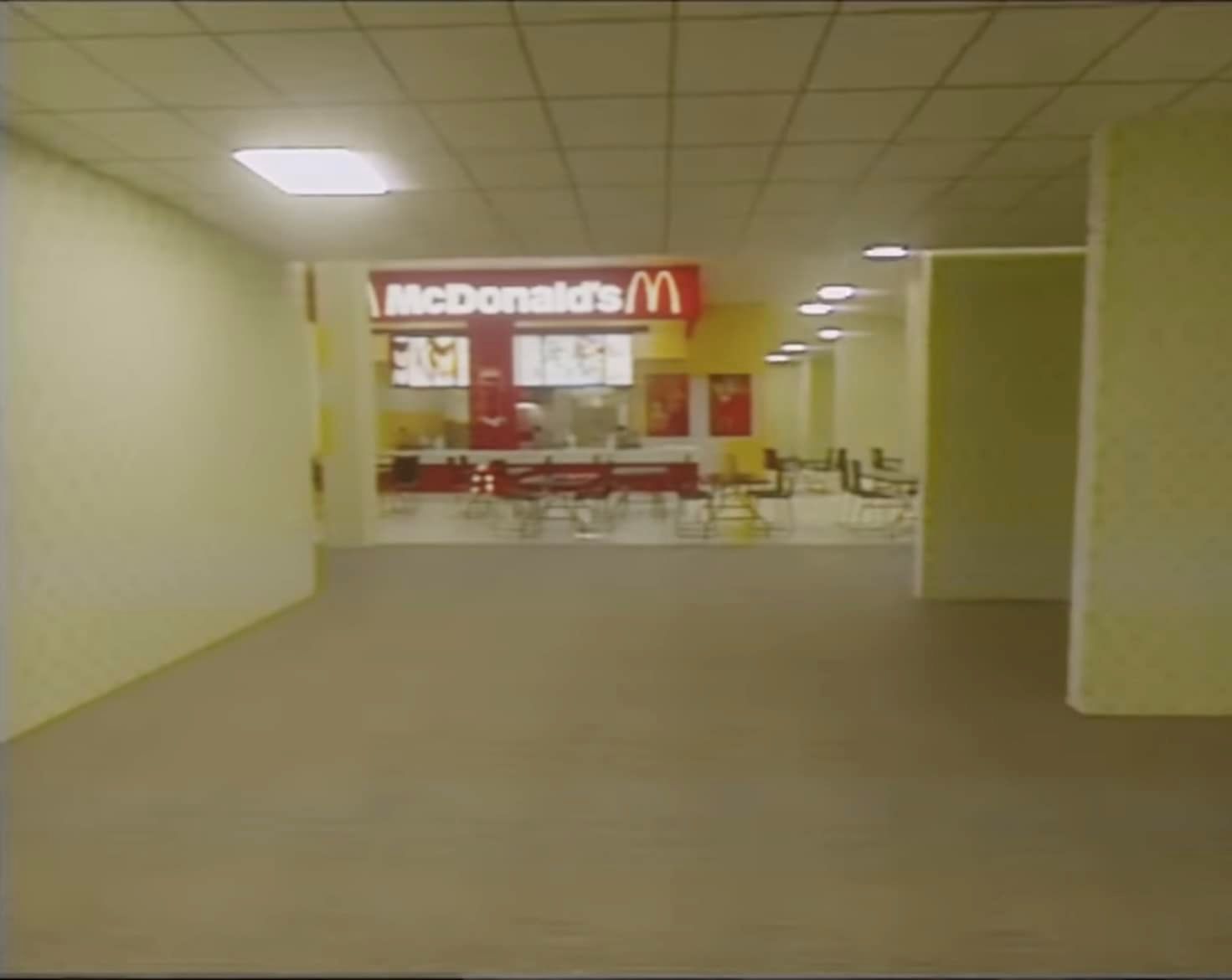
The meme is a screenshot of a desolate, empty shopping mall, with a single, flickering fluorescent light overhead. The text "Abandoned" is written in a bold, graffiti-like font across the top of the image. The image is captioned "when you're the only one left in the mall"
detailed-analysis (gemma3-27b-vision)
Okay, here's an analysis of the image, broken down into the requested sections, based on the presence of relevant themes. The image evokes a strange, slightly unsettling feeling – a deserted or liminal space – which lends itself well to these theoretical approaches.
Visual Description
The image depicts the interior of a McDonald's restaurant, but in a highly unusual and unsettling manner. The room is bathed in a sickly, yellow-green hue, likely a result of color grading or digital manipulation. It appears to be empty, devoid of patrons or staff. The restaurant's interior is largely visible, presenting the counter, menu boards, and rows of empty chairs. The atmosphere is eerie and dreamlike, contributing to a sense of disorientation. The composition is wide, nearly fisheye, that emphasizes the emptiness of the space. The entire image feels flat and detached, lacking the warmth or bustle typically associated with a fast-food establishment. A doorway is visible on the right.
Foucauldian Genealogical Discourse Analysis
This image is ripe for a Foucauldian analysis focusing on discipline and surveillance and the formation of subjectivity.
- Panoptic Architecture: While not a direct depiction of a panopticon, the arrangement of the space – the counter as a point of control, the visibility of the entire area – subtly evokes this concept. The empty chairs suggest the potential always under surveillance, even in absence. The implied gaze of those 'in charge' (unseen staff) is pervasive.
- Disciplinary Power: McDonald's itself represents a highly disciplined system. The standardized procedures, limited choices, and efficient service model create a controlled environment. The emptiness amplifies this – it's not a failure of the system, but a state of it. The system functions even in absence.
- Genealogy of the Fast-Food Subject: The image prompts consideration of how fast-food culture shapes our expectations for convenience, efficiency, and consumption. How do these establishments contribute to the formation of "subjects" accustomed to instant gratification and standardized experiences? The emptiness might suggest the end of that shaping process.
- Normalization: This is an exercise in normalization: the space is designed to be ‘normal’ (a fast food restaurant) and the weirdness is only highlighted by that assumption.
Critical Theory
The image presents a fertile ground for Critical Theory, especially around themes of alienation and commodification.
- Commodification of Space & Experience: The McDonald's isn't just a place to eat; it's a product itself. The standardized décor, predictable menu, and calculated atmosphere are all elements of a meticulously crafted commodity. The emptiness highlights the exchange value over any inherent use value.
- Loss of Authenticity: The standardized nature of the McDonald's interior contributes to a sense of placelessness and a loss of authenticity. It could be anywhere. The empty space emphasizes the lack of real human connection or lived experience.
- Alienation: The emptiness evokes a sense of alienation. Where are the people? The lack of activity highlights the dehumanizing potential of highly efficient, automated systems. Are we reduced to mere consumers in a sterile environment? The empty space can be viewed as a metaphor for the individual's detachment from community and genuine human interaction.
- The Spectacle: The restaurant is no longer being used as a restaurant but is a spectacle – we are looking at the restaurant rather than experiencing it.
Marxist Conflict Theory
This image can be interpreted through a Marxist lens as an illustration of capitalist alienation and control.
- Means of Production & Labor: The empty McDonald's highlights the separation between the means of production (the restaurant itself) and the labor force (the unseen employees). It suggests a system dependent on exploitation and the extraction of surplus value.
- Commodification of Needs: McDonald's caters to a basic human need – sustenance – but commodifies it, transforming it into a product to be bought and sold. The emptiness reinforces the idea that the primary concern is profit, not genuine nourishment or community.
- False Consciousness: The efficient, standardized environment can be seen as a tool for maintaining "false consciousness" – obscuring the underlying power dynamics and exploitation inherent in the capitalist system.
- The Empty Space: Symbolically, the emptiness could represent the absence of the worker, the exploited class, from the fruits of their labor.
Postmodernism
The image lends itself well to a Postmodern interpretation.
- Simulacra and Simulation: The empty McDonald's becomes a simulacrum – a copy without an original. It’s a representation of a restaurant, divorced from the authentic experience of dining and social interaction. It's a signifier without a signified.
- Hyperreality: The image could be interpreted as a hyperreal depiction of a McDonald's – an exaggerated and distorted version that feels more real than real. The unsettling color grading and emptiness contribute to this sense of artificiality.
- Deconstruction of Meaning: The emptiness deconstructs the traditional meaning of a McDonald's – a place of food, community, and convenience. It forces us to question the values and assumptions that underpin this cultural icon.
- Loss of Grand Narrative: The absence of anyone in the space suggests a breakdown of the ‘normal’ order, a lack of a overarching narrative.
Note: These are just potential interpretations. The power of the image lies in its ambiguity and ability to evoke different responses and critical perspectives. It’s important to remember that these theoretical frameworks are tools for analysis, not definitive answers.
simple-description (llama3.2-vision)
This meme is a screenshot of a desolate, abandoned shopping mall. The image shows a long, empty hallway with a few scattered chairs and a McDonald's restaurant in the distance. The text "I'm lovin' it" is written in a bold, red font above the restaurant, a sarcastic reference to the company's famous advertising slogan.
tesseract-ocr
a i \menonaias/) =) | > in ie : i