First Seen
2023-05-10T21:03:35+00:00
simple-description (llama3.2-vision_11b)
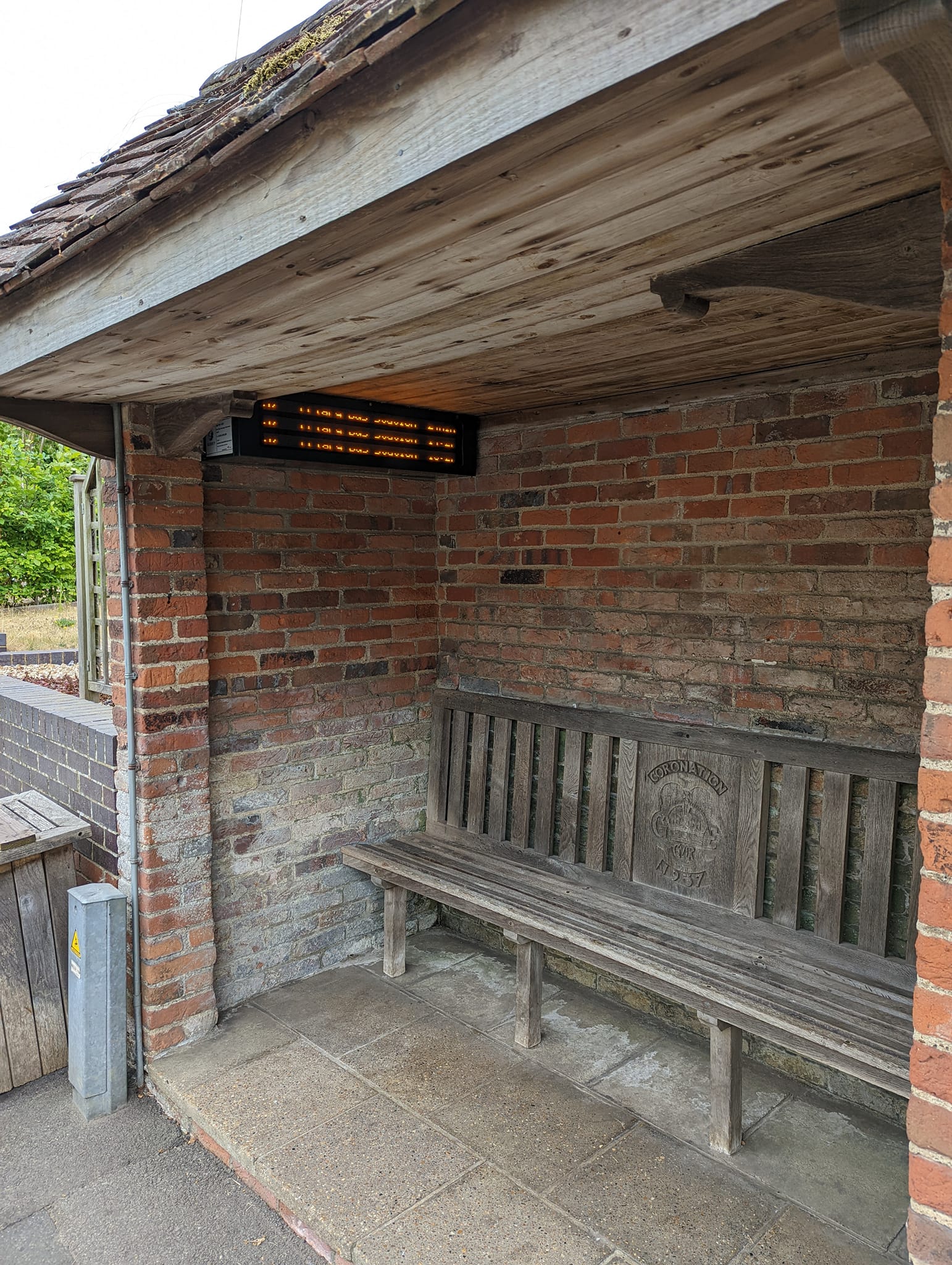
The meme is a photo of a bus stop with a sign that says "Liminality" and features a bus schedule with a single bus that says "Nowhere". The meme is about the idea that sometimes, you're just waiting for something to happen, but it never does.
detailed-analysis (gemma3-27b-vision)
Okay, here's an analysis of the image, broken down into the requested theoretical frameworks. I will only include sections that are actually applicable, and will explain why certain theories might not be relevant.
Visual Description
The image depicts a sheltered, open-sided structure constructed primarily of brick and weathered wood. It appears to be some kind of waiting area, potentially at a historical site or a rural transportation stop. The back and side walls are built of red brick with noticeable signs of aging and partial mortar erosion. The roof and supporting structure are made of unpainted, heavily weathered wood, displaying signs of wear and tear, some missing or broken pieces. A wooden bench is situated within the shelter, showing a partially visible inscription on its backrest. The bench is constructed of similar weathered wood, with simple plank seating. The ground is dirt/earth and there is vegetation visible outside the frame. The overall aesthetic is rustic, decaying, and suggests a history of use and exposure to the elements. The lighting suggests a cloudy or overcast day.
Foucauldian Genealogical Discourse Analysis
This image is particularly compelling through a Foucauldian lens. This shelter isn’t merely a functional structure; it’s a site of power relations.
- Discipline & Surveillance: The waiting shelter, in its very function, implies a system of control. People are held in this space, waiting for an external authority (a train, bus, etc.). This waiting is a disciplinary mechanism, requiring submission to a timetable and a network of regulation. Even the bench enforces a certain posture, a way of being within that system.
- Genealogy of Waiting: We can trace the genealogy of this waiting space. How did waiting become a normalized part of modern life? What historical conditions enabled the development of scheduled transport and the expectation of passivity in transit? This shelter embodies the history of those systems of control.
- The Inscription: The inscription on the bench is crucial. The partially visible text (“Coronation…”) suggests a particular moment in history—a royal coronation. This links the shelter to a narrative of power and legitimization. The shelter thus functions as an archive - a physical embodiment of the historical discourses surrounding monarchy, celebration and possibly the social order it reinforces.
- Power/Knowledge: The shelter's construction (bricks, wood) embodies specific techniques and knowledge systems. The choices of materials, the building methods, all reflect a certain power structure and knowledge base available at the time of construction.
Marxist Conflict Theory
While the image isn't screaming with class struggle, a Marxist interpretation is possible, though requires more inferencing.
- Material Conditions: The dilapidated state of the shelter speaks to material conditions. It isn't a well-maintained, comfortable waiting area. This could reflect a lack of investment in infrastructure in a specific region or for a specific population.
- Labor & Exploitation: The bricks and wood represent the labor of workers who constructed the structure. The weathering and decay could be seen as a symbol of the transience of labor and the inevitable erosion of material goods under capitalism. It speaks to the eventual fate of all labor under a system driven by profit.
- Spatial control: The shelter, even in its decline, serves to spatially control movement, potentially regulating access to transportation for a specific class of people. Historically, access to transportation has often been stratified.
Postmodernism
A Postmodern reading would focus on the breakdown of stable meanings and the constructed nature of reality represented by the scene.
- Decay & Simulacra: The weathered state of the shelter is a prime example of decay, erosion of original form. This could be interpreted as a metaphor for the loss of authenticity and the increasing prevalence of simulations. It's a representation of a representation, no longer a pristine functional object.
- Fragmented Narrative: The partial visibility of the inscription on the bench creates a fragmented narrative. We only have a piece of the story, inviting multiple interpretations and challenging the notion of a single, authoritative truth. The incompleteness is key to a postmodern reading.
- Deconstruction of Function: The shelter still resembles a waiting area, but its disrepair challenges its functional purpose. Is it still serving its intended purpose, or has it become something else—an historical relic, an artistic object, a site of nostalgia?
Why other frameworks aren’t strongly applicable:
- Critical Theory: While elements of critical theory overlap with Marxism and Postmodernism, the image doesn’t explicitly lend itself to an in-depth analysis of cultural hegemony or ideology in the same way. It's more focused on the physical manifestation of power and time.
- Queer Feminist Intersectional Analysis: The image lacks any direct markers relating to gender, sexuality, or intersectionality. It's possible to apply this lens, but it would require significant speculation and wouldn’t be directly supported by the visual information.
I’ve aimed to provide thorough analyses within the requested theoretical frameworks, and to explain why certain approaches are more or less suitable for interpreting this specific image. Let me know if you'd like me to elaborate on any particular point or explore a different theoretical perspective!
simple-description (llama3.2-vision)
The meme is an image of a small, brick-built bus shelter with a wooden bench inside. The shelter is empty, with no signs of recent use. The text on the shelter's sign reads "2-3 minutes" and "2-3 minutes" again, implying that the bus has been delayed or is not coming at all.
tesseract-ocr
tiggthims we Mi tha wa , I Jeg a ; = Ley Me ce, SGT Mig oZ le: s y EES ia " Sn 9 le ZZ ZA i gle z , Ps ot Gi ~~ J - wa e > , Qe cos Ta a : Mg os — ? - ja AZZ = a* “ Z se — FA g a a a “<a jo a at a Pe 5 : e se eS Ea ; = ; a _—= _ZzA ae = ? LE ma_-.-_0—@—— aap AL SS = ——— =< = = _ F oT SS. oon — ———— | RSace aes & fy . ¥ Roe ses ioe Me pe. Pree ; : i mi ye i i 5 ae aes | Pe | Reece | fo P Sens) Fae Ay Se | | LE : Fe ees | treat, : es ot he i ne ee a 4 Sore i 5 SE maaan | ' : oo a SEGRE [ih | ee eres | : : ot Vs j nae 2B alge IE 2 ee ne ea ] See a eee ge a rae acest) Ss ee 5 WikeS a Sek |S ais Wane Sn ke sie a eae Soe eet 3 ae ¥ ee were as ie a 5 : tes 2 TEDEr : eT ee en ara any i Death Sey J eee : tn Tt, hea oo War —— eae OPO Bi: Faia ees ee TCE es —— ae eS OTe | x ly PE or Ue ee CP Fie dV epee Hea OT i ee a ae | (Oe re NO ee a eT Wee ee Bh oe ly rE E he < SI bP fe le a Ns neg i AB a ata i) Pe P| a = SSS uf pO ase Magara SO Weg cai: ae ie LA Pa GRee deh eee a . ee io ee a sed eee oe BR i Hu NoRe eI] cecil | ti I | ee ae i Ga gh a es 2 ees, eZ Ta r & Pe as BES OE iat) i ae ee 4 | “i Mig: a : | ee: ge = GR? Lee ie ee > Se ee BAL NUR 8 ek BE se ee | i ee ee, Sa Se eS ee ee ey Pe ae as 3 WOT | E 7 a ee 8 a 1 e sa 4 NERA, settee lee ae pet igre A) | ae Se ee es Sac Sa {0 a Be sat PEI aig weieray rie ale SS SS = = Ze a ny c § roe bcs ae Se Se ee ee Sa, Sel \ ie Be we al) a a) SS o— Ves Vee Bea ee ee 2 is Se aon Ae MN ear ogee eR: Se — eh 0) ot MOE Ge ee) ae 4 > “SSS SSS E ee yal a So Bee Pe ee eee) SO eet: SS Ae i Soe De zs ie es Eee =| ese ee ye — ices | Spain Ree eee ee ee SSS a ae | mh PS Dy aes . ns a pe Ss oe = ~ > ee) “a ari eee eS Pe CNS : et Te a 2 Fe PSP Wier ere nee etnies oS ee ae a = > I SE EE ANS RS ee ee |, is TIE EG ee x= = Seaeriae SESS gE RS Sh 8 AL SS les ae ce pl Se ee ee PO ee 4. st Gees 2h SN CE SEN 7 OR IE GL SA ENO RES eG AE a ES eet co ye ae ae CO Zee ee So ES) SS BIE, ae ee PIN ER am Nn eae eee eae 22g high acces Sec haem eS FETE iy TRUE LEGER aie s Sen? £2 RE Sea Se eR NS : TELA penta eo, Fas Leno cone a SO RRS ie SN OR pn AR ee ee!