First Seen
2023-05-10T21:03:36+00:00
simple-description (llama3.2-vision_11b)
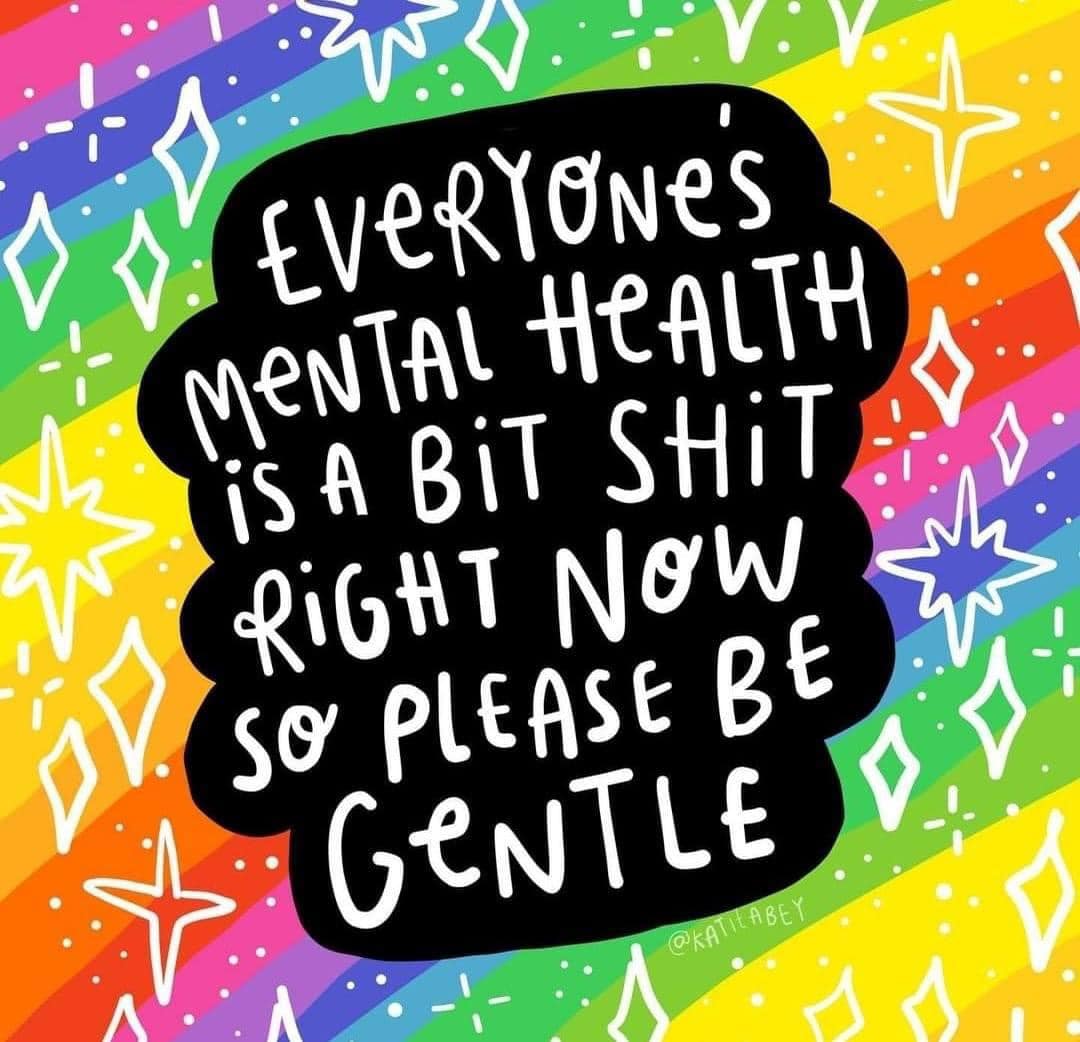
The meme features a cartoon image of a person with a thought bubble, expressing a relatable sentiment about the challenges of prioritizing mental health in today's fast-paced world. The text in the image reads: "Mental health is just as important as physical health, but we've been conditioned to prioritize the latter." This meme encourages readers to recognize the importance of mental well-being and to prioritize it alongside physical health.
detailed-analysis (gemma3-27b-vision)
Okay, here's an analysis of the image, broken down into sections based on the requested theoretical frameworks, and only where applicable. I'll prioritize depth of analysis over simply listing frameworks if a framework doesn't strongly apply.
Visual Description
The image is a brightly colored, digitally created illustration with a hand-lettered message. The background is a gradient of vibrant pink, purple, and blue, resembling a rainbow or aurora borealis effect. Scattered throughout the background are small, whimsical star and diamond shapes in various bright colors. The message, written in thick, black, slightly messy handwriting, states: "Everyone’s Mental Health is a Bit Shit Right Now So PLEASE BE GENTLE." The text is the dominant element and is centered within the background. The artist’s username, @kathabey, is printed in small font in the bottom right corner. The overall aesthetic is playful and informal, but the message is direct and vulnerable. It evokes a feeling of collective struggle and a plea for compassion.
Foucauldian Genealogical Discourse Analysis
This image can be analyzed through a Foucauldian lens by examining the discourse surrounding mental health. Historically, "mental illness" was understood through a medical model that often pathologized individuals and placed them within systems of power – asylums, diagnostic categories, and medical control. This image disrupts that discourse. The phrasing "a bit shit" is a deliberately deconstructing of clinical language. It's raw, informal, and avoids the medicalization of suffering.
- Power/Knowledge: The image challenges the authority of medical professionals to define and categorize "normal" mental health. It suggests that a state of distress is so widespread (“everyone”) that it moves beyond the realm of “illness” to a shared human experience. This shifts the power dynamic. It's not about “fixing” individuals but acknowledging a collective state of precarity.
- Genealogy: Tracing the "genealogy" of the phrase itself is useful. The use of colloquial language and even profanity ("shit") is a departure from the historically clinical and distanced language used to discuss mental health. This is a deliberate act of reclaiming language and subverting the normalizing discourse. It speaks to a more recent movement toward open and honest discussion of mental health challenges, fueled by social media and grassroots advocacy.
- Discipline/Normalization: The plea for gentleness is a call to resist the disciplinary forces that often demand productivity, positivity, and "coping" in the face of hardship. It’s a rejection of the idea that individuals are solely responsible for "managing" their mental health, and a demand for external compassion and support.
Queer Feminist Intersectional Analysis
This image is particularly potent when analyzed through a Queer Feminist Intersectional lens.
- Vulnerability & Rejection of Stoicism: Historically, dominant cultures (particularly Western ones) have valued stoicism and self-reliance, especially in men. This image openly acknowledges collective vulnerability. This is inherently a feminist act because it rejects patriarchal expectations that demand emotional suppression.
- Intersectionality: Mental health experiences are deeply shaped by intersecting identities – race, class, gender, sexuality, ability, etc. While the image doesn’t explicitly name these identities, the very emphasis on everyone being affected implies a recognition that suffering isn't universal in its expression but is universally experienced. People from marginalized groups often face disproportionate stressors and barriers to mental health care. Acknowledging this shared struggle can be a step toward collective liberation.
- Queer Disruption: The casual, unfiltered language ("a bit shit") can be seen as a Queer disruption of normative language. It challenges the expectation that emotions must be expressed in a “respectable” or “polite” manner. It’s a rejection of societal expectations about how we are “allowed” to feel. The openness of the statement also creates a space for acknowledging that mental health struggles aren’t always neat and tidy, aligning with queer perspectives that challenge binary thinking.
- Collective Care: The message “please be gentle” is not just a request for individual kindness but a call for collective care. This speaks to the feminist concept of mutual support and building communities based on empathy and solidarity.
Critical Theory
Critical Theory focuses on the examination of power structures and how they influence social reality. The image aligns with these principles in several ways:
- Critique of Social Norms: The image implicitly critiques social norms that prioritize productivity, positivity, and self-reliance, even in the face of hardship. It acknowledges that collective stress and struggle are often the result of systemic factors.
- Alienation & Precarity: The phrase "a bit shit" hints at a wider sense of alienation and precarity – a feeling of disconnection and instability that is increasingly common in late capitalist societies. The image suggests that mental health struggles are not simply individual failings but are often a response to systemic pressures.
- Ideology: The message challenges the dominant ideology that emphasizes individual responsibility and minimizes the impact of social structures on mental well-being. It suggests that "gentleness" is not simply a matter of individual choice but a necessary response to collective suffering.
Why Some Frameworks Don’t Fit as Well
- Marxist Conflict Theory: While systemic factors undoubtedly influence mental health, the image isn’t explicitly focused on class struggle or economic exploitation. It’s more broadly about collective suffering and a plea for compassion. Applying a strictly Marxist framework would require a deeper analysis of how economic forces contribute to widespread mental health challenges, which the image doesn’t directly address.
- Postmodernism: The image has elements of disrupting norms, but it doesn't necessarily embrace the core tenets of postmodernism (relativism, deconstruction of grand narratives). It presents a fairly direct message and doesn’t fully explore the complexities of subjectivity or the instability of meaning.
In conclusion, the image is a deceptively simple but powerfully resonant statement about the shared human experience of mental health struggles. It’s particularly insightful when analyzed through Foucauldian, Queer Feminist Intersectional, and Critical Theory lenses, as these frameworks illuminate the ways in which the image disrupts power structures, challenges norms, and advocates for collective care.
simple-description (llama3.2-vision)
This meme is a humorous and relatable image that pokes fun at the common phrase "I'm fine" when someone is actually struggling with their mental health. The text in the image reads: "Everyone's mental health is a little broken right now so please be gentle". The meme is likely intended to be a lighthearted way to acknowledge that everyone is struggling with their mental health, and to encourage others to be kind and understanding.
tesseract-ocr
——e rm) NM i am sity , ‘OeaSUE a PO aba “A a RSs re ae | —_ AA’: