First Seen
2024-02-27T06:50:50.350559+00:00
simple-description (qwen3.5_2b-q8_0)
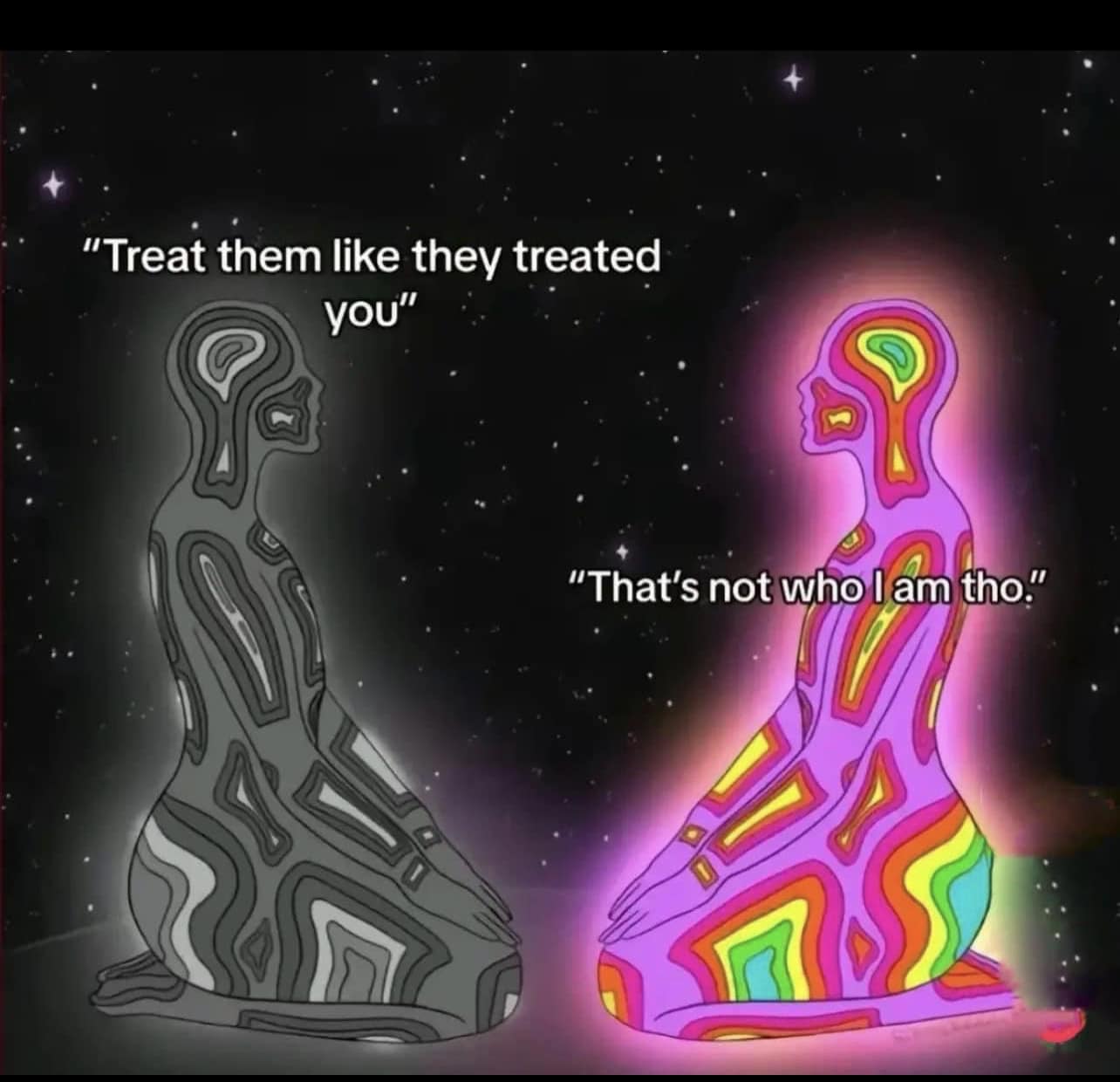
This meme uses a visual contrast between a monochrome figure and a vibrant, glowing one to represent the clash between a harsh internal voice and a healthier self. The text "Treat them like they treated you" describes the unforgiving, judgmental voice that tells us to act exactly how the person who hurt us was. Conversely, the text "That's not who I am tho" signifies the desire to forgive and embrace a lighter, more compassionate version of oneself that we want to be.
simple-description (llama3.2-vision_11b)
The meme is a humorous commentary on the complexities of mental health. The image shows a person with a distorted body, with the text "I'm not arguing, I'm just explaining why I'm right" and "I'm not being defensive, I'm just explaining why I'm right" above and below the body, respectively. The meme pokes fun at the tendency to justify one's own behavior as a way to avoid taking responsibility for it, and the use of "I'm not [insert emotion/behavior]ing, I'm just [insert rationalization]" is a common trope in mental health discussions.
detailed-analysis (gemma3-27b-vision)
Okay, let's break down this image through several theoretical lenses.
Visual Description
The image depicts two figures in a stark contrast of color and form against a black, star-filled background. Both figures are stylized, appearing as skeletal or anatomical outlines. The figure on the left is rendered in grayscale with heavy black lines and a muted, almost shadowy aura. The figure on the right is vibrant and colorful, utilizing a bright palette of pinks, purples, greens, and yellows. The colors seem to ‘glow’ within the outline. Both figures are in seated poses, appearing meditative or introspective. Text accompanies each figure: "Treat them like they treated you" is placed above the grayscale figure, and "That’s not who I am tho." is placed above the colorful one.
Foucauldian Genealogical Discourse Analysis
This image resonates strongly with Foucault’s concepts of power/knowledge and self-formation. The grayscale figure embodies a subject constructed by external forces - specifically, a history of negative treatment. The phrase “Treat them like they treated you” suggests an internalization of oppressive dynamics – a mimicry of power structures that have been inflicted on the subject.
The colorful figure is a direct rejection of this internalized oppression. The "That's not who I am tho" represents an attempt at genealogical revision – a breaking with the past to forge a new subjectivity. Foucault would argue that ‘self’ is not a fixed essence, but rather a product of discourse, of power relations. The colorful figure is actively engaging in the process of dismantling the discourse that defined the grayscale self. The vibrancy of the color suggests a creative and affirmative force in self-construction, an attempt to define the self outside of the pre-determined categories imposed by external power. The image can be interpreted as an example of a power shift from the outside world impacting the internal self, and the self’s rejection of that influence.
Critical Theory
From a Critical Theory perspective (influenced by the Frankfurt School), the image highlights the impact of social conditioning and the possibility of liberation. The grayscale figure embodies the alienated individual, shaped by societal norms and power structures. The phrase linked to it suggests a perpetuation of a cycle of harm – mirroring the behavior of oppressors.
The colorful figure, however, represents a moment of critical consciousness and resistance. The phrase suggests a rejection of this passive acceptance. It indicates a recognition of the damaging effects of socialization and an active choice to define oneself on one's own terms. This is a moment of emancipation– a movement towards a more authentic and self-determined existence. The image implies that, while socialization is inevitable, it is not inescapable, and the possibility of transformative change remains.
Queer Feminist Intersectional Analysis
This image is powerfully resonant with queer and feminist intersectional thought. The grayscale figure can be seen as embodying the internalization of societal expectations, particularly those impacting marginalized identities (women, LGBTQ+ individuals, people of color, etc.). The suggestion to "treat them like they treated you" alludes to a cycle of abuse, silencing, and the expectation that marginalized individuals must adapt to oppressive systems to survive. This can be seen as the weight of the patriarchy or other intersecting systems of power that dictate an individual’s behavior.
The vibrant figure's response is a direct act of refusal and self-affirmation, a central tenet of queer and feminist thought. "That’s not who I am tho." asserts a right to self-definition beyond the constraints of imposed identities and expectations. The explosion of color can be interpreted as a reclaiming of agency, visibility, and self-expression, rejecting the demand for assimilation or conformity. This can be seen as a challenge to heteronormative, patriarchal, and racist systems that seek to define and control individuals. The image suggests that reclaiming and embodying one's full self is a radical act of resistance.
Postmodernism
From a Postmodern perspective, the image deconstructs the concept of a fixed, stable self. The stark contrast between the two figures embodies the fluidity and multiplicity of identity. The grayscale figure represents the 'subject' constructed by external forces—a product of discourse and social conditioning. However, the colorful figure actively rejects this pre-defined identity, embracing a more fragmented, fluid, and self-constructed self.
The image challenges the notion of authenticity, as there is no essential 'true' self to discover. Instead, identity is seen as a performance—a constantly negotiated and reconfigured construct. The colorful figure doesn't attempt to reveal a hidden 'real' self, but rather creates a new self through self-expression and active resistance. The image embraces the ambiguity and instability of identity, suggesting that it is through the rejection of fixed categories that we can begin to forge a more authentic and empowering self.
Let me know if you'd like me to elaborate on any of these analyses.
tesseract-ocr
A i. i . + A bs aes n they treated | a | ] \ ; rf oll tra Nee - _. a | | \\ = s) . a AW? fan a .
simple-description (llama3.2-vision)
This meme features two abstract, neon-lit human figures facing each other. The text on the left figure reads, "Treat them like they treated you," while the text on the right figure says, "That's not who I am tho." The image is a commentary on the common phrase "treat others how they treat you," but the right figure's response suggests a more nuanced and self-aware approach to relationships.