First Seen
2023-05-10T21:03:36+00:00
simple-description (llama3.2-vision_11b)
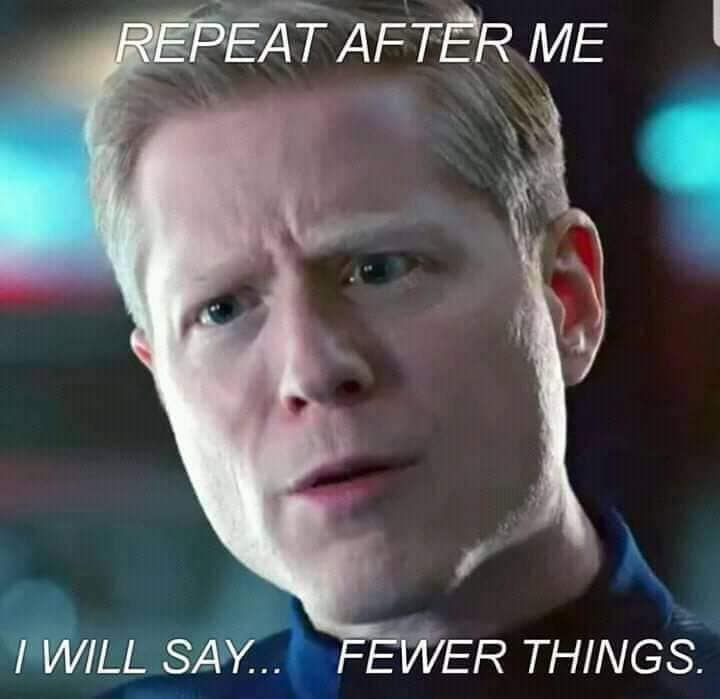
The meme is a screenshot of a character from the TV show "Star Trek: Picard," with the caption "I can feel it, it's starting" and the text "I'll say it three more times." The meme is from the category "Meta - Reactions" because it's a humorous take on a character's over-the-top reaction to a situation, poking fun at the idea of dramatic flair. The image is meant to be ironic and playful, exaggerating the character's emotional response for comedic effect.
detailed-analysis (gemma3-27b-vision)
Okay, let's break down this image/meme through several critical theory lenses.
Visual Description
The image is a close-up shot of actor Chris Evans (portraying Captain America/Steve Rogers) looking directly at the viewer with a serious, determined expression. The lighting is somewhat dramatic, with a cool blue tint and highlights on his face. He appears to be in uniform, suggesting a moment of intensity, likely from a scene involving duty or conflict. The text "REPEAT AFTER ME" is overlaid in white, bold font at the top, and "I WILL SAY...FEWER THINGS" is positioned at the bottom. The overall composition suggests a command, a challenge, or a declaration of resolve. The image is formatted as a meme, meaning the intent is likely humorous, satirical, or relatable – implying a desire for control over one's expression.
Foucauldian Genealogical Discourse Analysis
This meme can be examined through Foucault's lens by considering the discourse of self-control and the emergence of practices around limiting speech.
- Power/Knowledge: The "command" to repeat and then reduce speech reveals a dynamic of power. The speaker (Captain America) positions themselves as the authority establishing the rules of communication. This power operates through knowledge - the assumed understanding that fewer words equate to greater control or effectiveness.
- Discipline: The meme subtly echoes disciplinary practices, specifically self-discipline. The implication is not external force suppressing speech (censorship), but internal regulation - a self-imposed limitation to enhance strategic communication. The phrase implies a learning process--to 'say fewer things' is to practice a kind of speech discipline.
- Genealogy: A genealogical approach would trace the historical emergence of the idea that 'brevity is the soul of wit' or that strategic silence is powerful. Where did the idea that ‘saying less’ is preferable to saying more originate? This would involve examining the evolution of rhetorical principles and cultural norms around communication.
- Subjectification: The meme implicates the viewer in the process of subjectification. By presenting this as something to repeat, it invites the viewer to adopt this mode of self-regulation, to internalize this disciplinary practice.
Critical Theory (Frankfurt School)
This meme taps into the anxieties surrounding authenticity and control in a modern, mediated world.
- Instrumental Reason: Captain America’s statement, while seeming heroic, can be interpreted as applying “instrumental reason” – reducing communication to a means to an end (control, effectiveness, or avoiding unwanted outcomes). It’s a purely functional approach to speech, devoid of inherent value in expression itself.
- Culture Industry: The image itself is a product of the culture industry (memes, social media). This highlights how such seemingly simple statements can be commodified and circulated as relatable "wisdom." It can be seen as a simplification of complex emotional or strategic realities, contributing to a shallowing of discourse.
- Loss of Authenticity: The desire to say fewer things might be interpreted as a symptom of a culture that demands careful self-presentation. It can be a reaction to feeling overly scrutinized or the fear of misinterpretation.
Marxist Conflict Theory
While not directly about class conflict, a Marxist lens can reveal the power dynamics embedded in the statement.
- Ideology: The meme subtly promotes an ideology of control and strategic communication. This ideology serves those in positions of power (like Captain America, a leader figure) who benefit from maintaining order and limiting dissent. Saying fewer things can be a way to avoid challenging the status quo.
- Hegemony: The widespread circulation of this meme suggests that this idea of controlled speech has achieved a degree of hegemony – it's presented as common sense, a desirable trait, even though it potentially reinforces existing power structures.
- Symbolic Capital: The meme utilizes the image of a well-known cultural figure (Captain America) and assigns him a specific attitude. His authority lends symbolic capital to the concept of reduced communication.
Postmodernism
This meme embodies several key postmodern characteristics.
- Simulacra & Simulation: The meme isn’t about genuine emotion or strategic thinking; it's a simulacrum of those things. It's a representation of a representation. The meme points to a surface-level desire to project an image of control rather than embodying it.
- Deconstruction: The statement itself can be deconstructed. The concept of "fewer things" is vague and open to interpretation. What constitutes “fewer”? It questions the inherent meaning of communication.
- Meta-Narratives: The meme plays with the trope of the stoic, strong leader. It satirizes the idea that leaders always know what to say (or not say) and positions the viewer as an insider who understands the game.
Queer Feminist Intersectional Analysis
This is a more complex application, but worth considering.
- Silencing & Control: For marginalized groups (especially women and queer individuals), the pressure to "say fewer things" can be a particularly insidious form of control. It reinforces the historical silencing of these voices and the expectation that they should be seen and not heard.
- Emotional Labor: The demand to regulate speech can place an additional burden of emotional labor on those who are already navigating systems of oppression. They may feel pressured to censor themselves to avoid conflict or discrimination.
- Intersectional Considerations: The impact of this pressure to control speech will vary depending on multiple intersecting identities. A Black trans woman will experience this pressure differently than a white cisgender man.
I hope this detailed breakdown is helpful! Let me know if you'd like me to focus on any particular theoretical lens in more detail.
simple-description (llama3.2-vision)
This meme is a photo of a character from a TV show, specifically Captain Sorenson from the TV show "Stargate SG-1". The text on the meme reads: "Repeat after me: I will say less. I will say less." The meme is a humorous way to poke fun at the idea of repeating phrases, with the character's serious expression adding to the comedic effect.
tesseract-ocr
REPEAT AFTERME | a : ve? . y TWILL SAY... FEWER THINGS.