First Seen
2023-05-10T21:03:36+00:00
simple-description (llama3.2-vision_11b)
The meme is a photo of a cat with its face distorted in a comical expression, accompanied by a caption that reads "I can smell the desperation". The image is a humorous representation of someone trying to make a joke or comment, but it's so poorly executed that it's actually embarrassing. The meme is poking fun at the idea that someone is trying too hard to be funny, but it's just not working.
detailed-analysis (gemma3-27b-vision)
Okay, let's break down this image through the requested theoretical lenses.
Visual Description
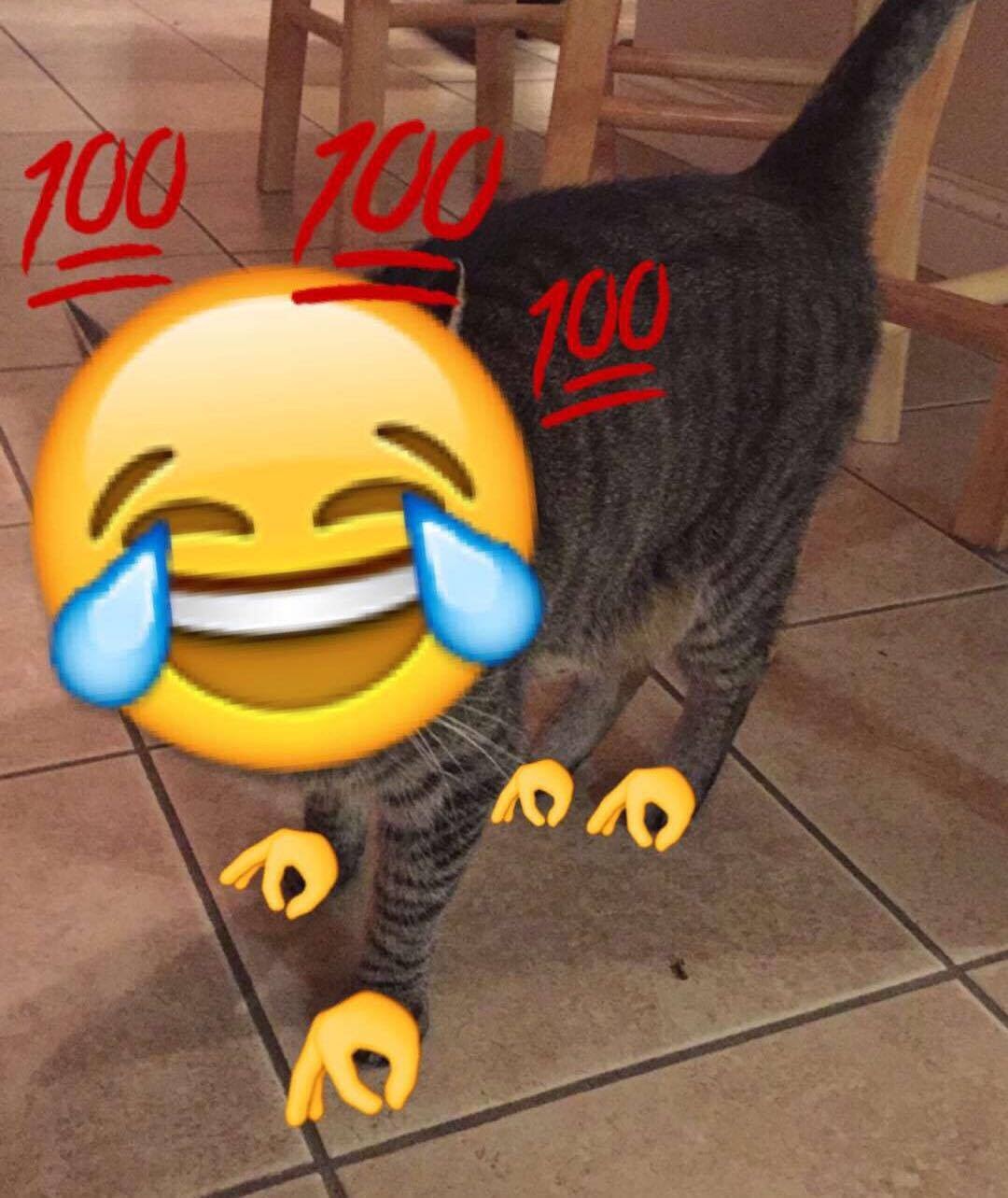
The image depicts the rear portion of a tabby cat, mid-stride. The cat appears to be walking away from the viewer. The background is a tiled floor, likely in a kitchen or similar domestic setting. Superimposed over the image are multiple digital elements: three images of toilet plungers, and multiple instances of the "face with tears of joy" emoji, along with the number "100" repeated as text. The placement creates a somewhat chaotic and overwhelming visual effect. The cat’s motion, combined with the incongruous digital additions, feels like an ironic or meme-based attempt at humor.
Postmodernism
This image strongly resonates with postmodern aesthetic and sensibilities.
- Pastiche & Irony: The juxtaposition of a common domestic animal (the cat) with digital icons (emojis, plungers, numbers) is a key element of pastiche - an imitation of a style, which has no inherent meaning or originality. It seems to intentionally flout traditional artistic or photographic ‘good taste’. It is playful, self-aware, and intentionally absurd.
- Deconstruction of Meaning: The image doesn't have a logical narrative or coherent meaning. It's a collection of signs that are thrown together, encouraging viewers to question the notion of inherent meaning itself. Why the cat? Why plungers? Why "100"? There is no single answer, and the viewer is left to construct their own interpretation (or realize the futility of seeking one).
- Simulacra & Simulation: The digital elements (emojis, text) are simulations of emotions and values, layered over a "real" image. They are copies of copies, creating a world of hyperreality where the distinction between the real and the simulated is blurred. The image references joy (emojis) and perhaps some unspecified achievement ("100") without actually being joyful or signifying anything substantive.
- Playfulness and Subversion: The overall aesthetic is characterized by playfulness, a rejection of grand narratives, and a subversion of expectations. The image intentionally avoids seriousness or profundity.
Critical Theory
Through a Critical Theory lens, the image can be interpreted as a manifestation of culture industry and the commodification of emotions.
- Culture Industry & Mass Consumption: The use of emojis and the number “100” are products of the culture industry—mass-produced signs and symbols designed to elicit specific reactions (in this case, laughter or affirmation). These symbols become detached from their original meaning and function as commodities in the attention economy. The image itself is likely intended for social media, a space deeply embedded within the culture industry.
- False Consciousness: The superficiality of the emoji and number potentially represent a distraction from real issues or deeper emotions. They offer a momentary "high" without addressing underlying problems.
- Spectacle: The image, like many social media posts, contributes to the “spectacle” described by Guy Debord, where images and representations take precedence over lived experience. The cat’s “performance” (walking) and the digital embellishments contribute to a mediated reality that is disconnected from genuine connection.
Marxist Conflict Theory
While a direct application of Marxist theory might seem strained, we can analyze the image as a reflection of commodity fetishism and the alienation of labor.
- Commodity Fetishism: The image itself is a commodity—a visual product designed for consumption and attention on social media. The emojis and the number "100" represent value, but this value is abstracted from any real use or labor. We are encouraged to focus on the image's aesthetic qualities and emotional impact rather than on the conditions under which it was created.
- Alienation: The image's absurdity and fragmentation can be seen as a metaphor for the alienation of labor in a capitalist society. The disconnected elements—cat, emojis, plungers—mirror the fragmentation and loss of meaning that workers experience under conditions of commodification.
Queer Feminist Intersectional Analysis
This one is trickier, but it can be approached by thinking about the image’s performativity and subversion of expected norms.
- Performativity: The cat’s walk and the added digital elements function as a performance of sorts. The image is not simply representing joy or humor; it is enacting it through the arrangement of signs and symbols. This aligns with queer theory’s emphasis on the constructedness of identity and the fluidity of meaning.
- Subversion of Norms: The image's deliberate absurdity and refusal to conform to traditional aesthetic standards can be seen as a subversive gesture. It challenges viewers to question conventional notions of beauty, humor, and meaning.
- Humor as Resistance: The use of absurdist humor can be a form of resistance against oppressive norms. By embracing the illogical and the unconventional, the image disrupts dominant modes of thought and expression.
Important Note: The image is open to multiple interpretations. The above analyses are not mutually exclusive, and different theoretical frameworks can offer valuable insights into its meaning. It is also important to acknowledge the limitations of applying complex theories to a relatively simple visual artifact.
simple-description (llama3.2-vision)
This meme features a picture of a cat with its face distorted in a comically exaggerated expression of sadness or despair. The cat's body is also distorted to resemble a humanoid figure, with its limbs stretched out in a way that makes it look like it's trying to walk on its hands and knees. The text "100" is written in a bold, red font across the image, implying that the cat is experiencing extreme emotional pain or distress.
tesseract-ocr
WAN eo & a a ne a ‘N