First Seen
2023-05-10T21:03:36+00:00
simple-description (llama3.2-vision_11b)
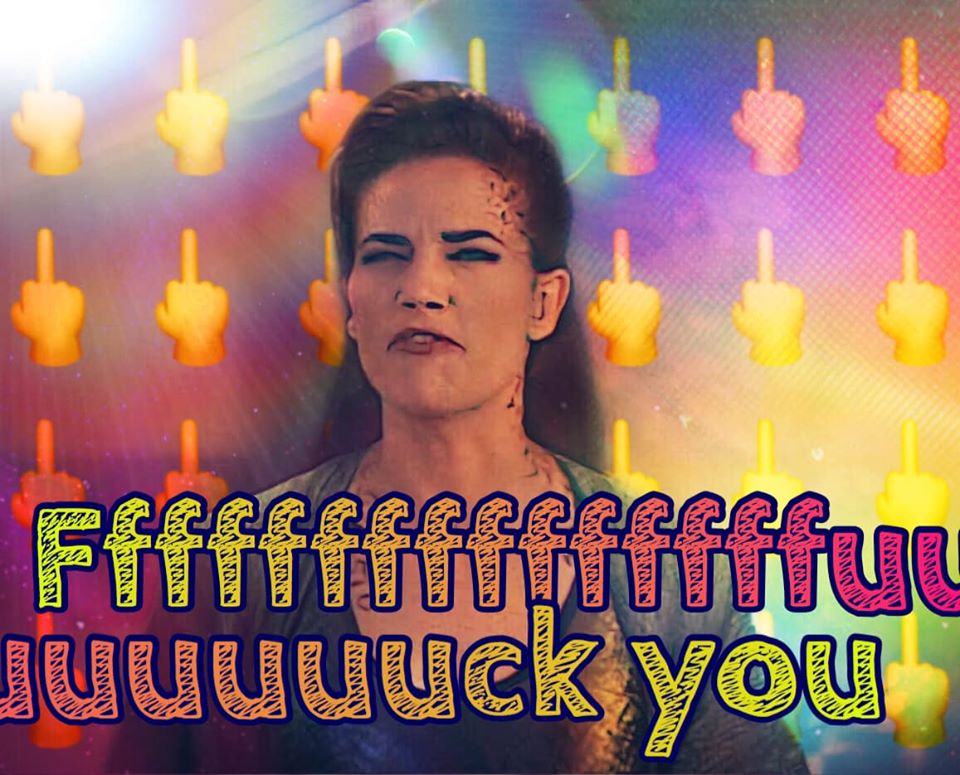
The meme is a screenshot of a character from the TV show "Star Trek: Picard" with the caption "FUCK YOU" repeated in a bold, graffiti-style font. The image is meant to convey a sense of anger or frustration, with the character's face distorted in a comically exaggerated expression. The text is likely intended to be humorous or ironic, rather than a genuine expression of anger.
detailed-analysis (gemma3-27b-vision)
Okay, let's break down this image through a few different theoretical lenses.
Visual Description
The image features a portrait of a woman with a stern, defiant expression. She has dark hair and light skin, and her gaze is directed at the viewer. The background is a vibrant and chaotic mix of colors – blues, purples, and greens – creating a sense of energy. Superimposed over the background, repeated multiple times, are bright yellow images of a middle finger, a universally recognized gesture of defiance and disrespect. The bottom of the image features the text "Fffffffffffffffffuuuuck you" in a blocky, colorful font, with the repetition of letters emphasizing the intensity of the sentiment. The image has a digitally manipulated or filtered appearance, appearing somewhat pixellated.
Foucauldian Genealogical Discourse Analysis
This image is a powerful display of discourse – the systems of thought, language, and practice that construct our understanding of the world. The repeated middle fingers and the explicit text break down normalized expectations of polite discourse. Foucault’s work on power/knowledge suggests that power operates not simply as repression, but as production. In this case, the production is of a defiant statement, a reclamation of agency.
The gesture and the explicit language actively resist dominant discourses of politeness and respect. They are not merely expressing anger; they are performing a refusal of subjection. The repeated nature of the gestures and text emphasizes the consistent need to assert this refusal, highlighting the pervasiveness of power dynamics that require such resistance. The genealogy would trace how these expressions of rebellion – gestures and expletives – have been historically constructed as transgressive and, therefore, inherently powerful as challenges to established norms.
Critical Theory
From a Critical Theory perspective (drawing on the Frankfurt School), this image can be viewed as a critique of societal power structures. The woman’s defiant expression, amplified by the repeated middle fingers and forceful language, signifies resistance against systems of domination. The image rejects the passivity expected by dominant culture and asserts a refusal to conform to expectations. The image is a deconstruction of conventional communication, challenging the norms that enforce conformity and silence.
The repetition of the gesture and text can be seen as highlighting the constant negotiation of power dynamics in everyday life. It suggests that resistance is not a one-time act but an ongoing process of asserting agency in the face of oppressive structures.
Queer Feminist Intersectional Analysis
This image can be read as a powerful expression of defiance that resonates with queer and feminist perspectives. The forceful rejection expressed in the language and gesture rejects the expectations and demands placed on individuals, particularly women and queer individuals, to be polite, accommodating, and silent.
The intersectional aspect comes into play by considering how the rejection of these expectations is particularly relevant to those marginalized by multiple systems of power. The image could be interpreted as a refusal to participate in systems that seek to control or silence based on gender, sexuality, or other aspects of identity. The image could be a direct affront to patriarchal structures that demand submissiveness. The directness of the language challenges polite discourse, a strategy often used to silence marginalized voices. The image, therefore, becomes a reclamation of voice and a rejection of systemic oppression.
Disclaimer: It’s important to note that interpretations are subjective, and different viewers may find different meanings in this image depending on their backgrounds and experiences.
simple-description (llama3.2-vision)
This meme features a screenshot of actress Natalie Tresson in a dramatic pose, with a caption that reads "F**k You" in bold, playful letters. The image is likely intended to convey a sense of anger or frustration, and the use of explicit language is meant to be humorous or attention-grabbing.
tesseract-ocr
a 7 C4 ke ram Ae) See ena at eA A ~ = eee A) ANZ = 7 -\ my : "