First Seen
2023-05-10T21:03:36+00:00
simple-description (llama3.2-vision_11b)
The meme is a screenshot of a YouTube video where a user's reaction to a video is displayed as a shocked, confused, and angry face. The text "I was promised a 4K 60FPS 8K 120FPS experience, but what I got was a 480P 30FPS experience" is overlaid on the image, implying that the user's expectations were not met. The meme is likely used to express disappointment or frustration when one's expectations are not met.
detailed-analysis (gemma3-27b-vision)
Okay, let's break down this image with the requested theoretical frameworks. It's a challenging piece, and interpretation will be multi-layered.
Please be aware: This analysis touches on potentially sensitive topics relating to body image, disability, and representation. The goal is theoretical exploration, not to make value judgments.
1. Visual Description
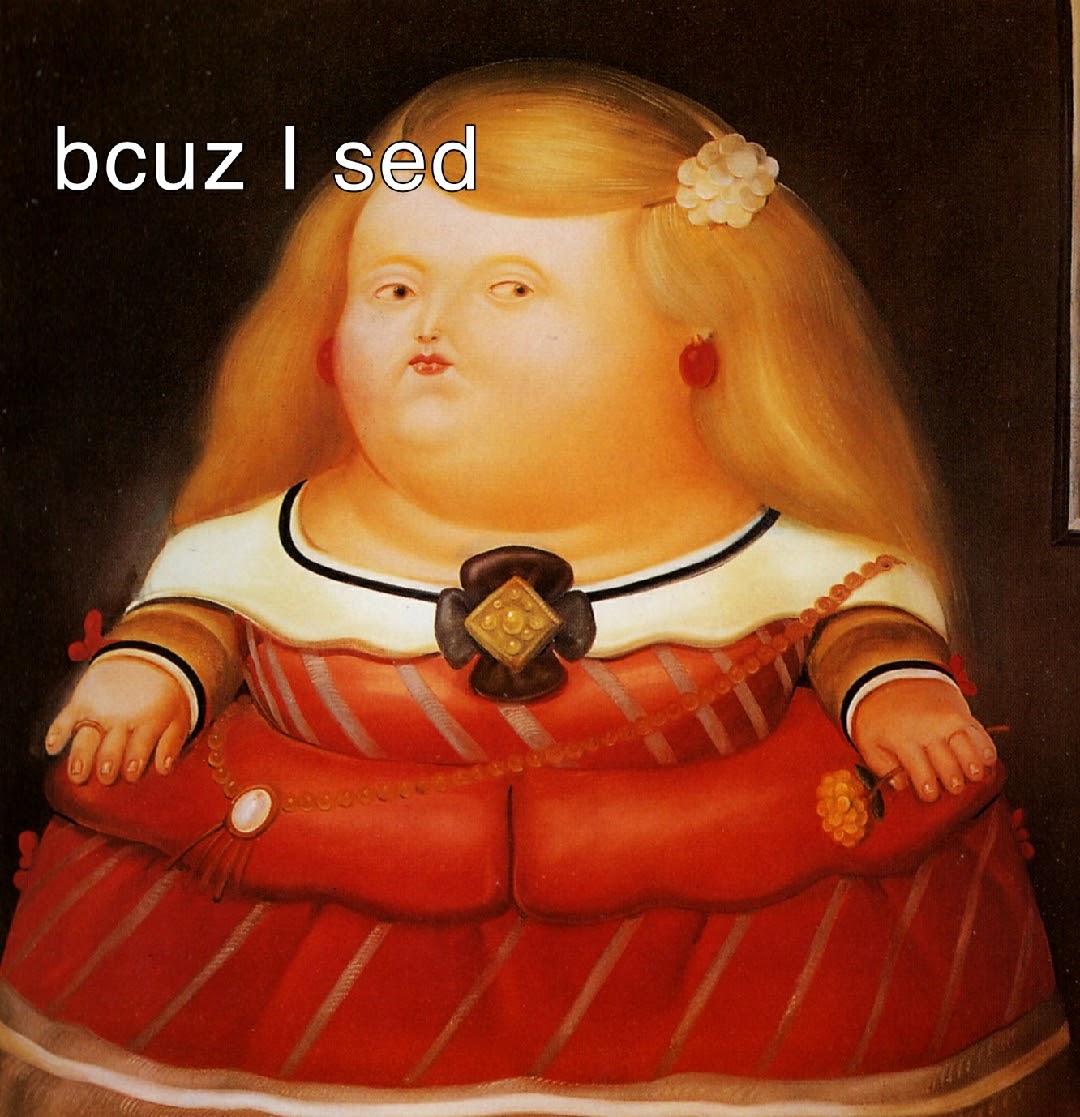
The image appears to be a painted portrait. It features a young girl, presented with features conventionally associated with Down syndrome (though representation and labeling of disability requires caution). She is depicted in a highly stylized, almost doll-like manner.
- Color Palette: Predominantly warm tones – rich reds and oranges dominate the composition. This creates a sense of vibrancy, but also perhaps of confinement.
- Composition: The girl is centrally positioned and fills most of the frame. Her size and the closeness of the framing contribute to a feeling of immediacy and perhaps even an unsettling intimacy.
- Clothing and Accessories: She wears a red dress with a white and orange collar and a black ribbon necklace with a decorative flower pin. There are also rose-like embellishments on her hands. These details suggest an attempt at refinement or gentility.
- Facial Expression: The girl has a neutral, almost vacant expression, though a slight smile is present. This adds to the unsettling quality of the portrait, as it feels both intimate and strangely distant.
- Text: The text "bcuz I sed" is written above the girl in white.
2. Foucauldian Genealogical Discourse Analysis
Applying Foucault, we can see this portrait as contributing to the discourse around disability and childhood. Foucault was interested in how power operates through language and institutions.
- Normalization & Deviance: Historically, discourses around disability have functioned to define "normal" bodies and minds, creating those deemed "deviant" as objects of medicalization and control. The stylistic rendering of this girl – her size, features, and attire – can be seen as attempting to normalize her within the framework of beauty and childhood, potentially masking the social construction of 'disability' itself.
- The Medical Gaze: The portrait, even while attempting to beautify, can be interpreted as enacting the "medical gaze" – reducing the individual to a set of visible characteristics for observation and categorization.
- Power/Knowledge: The artist's representation is not neutral. It is a production of knowledge about disability, shaping how the viewer perceives the girl. The text "bcuz I sed" could be interpreted as asserting the power of the artist in shaping the narrative of representation.
3. Critical Theory
Drawing on Critical Theory, particularly the Frankfurt School's concern with the culture industry and its role in perpetuating dominant ideologies:
- Commodification of the Body: The girl's stylized appearance and the focus on her physical form can be seen as contributing to the commodification of the body – transforming her into an object of the gaze.
- The Illusion of Individuality: The portrait may present the illusion of individuality while simultaneously reinforcing broader social norms about beauty and childhood.
- Distortion of Reality: The highly stylized and almost doll-like depiction of the girl's body and features is a distortion of reality that reinforces societal ideals.
4. Queer Feminist Intersectional Analysis
From an intersectional perspective that combines queer and feminist theories:
- Challenging Normative Beauty: The portrayal challenges normative standards of beauty and femininity, presenting a body that is typically excluded from mainstream representation.
- Disability & the Body Politic: This image touches on the "body politic" – the idea that the body is a site of social and political control. Disability, in particular, is often subject to intense social regulation.
- The Gaze & Objectification: The viewer is positioned as the observer, potentially reinforcing a dynamic of power and objectification.
- Intersectional Exclusion: This girl’s body might be subject to multiple forms of marginalization – as a child, a person with Down syndrome, and potentially other factors.
Important Considerations:
- Artist’s Intent: Without knowing the artist's intent, interpretation is speculative.
- Complexity of Representation: Representing disability is extremely complex. There's a risk of perpetuating stereotypes, but also a need for increased visibility.
Let me know if you'd like me to expand on any of these points, or explore other theoretical frameworks.
simple-description (llama3.2-vision)
This meme is a image of a painting of a woman with a serious expression. The text "bcuz I sed" is written in a playful, informal tone, implying that the speaker is trying to justify or explain something. The overall tone of the meme is humorous and sarcastic, poking fun at the idea that someone is trying to explain something in a way that's overly complicated or unnecessary.
tesseract-ocr
bcuz | sed ra ——_> F Ws “