First Seen
2023-05-10T21:03:36+00:00
simple-description (llama3.2-vision_11b)
This meme is a humorous example of a "distracted boyfriend" meme, where a person is looking at something or someone else instead of their partner. The image depicts a person staring at a fish, with a caption that reads "I love you, but I'm looking at this fish". The meme is a lighthearted way to poke fun at the idea of being distracted by something or someone else, and the text is a playful way to express that feeling.
detailed-analysis (gemma3-27b-vision)
Okay, let's break down the image with a critical lens, applying the suggested theoretical frameworks where relevant.
Visual Description
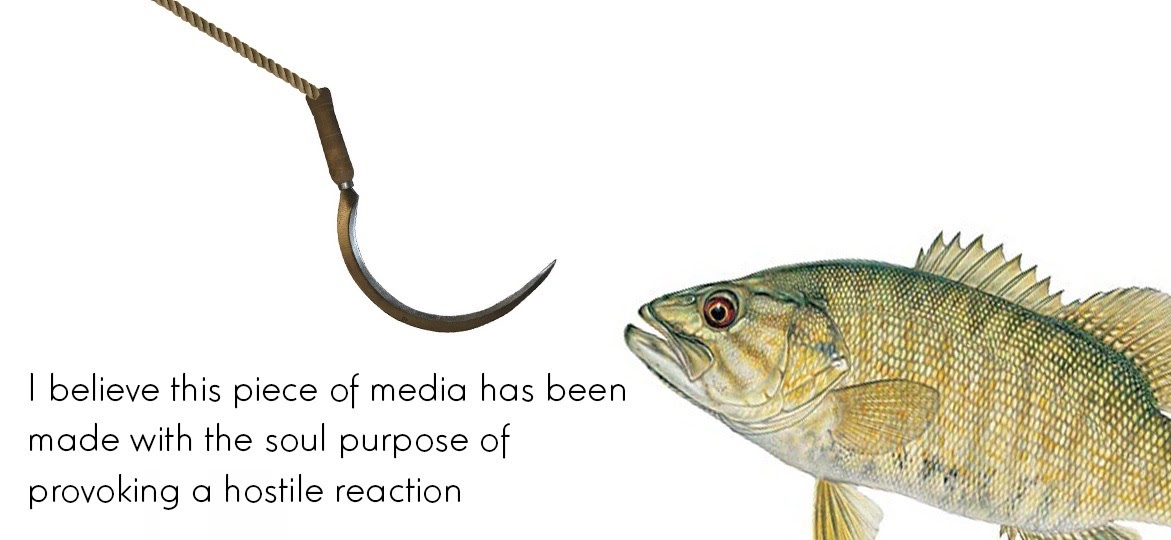
The image depicts a close-up of a fish, specifically a crappie, partially captured by a fishing hook. The fish is presented in a realistic, detailed style, seemingly from an illustration or painting. Its eye is prominent and gazes towards the viewer. The hook is embedded in its lip, and the fishing line extends upwards, disappearing outside of the frame. The background is a plain, neutral light color. The overall impression is one of struggle, vulnerability, and potential harm.
Foucauldian Genealogical Discourse Analysis
This image is ripe for Foucauldian analysis. The act of fishing, and the image of the hooked fish, serves as a micro-level example of power dynamics.
- Power/Knowledge: The image reveals a power imbalance inherent in the act of fishing. The angler, represented by the unseen force of the line and hook, exercises power over the fish. This power isn’t merely physical; it’s linked to knowledge—knowledge of fishing techniques, fish behavior, and the environment. The angler knows how to capture the fish, and the fish lacks the knowledge to evade capture.
- Discipline/Biopower: Fishing, and hunting generally, represent a mode of discipline imposed upon the natural world. The fish's body is made subject to the angler’s control. This can be seen as an early form of biopower—the regulation and control of life. The fish is reduced to an object, categorized, and potentially consumed.
- Genealogy: Tracing the genealogy of fishing reveals how it evolved from a survival necessity to a sport and leisure activity. This evolution is tied to changing social structures, property rights (access to fishing grounds), and the conceptualization of nature as a resource to be exploited.
This image, then, isn't simply about fishing; it's a condensed representation of broader historical power dynamics and how knowledge is used to exert control over the natural world.
Critical Theory
From a Critical Theory perspective, the image embodies the relationship between humans and nature, which has been historically structured by domination.
- The Enlightenment/Instrumental Reason: The image can be interpreted as a manifestation of Enlightenment ideals gone awry. While the Enlightenment emphasized reason and scientific inquiry, it also laid the groundwork for a view of nature as a resource to be exploited for human benefit. The angler, using reason and technology (the hook and line), subjugates the fish, reducing it to an object of utility.
- Dominating Relationships: The image is not a reciprocal one, but one of domination. This extends to a critique of a broader patriarchal structure wherein nature is often feminized and subjugated, mirroring the historical domination of women.
- Loss of Authenticity: Some strands of Critical Theory, like those of the Frankfurt School, might interpret the image as symbolic of a loss of authenticity in the modern world. The angler's pursuit of the fish represents a detachment from the natural world and a pursuit of control over it, leading to alienation and a fractured relationship with nature.
Marxist Conflict Theory
Although seemingly straightforward, a Marxist reading reveals elements of class and resource control.
- Resource Control: Fishing is, fundamentally, about controlling a resource. Those with the means (equipment, access to fishing grounds, leisure time) have the power to exploit this resource. The fish, in this context, represents the exploited “proletariat” of the natural world.
- Commodity Fetishism: The fish is destined to be a commodity—food, a trophy—obscuring the labor and ecological impact involved in its capture. This is an example of commodity fetishism, where the object is valued for its exchange value rather than its use value or inherent worth.
- Alienation: The angler, while seemingly enjoying the activity, is also alienated from the natural process of sustaining life. The fish is no longer seen as a living creature but as a means to an end.
Postmodernism
A Postmodernist interpretation would focus on the image's instability of meaning and the deconstruction of traditional power dynamics.
- The End of Grand Narratives: The image challenges the traditional “grand narrative” of humanity’s dominion over nature. The hooked fish is a symbol of the limits of this dominance.
- Simulation and Hyperreality: The photograph itself is a simulation of an event. The angler's act of fishing is removed from its natural context and presented as an aesthetic object.
- Fragmentation: The close-up view focuses on a fragment of a larger event. The fish is isolated and decontextualized, highlighting the fragmentation of experience in the modern world.
Queer Feminist Intersectional Analysis
This framework can be applied in a more nuanced way.
- Nature as Feminized/Subjugated: Drawing on ecofeminist thought, the image reinforces a historical pattern of associating nature (and specifically, female bodies) with vulnerability and exploitation. The fish, as a symbol of nature, is "penetrated" by the hook, mirroring patriarchal violence and control.
- Intersection of Vulnerability: The fish's vulnerability can be read as symbolic of marginalized groups. The act of being "hooked" reflects experiences of being trapped, controlled, or exploited by dominant systems.
- Challenging Dominance: This analysis doesn't simply accept the power dynamic but asks: What if we see the fish’s struggle as a form of resistance? How can we challenge the logic of domination that underpins the angler-fish relationship?
Regarding the prompt statement "I believe this piece of media has been made with the soul purpose of provoking a hostile reaction,"
The image is inherently unsettling. The tension and vulnerability of the fish will likely provoke a reaction—sadness, discomfort, even anger—in many viewers. The image seems purposefully stark, with no attempt to soften the impact of the hook. It’s plausible that the artist intentionally aimed to evoke a hostile reaction—a disruption of complacency, or a challenge to the viewer’s assumptions about humanity’s relationship with nature.
I hope this detailed analysis is helpful! Let me know if you'd like me to explore any of these perspectives further.
simple-description (llama3.2-vision)
This meme is a play on the concept of "I can smell the desperation" from a TV show, but instead, it says "I can smell the desperation... of the fish". The image is of a fish hook, implying that the fish is being caught and is desperate to escape. The text that appears in the image is "I can smell the desperation... of the fish".
tesseract-ocr
; Wy a i os SW) Ee ee | believe this piece of media has been ™ GG ST Re . Ss LMS OM made with the soul purpose of 4 Hh) MD OE ‘ ‘ . ea ML, TI provoking a hostile reaction . mal UE