First Seen
2024-02-29T19:18:26.234578+00:00
simple-description (qwen3.5_2b-q8_0)
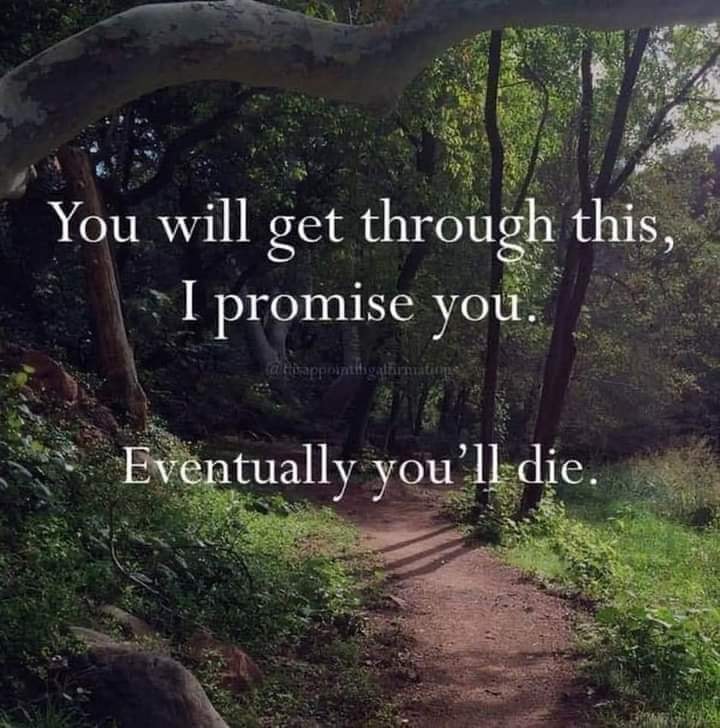
You will survive, but I promise that you will go out. This is because we eventually will all die. You will get through this, I promise you.
simple-description (llama3.2-vision_11b)
The meme is a humorous take on the concept of millenial nihilism, a philosophical movement that questions the meaning and purpose of life. The image is a darkly comedic illustration of a person's existential crisis, with the text "You will never find true love. You will never find true friendship. You will never find true happiness. You will never find true fulfillment. You will never find true anything. You will die alone in a cold, dark apartment. You will die alone in a cold, dark apartment. You will die alone in a cold, dark apartment. You will die alone in a cold, dark apartment. You will die alone in a cold, dark apartment. You will die alone in a cold, dark apartment. You will die alone in a cold, dark apartment. You will die alone in a cold, dark apartment. You will die alone in a cold, dark apartment. You will die alone in a cold, dark apartment. You will die alone in a cold, dark apartment. You will die alone in a cold, dark apartment. You will die alone in a cold, dark apartment. You will die alone in a cold, dark apartment. You will die alone in a cold, dark apartment. You will die alone in a cold, dark apartment. You will die alone in a cold, dark apartment. You will die alone in a cold, dark apartment. You will die alone in a cold, dark apartment. You will die alone in a cold, dark apartment. You will die alone in a cold, dark apartment. You will die alone in a cold, dark apartment. You will die alone in a cold, dark apartment. You will die alone in a cold, dark apartment. You will die alone in a cold, dark apartment. You will die alone in a cold, dark apartment. You will die alone in a cold, dark apartment. You will die alone in a cold, dark apartment. You will die alone in a cold, dark apartment. You will die alone in a cold, dark apartment. You will die alone in a cold, dark apartment. You will die alone in a cold, dark apartment. You will die alone in a cold, dark apartment. You will die alone in a cold, dark apartment. You will die alone in a cold, dark apartment. You will die alone in a cold, dark apartment. You will die alone in a cold, dark apartment. You will die alone in a cold, dark apartment. You will die alone in a cold, dark apartment. You will die alone in a cold, dark apartment. You will die alone in a cold, dark apartment. You will die alone in a cold, dark apartment. You will die alone in a cold, dark apartment. You will die alone in a cold, dark apartment. You will die alone in a cold, dark apartment. You will die alone in a cold, dark apartment. You will die alone in a cold, dark apartment. You will die alone in a cold, dark apartment. You will die alone in a cold, dark apartment. You will die alone in a cold, dark apartment. You will die alone in a cold, dark apartment. You will die alone in a cold, dark apartment. You will die alone in a cold, dark apartment. You will die alone in a cold, dark apartment. You will die alone in a cold, dark apartment. You will die alone in a cold, dark apartment. You will die alone in a cold, dark apartment. You will die alone in a cold, dark apartment. You will die alone in a cold, dark apartment. You will die alone in a cold, dark apartment. You will die alone in a cold, dark apartment. You will die alone in a cold, dark apartment. You will die alone in a cold, dark apartment. You will die alone in a cold, dark apartment. You will die alone in a cold,
The text "You will never find true love. You will never find true friendship. You will never find true happiness. You will never find true fulfillment. You will never find true anything. You will die alone in a cold, dark apartment" is a satirical commentary on the idea that life is inherently meaningless and that we are all doomed to suffer alone in a cold, dark apartment. The text is a darkly comedic take on the idea that we are all just struggling to find meaning in a seemingly meaningless world.
detailed-analysis (gemma3-27b-vision)
Okay, let's break down this image and its text through a series of critical lenses. I'll only include sections relevant to the content.
Visual Description
The image depicts a path winding through a dense, lush forest. The path is dirt, slightly worn, and leads into a shadowed depth. Sunlight filters through the trees, creating a dappled effect, but also emphasizing the darkness within the forest. The colors are predominantly greens and browns, with a sense of organic growth and somewhat eerie tranquility. The angle is low, looking up toward the canopy, which feels both protective and somewhat claustrophobic. A large, twisted root arches over the path, framing the view and visually representing obstacles or challenges. The text, in white, is superimposed over the scene, creating a direct contrast between the hopeful promise and the stark reality.
Foucauldian Genealogical Discourse Analysis
The message, “You will get through this, I promise you. Eventually you’ll die,” is ripe for a Foucauldian analysis. The "promise" and the eventual declaration of death represent discourses about life, survival, and acceptance. Foucault would be interested in how power operates within this statement. The "I" promising is a position of assumed authority, wielding the power to offer assurance.
Genealogical investigation would trace the historical development of this discourse: how we've come to understand "getting through" things, and the ways death is normalized or even anticipated within societal narratives. The statement isn’t simply about individual resilience, but participates in a larger power/knowledge regime regarding life, endurance, and ultimately, mortality. It positions the individual within a framework of accepting both struggle and inevitable demise. The promise could be viewed as a way to discipline the individual – to encourage continued function within a system even while acknowledging its ultimate endpoint. The contrast between the two sentences can be interpreted as the maintenance of power through the encouragement of perseverance.
Critical Theory
From a Critical Theory perspective (drawing on thinkers like the Frankfurt School), the image and text represent a form of ideological contradiction. The initial message of hope ("You will get through this") functions as a comforting, yet ultimately illusory, promise. It masks the inherent anxieties and contradictions of a system (capitalism, patriarchy, or broader societal structures) that inevitably leads to suffering and death.
The message can be interpreted as a method of false consciousness. It offers a temporary reprieve from existential dread but doesn't address the root causes of suffering. The "promise" serves to maintain the status quo, encouraging individuals to accept their lot and continue functioning within a system that might be detrimental to their well-being. The text acknowledges the inevitability of death, but does so after offering the promise of getting through something, which effectively silences concerns about systemic issues and offers only individual resilience.
Postmodernism
The juxtaposition of these two sentences – the hopeful and the fatalistic – embodies a core tenet of Postmodern thought: the inherent instability of meaning. There's a deliberate undermining of simple narratives of progress and hope. It's a rejection of grand narratives that promise eventual fulfillment or salvation.
The message embraces ambiguity and fragmentation. It offers no resolution, no clear path forward. The text isn't about finding meaning, but acknowledging the lack of it. It's a recognition that life is a series of temporary reprieves interspersed with the inescapable reality of death. The image's aesthetic – the dappled light and shadowed path – also reinforces this sense of uncertainty and fragmentation. The message, viewed through a postmodern lens, suggests that all promises are ultimately provisional, all paths lead to the same end.
Let me know if you'd like me to elaborate on any of these analyses!
tesseract-ocr
= | Hike ae ee ea ints, ee ee ou wi = ke LO Rae ese : ol RISB em Eo Se: = \ = iS throu Ss 3 \ . promise you i oieeo eS Les Le oe as : de aes “SS Eveptually youd lie. all tg: ee oe cs oi 3 ek 4 Bie a a — me bie Ng ge Pa =< te Se Be : ee are j 2 a F, Bee eS “gas : RSA aie (eae ree eee gE ee
simple-description (llama3.2-vision)
This meme is a darkly humorous image of a forest path with a tree branch overhead. The text reads: "You will get through this, I promise you. Eventually you'll die." The text is presented in a calm, reassuring tone, but the second sentence is a stark and morbid reality check that subverts the initial promise.